
Unbiased headlines. Facts, not spin.
Unbiased Headlines is an independently owned news organization. We bring you the facts, not opinions, written fresh from 110+ named sources. Sources linked so you can verify it yourself.
 energy
Major Story (8/10)
Event date: October 29, 2026 ·
QatarEnergy Signs Two Long-Term US LNG Deals in a Week as Hormuz Attacks Continue
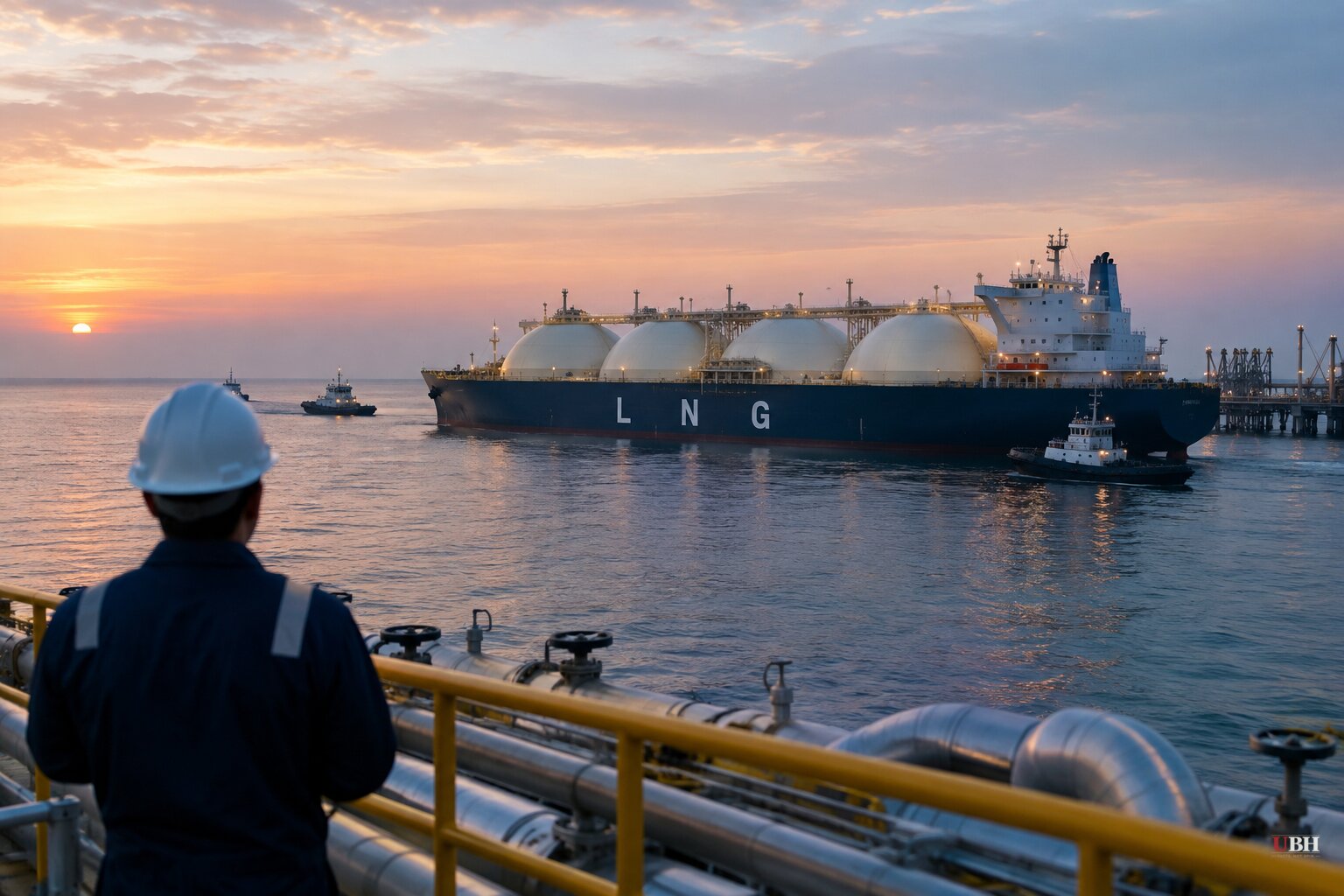
Qatar, one of the world's biggest LNG exporters, is now buying American gas for decades. It signed two long-term US supply deals in seven days while its own Ras Laffan complex remains impaired by the Iran war.
Two deals in seven days
On Oct. 22, QatarEnergy announced a deal with Cheniere Energy to buy 4 million tons a year of LNG through 2054. It takes 2 million tons a year from each of Cheniere's plants, Sabine Pass in Louisiana and Corpus Christi in Texas. Deliveries start in the early 2030s. One million tons a year from Sabine Pass depends on a final investment decision on that facility's expansion.
On Oct. 29, it signed a 20-year agreement with Australia's Woodside Energy for up to 3 million tons a year from the Louisiana LNG project. That plant is still under construction, with deliveries expected from 2030. The cargoes are free-on-board, so Qatar takes responsibility once they are loaded.
QatarEnergy CEO Saad Sherida Al-Kaabi, who is also Qatar's Minister of State for Energy Affairs, said the volumes would make the company the largest buyer of US LNG. He said the purchases, together with the Golden Pass LNG project in Texas, support QatarEnergy's growth and diversification strategy. QatarEnergy is the majority owner of Golden Pass, which is in the process of starting up. ExxonMobil is also a shareholder.
Qatar's own supply is still disrupted
QatarEnergy halted production at Ras Laffan in March after Iranian strikes, according to The Thursday Times. The same report says the damage has knocked out about 17% of the company's export capacity.
Italy's Edison said Oct. 27 that QatarEnergy had extended force majeure on its LNG supply through the end of December 2026. That covers three more cargoes and brings the total suspended since April to 38, roughly 5 billion cubic meters of gas.
Some Pakistani buyers have been told they will get no Qatari LNG until year-end, a person with knowledge of the matter told The Thursday Times. Pakistan depends on two long-term Qatari contracts for much of its imported gas. QatarEnergy has made a final offer to reprice them at 11.96% of Brent for fewer cargoes. Pakistan State Oil was seeking government approval to sign by Nov. 3. Whether it did has not been made public.
Hersh Oberoi, global research director at Balfour Capital Group, read the Woodside deal as a signal. "If you were just trying to fill a three- or four-year gap, you wouldn't be signing 20-year contracts," he said. "Qatar is clearly treating the Hormuz risk as something that is not going away."
Oil and gas prices
On Oct. 30, Brent December futures rose $2.26, or 2%, to $117.14 a barrel. The more active January contract gained $2.30 to $113.10. WTI climbed $1.94 to $103.94. Brent was on pace for a monthly gain of about 13% and WTI about 15%.
The move followed incidents on Oct. 29 reported by the UK Maritime Trade Operations. A tanker leaving the Strait of Hormuz was struck by an unknown projectile, with no injuries or environmental damage reported. Another outbound tanker caught fire about 25 nautical miles northeast of Khasab, Oman, after a small boat attached two explosive devices to its hull. The crew was safe, the engine-room fire was put out, and the ship continued to its next port. A dhow burned and sank about nine nautical miles north of Khasab, and all crew were evacuated.
The strait carries roughly one-fifth of global oil. Attacks on shipping there have recurred since the Iran war began in February.
In Europe, ING's head of commodities Warren Patterson wrote that the TTF gas benchmark settled 4.85% higher on Oct. 28. He said it was above €100 per megawatt-hour for the first time since 2022, with "little sign of imminent relief in Persian Gulf LNG flows." He added that the outlook looked worse given "the risk of renewed U.S. strikes on Iran following the U.S. midterm elections." Those elections were held yesterday, Nov. 3.
Qatar's lobbying in Washington
A Daily Wire investigation found that QatarEnergy sent letters to major US agricultural and chemical trade groups. The letters asked them to press the Office of the US Trade Representative on tariff treatment for Qatari urea and ammonia. USTR ultimately exempted ammonia, as Qatar had requested.
QatarEnergy's Texas branch is registered under the Foreign Agents Registration Act. The Daily Wire says that branch forwarded a Doha letter to the American Soybean Association asking it to use its "influence" with US lawmakers. It also says the branch did not identify itself as a registered foreign agent when it made the contact. The outlet says the groups filed their requests with USTR before QatarEnergy disclosed its outreach. It also says the soybean association did not tell the government that QatarEnergy had asked it to petition.
The Daily Wire acknowledges that the American groups likely would have made the requests anyway. It also says USTR did not clarify whether it knew of the Qatari outreach or whether that would have changed its decision. QatarEnergy's own FARA filing says its board is appointed by the Emir and that Al-Kaabi and other board members hold senior government positions. No investigation or charge relating to the outreach has been announced.
What comes next
The Cheniere and Woodside volumes will not arrive for years. Cheniere's deal also still hinges on an expansion decision at Sabine Pass for part of its volume. In the meantime, the force majeure on Qatari cargoes runs to the end of December. The open question is what happens to supply to buyers like Edison and Pakistan after that, and whether the Hormuz incidents continue as winter demand builds.
Sources used for this briefing
6 links from 6 independent newsrooms (syndicated copies of the same report count once)
These are the sources it draws on, linked so you can verify.


