
Unbiased headlines. Facts, not spin.
Unbiased Headlines is an independently owned news organization. We bring you the facts, not opinions, written fresh from 110+ named sources. Sources linked so you can verify it yourself.
 energy
Major Story (8/10)
Hormuz Oil Flows Recovering but Not Normal, Rystad Says, as Brent Drops 8% on Iran Talks Hopes
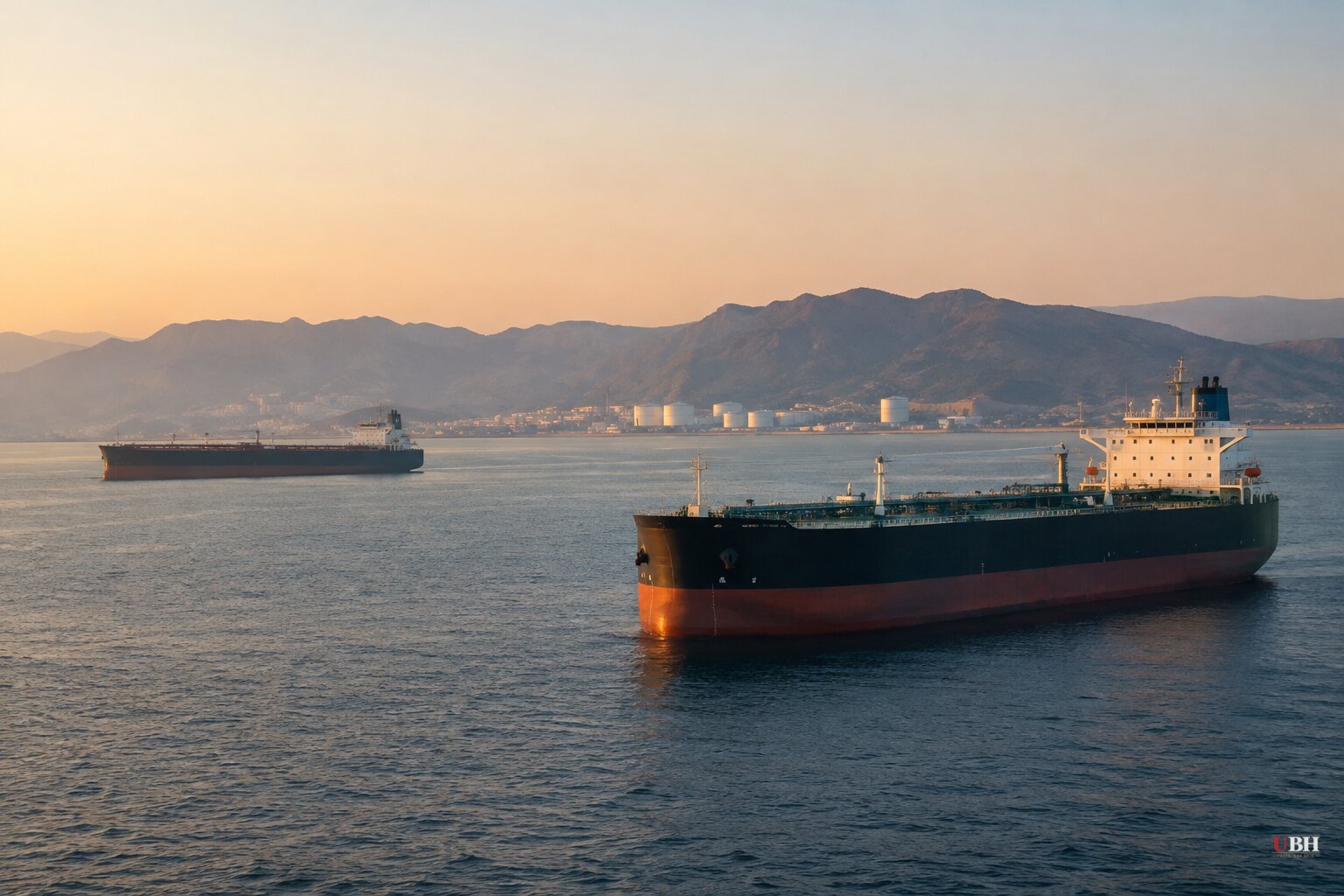
Oil is moving out of the Persian Gulf again. How much, and how reliably, depends on who is counting.
Rystad Energy said in a report Tuesday that it expects only a partial recovery in Strait of Hormuz flows, which it calls "pseudo-normalisation" rather than a full return to pre-war conditions. Its base case now has a limited accommodation between Washington and Tehran emerging toward the end of the first half of 2027.
What the numbers say
Rystad put total Gulf crude exports at about 12 million barrels per day in September and the first 20 days of October. That is well above the lows earlier in the conflict but short of the roughly 18 million barrels per day shipped before the war.
The maritime tracker Kpler reports something different. Its data show total oil flows hit 24.5 million barrels per day in the week ending Oct. 18, above the 24.4 million average on Feb. 22, a week before the war began.
The two figures are not measuring the same thing. Kpler's total includes oil moved around Hormuz by other routes, including the Red Sea, and excludes Iranian exports, which have fallen to near zero under the U.S. blockade. Rystad's figure is Gulf crude exports.
Vortexa, another tracking service, put flows lower than Kpler but still at 18 million barrels per day, only slightly under the prewar average. Bloomberg reported that large tankers are traveling in convoys and transferring cargo to other ships once clear of the threatened area. That would explain high volumes with few transits, though analysts told the outlet it also makes daily flows more volatile.
Ship traffic is another story
Kpler said about 20 ships were known to have completed the transit over the past ten days. Before the war, more than 100 a day passed through. Many vessels now run with transponders off to avoid being targeted, so the count is hard to pin down.
U.S. Central Command puts the number far higher. It said about 400 merchant ships passed through the strait over the preceding week. The Islamic Revolutionary Guard Corps insists the strait is "closed." CENTCOM says it is open.
Another Bloomberg tally puts strait shipments at about 80% of prewar levels. Insurance is the problem. In early October it cost more to hire a supertanker in some parts of the world than to launch a rocket into space.
Attacks continue
Rystad cautioned that rising October exports should not be mistaken for normalization. Weekly vessel disruptions climbed to 10, then 16, including 13 inside the strait. The following week brought 11, eight of them in the strait.
Open-source reports of damage to shipping in the strait hit a record of at least 28 in October. A U.S. official with direct knowledge told Bloomberg that Iran has not increased the volume of attacks. Instead, more serious damage is getting flagged, with a quarter of reports in the first two weeks of October involving hits to ship engine rooms.
Jim Lamson, a visiting research fellow at King's College London and a former CIA Iran analyst, told Bloomberg that economic pain is unlikely to stop Iran's "harassing fire." Tehran's stockpile of missile components lets it keep assembling anti-ship weapons even though U.S. airstrikes have degraded its ability to produce them at scale. "They have been planning for a long-term asymmetric conflict with the U.S. for decades," he said.
U.S. forces reportedly struck Iranian positions on Qeshm Island, near the strait, overnight Nov. 2. President Trump has threatened renewed attacks while also voicing hope for negotiations.
Prices swing on diplomacy
Brent fell $9.32, or 8.22%, to $104.10 a barrel as of 21:38 GMT Monday. WTI dropped $8.10 to $96.02, below $100. The sell-off followed weekend mediation between Iran and Qatar, with a draft proposal reportedly centered on reopening the strait. The weekend also passed without major military escalation.
The drop erased part of a sharp October. Brent rose 13.6% and WTI 15.2% for the month, and Brent closed at a six-month high after a tanker was struck in the strait. Analysts quoted in market reports describe the move as hope, not a deal, and some warn Brent could reach $120 if tensions flare after the election.
The politics are plain. Bloomberg reports that high fuel prices are stirring backlash at home as the midterms arrive today, Nov. 3. Iran, for its part, is absorbing the blockade, which has cut deeply into a roughly $300 billion economy that once exported about 2 million barrels per day.
OPEC+ is planning blind
Seven core OPEC+ members, Saudi Arabia, Russia, Iraq, Kuwait, Algeria, Kazakhstan and Oman, kept December output targets unchanged at a Sunday online meeting, OPEC said in a statement. The United Arab Emirates left OPEC in May.
Gulf members are boosting exports, but most are still producing well below targets. The International Energy Agency's October report put Saudi Arabia's September output at 8.3 million barrels per day against a 10.5 million target.
Jorge Leon, Rystad's head of geopolitical analysis, called Sunday's decision "the easy one." He said the group "has to plan around huge uncertainty over the US-Iran war, the pace of recovery through the Strait of Hormuz, and the size of the surplus that could emerge once disrupted barrels return." Leon warned that geopolitical disruption is masking underlying weakness in the oil balance. If Hormuz flows recover materially next year, OPEC+ could swing quickly from managing constrained supply to managing a sizable surplus.
OPEC+ must finish a review of members' production capacity, now expected by mid-November, before setting 2027 baselines. All 21 members are due to meet Nov. 29, when analysts expect 2027 quotas to be decided.
Iran's foreign minister, Abbas Araghchi, submitted a two-day Hormuz transit proposal on Oct. 31. No transit arrangement was in place as of Sunday.
Sources used for this briefing
7 links from 7 independent newsrooms (syndicated copies of the same report count once)
These are the sources it draws on, linked so you can verify.


