
Unbiased headlines. Facts, not spin.
Unbiased Headlines is an independently owned news organization. We bring you the facts, not opinions, written fresh from 110+ named sources. Sources linked so you can verify it yourself.
 energy
Breaking / Critical (9/10)
WTI Falls Below $95 for a Second Session as Rumors of US-Iran Deal Progress Outweigh Qeshm Strike Reports
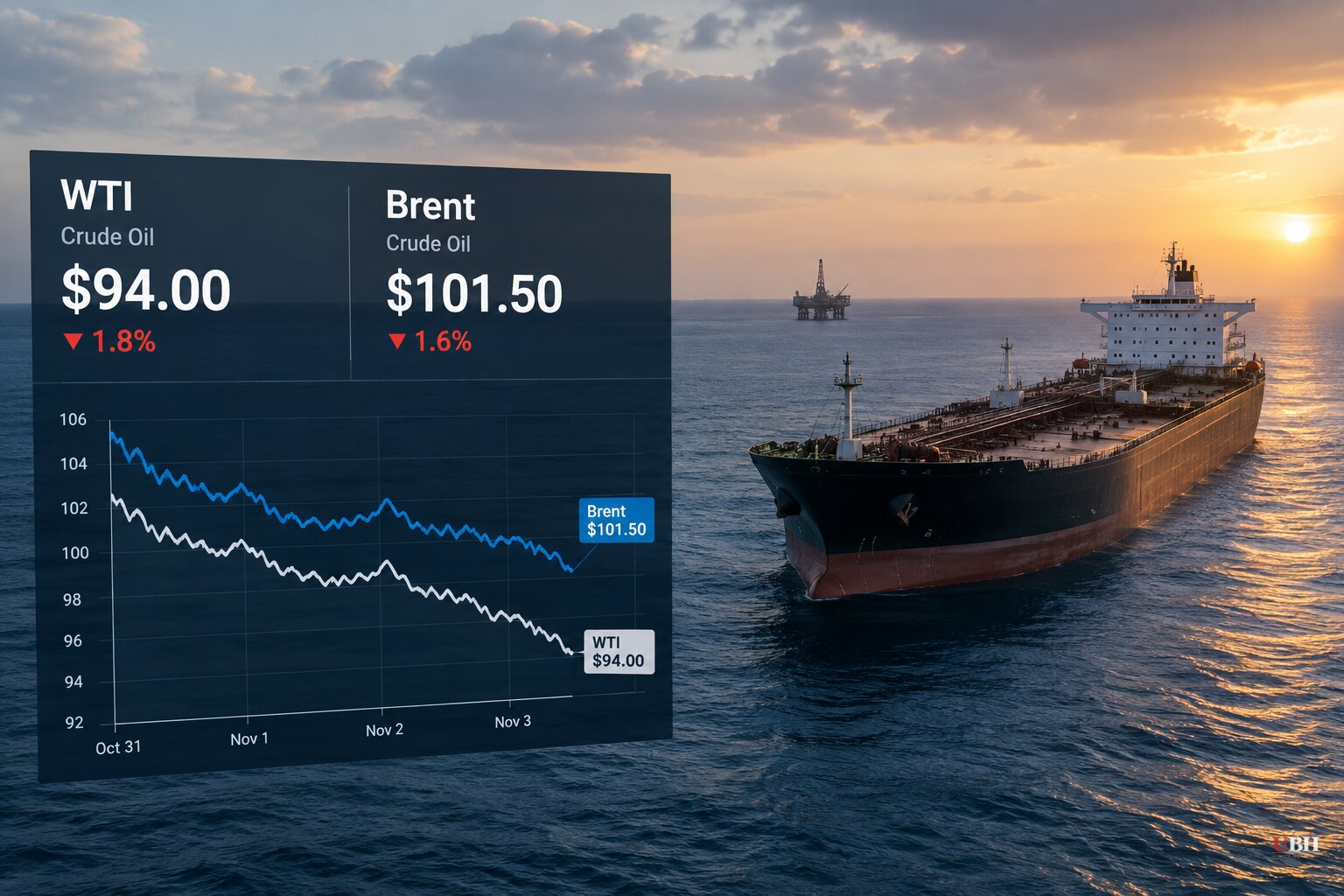
Since oil's 7% slide on Monday, Nov. 2, crude has extended its losses on Tuesday, Nov. 3, and an early rebound on reports of a US strike on Iran's Qeshm Island has been erased.
West Texas Intermediate was down about 2.3% at $94.23 a barrel, and Brent was down about 3% at $101.54. Trading Economics put crude at a three-week low, below $95, after it had climbed above $98 earlier in the session on the Qeshm reports.
The drop follows rumors that Washington and Tehran are making progress toward a settlement. No signed text has been announced.
What changed overnight
Three developments pulled prices down after the early bounce.
First, US Energy Secretary Chris Wright said the overnight attacks on Qeshm had not affected oil flows. He added that more refined products would be supplied from the Persian Gulf and India.
Second, Iranian President Masoud Pezeshkian said Supreme Leader Mojtaba Khamenei had authorized discussions on issues previously considered non-negotiable. Iran's Foreign Ministry spokesman Esmail Baghaei said "the ball is in the US court."
Third, Trump announced that Washington would end its $4 billion aid program for Israel by year-end, following an agreement with Prime Minister Benjamin Netanyahu. Trump said Israel no longer needed the assistance, though the US would still offer other forms of support. Trading Economics tied the price reversal to that announcement.
The strikes
Accounts of the Qeshm strike differ. A US official said the strike was "defensive," a response to Iran firing at a US aircraft, and did not signal a return to US strikes on Iran. Qeshm hosts an underground missile site, a naval base and a major desalination plant, and Iran's state news agency IRNA reported five explosions on the island.
US officials told The Wall Street Journal something broader: Washington has been carrying out "limited strikes" on Iran in recent weeks, and the campaign has been kept deliberately low-profile to avoid signaling a major escalation.
Trump, speaking on "Hannity," called the conflict "a very soft war." He said the US could hit further targets, including the nuclear site he called "pickaxe," "in one hour."
Diplomacy and its limits
Secretary of State Marco Rubio said Sunday that Trump would prefer a diplomatic resolution. He added that the US has "everything we need to be successful" militarily if it comes to that.
Vice President JD Vance told CNN that he and Trump "both feel really good about the prospect of potentially coming to a negotiated settlement."
Tehran has set conditions. Foreign Minister Abbas Araghchi told IRNA that a deal is possible if the US "demonstrates goodwill." He also said Iran has "presented our conditions and proposals and everything depends on the political rationality of Washington." Iranian officials also said a deal remains within reach, provided commitments are implemented in practice, following Qatar-mediated discussions.
Pressure for a harder line exists too. Axios reported that Netanyahu has pressed the White House for a forceful round of strikes. Trump told reporters in recent days the US would not strike Iran after the midterms, but he also told Right Side Broadcasting on Nov. 1: "Either they'll make a deal, or we'll just end it." Yahoo Finance noted that national outlets have reported the military briefed Trump on options for a major re-escalation once the election is over.
Prices, politics and the Fed
WTI is still up about 70% this year. Brent surged close to $118 last week and oil gained more than 10% in October, as the market priced in escalation after the election.
At the pump, AAA put the national gasoline average just below $4.17 on Nov. 2, down more than 20 cents from a month earlier. Diesel is around $6.29, down about 8 cents.
High fuel costs have fed inflation, which the CNBC report called a concern for Trump heading into the midterms. Two Federal Reserve presidents said last week that rates will need to move higher to rein in inflation.
In Britain, the Bank of England is widely expected to raise rates Thursday to 4% from 3.75%. Lower oil prices could temper its signals on further hikes.
Kathleen Brooks, research director at XTB, said the midterms are key for oil. If Democrats win Congress, she said, that "could hasten a resolution to the conflict which may push the price of oil below 100 dollars per barrel." Brent is already near that line.
ING commodity strategists wrote on Nov. 1 that the key question is whether investors keep pricing in elevated geopolitical risk or start dialing it back. Two sessions into the move lower, the market is dialing back. Whether Iran's stated authorization produces implemented commitments, or whether Trump's "one way or the other" ends in strikes, remains an open question as voters head to the polls.
Sources used for this briefing
7 links from 7 independent newsrooms (syndicated copies of the same report count once)
These are the sources it draws on, linked so you can verify.


