
Unbiased headlines. Facts, not spin.
Unbiased Headlines is an independently owned news organization. We bring you the facts, not opinions, written fresh from 110+ named sources. Sources linked so you can verify it yourself.
 energy
Major Story (7/10)
Event date: October 29, 2026 ·
China Landed 23 of 36 Major Clean Industry Projects Financed in the Past 12 Months, Mission Possible Partnership Finds
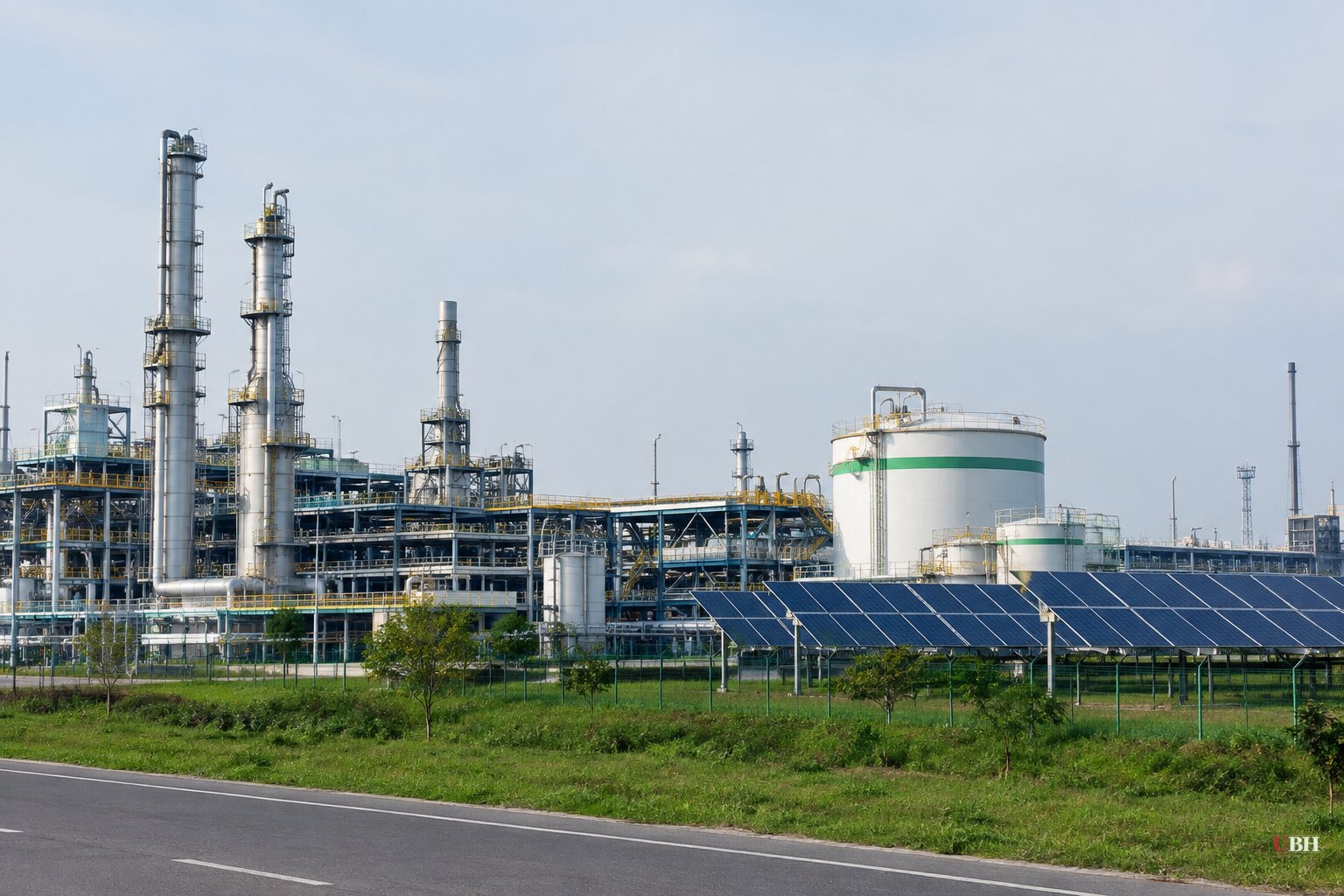
The West is losing the race to build the factories that make tomorrow's fuels, chemicals and metals. China is winning it by a wide margin.
A record 36 clean industrial projects reached final investment decision over the past 12 months, according to the Global Project Tracker from Mission Possible Partnership, a non-profit that works on decarbonising heavy industry. China accounted for 23 of them and $45 billion in financing.
Emerging economies in what the group calls the new industrial sunbelt raised $5.3 billion across six large facilities. Developed economies, the US and EU included, secured $4.8 billion for six projects.
China also hosts 49 percent of all clean industrial plants operating or under construction worldwide. It holds more than 90 percent of global clean methanol capacity and more than 40 percent of clean aluminium capacity. Seventeen Chinese aluminium smelters now run on renewable power, with two more being built.
Where the money and the factories are going
The tracker says 89 countries are now developing commercial-scale clean industrial projects. Two of the new sunbelt plants, in Kenya and Paraguay, will make fertiliser for domestic and export markets.
Mission Possible Partnership ties China's lead to industrial policy: the 14th Five-Year Plan, launched in 2021, set dedicated targets for green industrial and transport development. An emissions trading scheme expanded to steel, cement and aluminium is credited with boosting the clean aluminium sector.
Belinda Schäpe of the Centre for Research on Energy and Clean Air said the shift "creates significant economic opportunities for China and could strengthen its geopolitical influence, particularly in emerging economies."
Equipment, exports and emissions
China's own energy report puts its share of global supply at roughly 70 percent for wind equipment and 80 percent for solar modules. The report comes from the China Electric Power Planning and Engineering Institute, a Chinese state-linked body. It also says wind and solar capacity passed coal-fired capacity in 2025 for the first time.
Coal's share of China's energy consumption fell to 51.4 percent in 2025, down 1.8 points. Coal output still rose 1.4 percent to 4.85 billion tons.
Carbon Brief's analysis, led by Lauri Myllyvirta, estimates Chinese clean-tech exports will avoid about 450 million tonnes of CO2 in 2026 outside China. That is nearly 2 percent of emissions outside China and roughly Brazil's annual fossil-fuel output. The effect grew 26 percent year on year in the first three quarters of 2026, after rising 36 percent in 2025.
The analysis also finds that making the gear emitted about 170 million tonnes in China in 2025, against 370 million tonnes avoided abroad. It adds that a domestic solar slowdown, if it continues, could worsen trade tensions.
The critics' case
Breitbart makes the opposing argument bluntly: China is "by far, the worst polluter in the world" and profits from a near-monopoly on green-energy materials.
Breitbart pointed to remarks by Vice Minister of Ecology and Environment Li Gao, who said China will send a delegation to the COP31 climate conference in Antalya, Turkey, this month. Li touted China's solar capacity passing coal and its lead in EVs and nuclear. He also called for a roadmap for developed countries to deliver $300 billion in climate finance by 2035.
China presents itself as a developing country in those talks, so the funding obligations fall on others. It is the world's second-largest economy.
Breitbart also said Li left out that coal consumption is forecast to rise more than 3 percent this year. It tied that to reduced LNG shipments from the Middle East during the Iran war and to rising power demand from data centers, EVs and air conditioning.
AI is the next battleground
Beijing wants renewables to give it an edge in AI. Envision Energy began operating a data center campus in Ulanqab, Inner Mongolia, in August, powered by renewable electricity delivered directly to the site. The company says it could become the world's largest standalone AI data center, expanding past 2 gigawatts. It says customers can lock in rates 20 percent below grid prices for a decade.
China is targeting renewables for more than 80 percent of electricity at new data centers in its major computing hubs. Its data centers used about 170 terawatt-hours in 2025, 1.6 percent of national use. Beijing estimates about 800 terawatt-hours by 2030, around 6 percent.
The Trump administration, by contrast, has scrapped a requirement that AI data centers on federal land be paired with clean generation. Kyle Chan of the Brookings Institution said China "doesn't want a trade-off between having faster data center build-out but sacrificing on the energy transition."
Beijing eyes export controls
China is also preparing to restrict what it sells. Plans reported on Oct. 22 cover 40 technologies: 14 would be banned, including AI that generates malicious code, and 26 restricted, including technology for mass-producing polysilicon, a core solar material. A temporary rule already requires companies to register with the Commerce Ministry before sending any of the 40 abroad.
The ministry cited security concerns over items such as AI-powered malware generation.
Taiwanese analysts read it as leverage. Daphne Shiow-wen Wang of the Institute for National Defense and Security Research said Beijing wants an edge in talks with Washington over the trade deficit and wants Brussels to think twice about penalties. Tsai Ming-fang of Tamkang University said the curbs "will backfire by pushing them to get serious about decoupling from China."
The test comes soon. APEC leaders meet Nov. 18 and 19 in Shenzhen, where Trump is expected to meet Xi on the sidelines. Lee Chung-chih of the DIMEs Center expects Beijing to ask for something of equal value if Washington presses it to ease the controls.
Sources used for this briefing
7 links from 7 independent newsrooms (syndicated copies of the same report count once)
These are the sources it draws on, linked so you can verify.


