
Unbiased headlines. Facts, not spin.
Unbiased Headlines is an independently owned news organization. We bring you the facts, not opinions, written fresh from 110+ named sources. Sources linked so you can verify it yourself.
 energy
Major Story (8/10)
IEA Warns Gas Market Could Stay Tight Through 2027 as Europe Enters Winter With Lowest Storage Since 2013
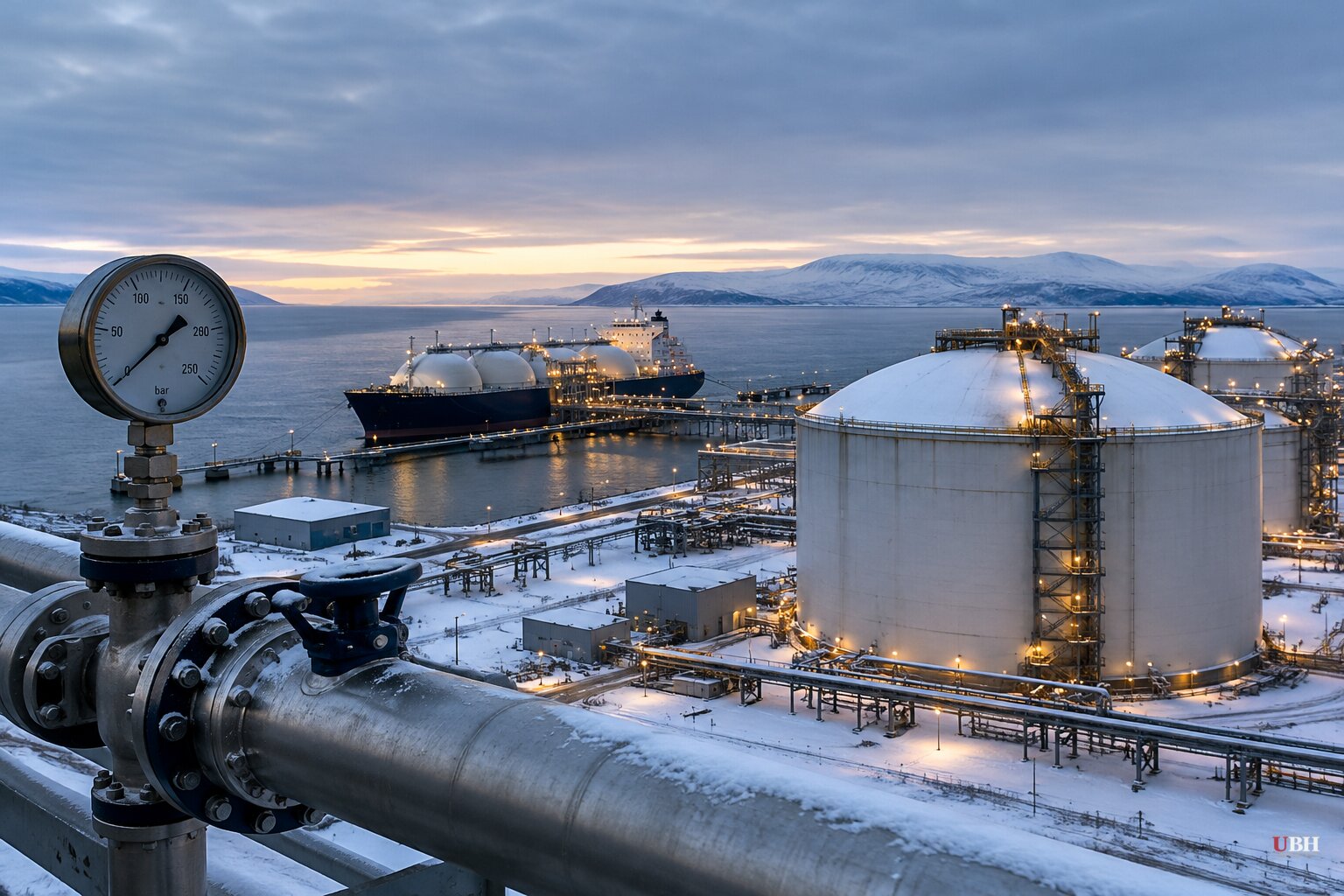
Since LNG loadings from Qatar and the UAE began falling in March, the Strait of Hormuz disruption has reshaped the global gas balance. On Tuesday, Nov. 3, the International Energy Agency put numbers on how long the damage could last.
In its Global Gas Security Review 2026, the IEA said global LNG supply will shrink 3%, or almost 20 billion cubic meters, this year. It called that the steepest annual contraction since it began tracking the market.
Where the gas went
Gulf LNG loadings from Qatar and the UAE dropped by more than 60 bcm between March and October compared with a year earlier, the IEA said.
Other producers covered part of it. Non-Gulf LNG output rose 14%, or more than 40 bcm, helped by new plants in North America and Africa and more feedgas from existing suppliers in Africa, Asia and Russia. That offset roughly two-thirds of the lost Gulf volume.
Global LNG production still fell about 6%, or 20 bcm, over the period.
The agency's base case assumes Hormuz shipping stays largely disrupted through the end of 2026. QatarEnergy, the Gulf's biggest LNG exporter, has extended force majeure notices on deliveries to most of its customers through December.
Europe's winter problem
EU storage is entering the 2026-2027 heating season at its lowest level since 2013, according to the IEA. In a colder-than-average winter with continued Hormuz disruption, the agency estimates storage could fall below 10% of working capacity by the end of March 2027.
That would force heavy injections through the summer of 2027, putting Europe in competition for LNG cargoes long after the cold months end.
Europe is more exposed to the spot market than it used to be. It built up LNG import capacity after cutting most pipeline gas from Russia, and now buys on a global market where Asian buyers chase the same marginal cargoes.
Prices show it. European TTF spot prices averaged close to $20 per million British thermal units from March through October, almost 70% above a year earlier, the IEA said. Asian spot LNG averaged about $21.50, up almost 80%.
The Asian premium over European hub prices was about $2 from March to July. It narrowed to roughly $1 from August through October as Europe bid harder for flexible cargoes. Oil-indexed contract prices have climbed to an estimated $12 to $14.
The IEA said more North American supply and more flexible trading arrangements have helped markets absorb part of the shock. It still described risks to gas security as elevated.
Birol: no normal year in sight
Speaking Tuesday at the Financial Times Energy Transition Summit in London, IEA executive director Fatih Birol was blunt. "I don't see any credible pathway that 2027 will be a year of normalisation," he said.
Birol said the Strait of Hormuz has been closed once and "it can be closed again." He said he is "very worried that there will be some overlapping crises in the Middle East."
Brent crude was trading above $111 a barrel Tuesday, CNN reported. If that held, it would be the highest settlement since May.
Birol warned against judging the crisis by crude alone. Prices have not reached the $200 some analysts predicted at the war's start, but he called a crude-only view "myopic." "We don't use crude oil, we use products," he said. Diesel prices have doubled from pre-war levels, he said, due largely to the Iran war and partly to attacks on Russian refineries. Diesel demand typically rises this time of year, and many large refineries have planned maintenance.
What the flow data show
Not every indicator points the same way. Kpler data showed the seven-day average of Middle East oil flows, including via Hormuz, the Red Sea and the Gulf of Oman, at just over 24 million barrels a day on Tuesday. That is above the pre-war average. Restored Saudi pipeline exports have helped, even though tanker crossings through the strait remain well below pre-war levels.
Birol's counter is that attacks on shipping have ramped up in recent weeks. Houthi strikes on Saudi Arabia disrupted oil shipments and led the kingdom to cancel its flagship investor conference, planned for later this month. Iran has issued public threats against Washington as it signals preparation for another round of war, CNN reported.
Reports circulating Tuesday said Iran is willing to reopen the strait within two days as part of a potential U.S. deal. Rystad Energy has said Hormuz oil flows are unlikely to return to pre-war levels anytime soon. No deal has been confirmed.
The fuel bill at home
The diesel squeeze is already reaching U.S. policy. On Oct. 12, Michigan Gov. Gretchen Whitmer declared a state energy emergency, letting eligible farm and logging vehicles run dyed diesel on public roads. Her order cited record diesel prices and thin margins. It runs until she determines the shortage has ended, or Dec. 31 at the latest.
As of Oct. 14, AAA put regular gasoline at $4.33 a gallon nationally and diesel near $6.30, after a record $6.52 at the end of September. Whitmer wrote that the federal government created the problem and can fix it.
The IEA said Oct. 14 that diesel export losses from the Middle East and Russia totaled 1.3 million barrels per day in September, and that diesel markets could stay tight well into next year.
The open question is the Hormuz timeline. The IEA's 2027 outlook rests on its assumption that shipping stays largely disrupted through December. Whether Europe can refill storage next summer depends on whether that assumption breaks in either direction.
Sources used for this briefing
7 links from 7 independent newsrooms (syndicated copies of the same report count once)
These are the sources it draws on, linked so you can verify.


