
Original briefings. Zero spin.
Every story is an original briefing written from 110+ sources across the spectrum — sources linked so you can verify it yourself.
 energy
Notable (6/10)
August 26, 2026 at 09:59 AM
energy
Notable (6/10)
August 26, 2026 at 09:59 AM
A Tulsa Woman's $1,373 Electric Bill Is a National Warning Sign
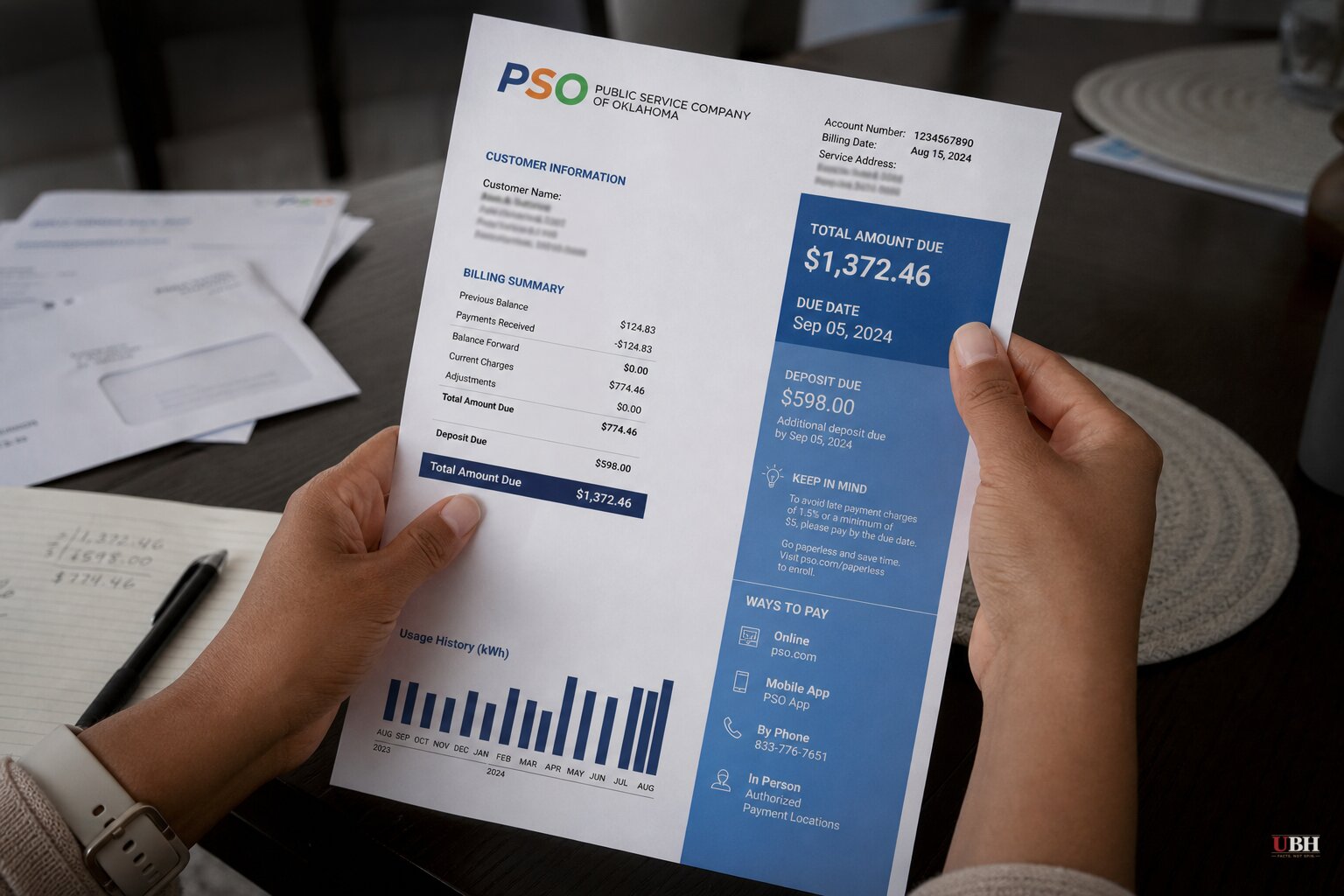
Raelynn McMurchy opened her electric bill this summer and found a number bigger than her rent: $1,373. Part of that was a nearly $600 deposit her utility, Public Service Company of Oklahoma (PSO), tacked on after some late payments. McMurchy, who works nights at a Tulsa hospital, posted about it on TikTok. The video hit more than 100,000 views, according to NPR. She then started a Change.org petition asking Oklahoma regulators to rein in the increases.
She's not alone. Electricity prices nationwide have been rising faster than overall inflation, according to Labor Department data cited by NPR. Summer is when it hurts most, with air conditioners running nonstop.
Tulsa got hit especially hard this year. NPR reported the city saw more than twice its average number of triple-digit days this summer. PSO had asked state regulators for a roughly 15% residential rate hike. It settled with the Oklahoma attorney general for closer to 1%, a deal that still needs regulatory approval. But even with a frozen rate, bills spiked anyway because people ran their AC longer and harder.
Shutoffs Hit Oklahomans Far More Than the National Average
PSO disconnects customers at more than five times the national average rate, according to a first-of-its-kind U.S. Energy Department tally based on 2024 data, reported by both NPR and its member stations.
Oklahoma's rules make that possible. The Oklahoma Corporation Commission allows shutoffs anytime the heat index is under 101 degrees. Consumer advocates have pushed to lower that threshold. They've lost every time, per NPR's reporting.
Joanne Pearson, who runs the Helping Hand Ministry in downtown Tulsa, put it bluntly to NPR: "I wish every corporation commissioner had to sit in a house that had no electricity when it's 95." Her ministry fields lines of people every Monday and Tuesday morning holding disconnect notices. Volunteer John Johnson works the phones, negotiating partial payments to buy families a few more days of power. One recipient, Ashley Fonseca Mejia, works in retail and told NPR the relief was real, even if temporary. Eric Widger, who works at a Kimberly-Clark plant near Tulsa, said his bill doubled to around $500 a month and he was one day from a shutoff before help came through.
This is a state allowing utilities to cut power to families in near-100-degree heat over unpaid bills of a few hundred dollars. That's a policy choice regulators can revisit and haven't.
The AI Data Center Factor
The heat and the deposits aren't the whole story. Research from the Federal Reserve Bank of Dallas, reported by Fox News, found that AI data centers already popping up around the country have pushed average wholesale electricity prices up 2% to 6% nationwide, with much bigger spikes in areas where data centers cluster.
The Dallas Fed modeled grid demand through 2028 and found a middle-range scenario where electricity generation costs could run 20% to 30% higher than they would without new data centers. That doesn't mean household bills jump 20% to 30%. Wholesale power is only about half of what shows up on a retail bill, and wholesale price increases take time to filter down, according to the Fed researchers cited by Fox News. But the direction is clear: a single large data center can use as much power as a small city.
That's a real tradeoff. The AI boom is driving investment and jobs. It's also straining a grid that takes years to expand, since new power projects can wait more than five years to connect, per the Dallas Fed's findings.
Who's Actually Fighting Over the Fix
The Federal Energy Regulatory Commission, under new Trump-appointed leadership, voted 5-0 to streamline permitting for "brownfield" infrastructure projects, like adding a second natural gas storage facility next to one already approved, according to the Daily Wire.
Fifteen Democratic attorneys general, led by Washington's Nick Brown and Massachusetts's Andrea Campbell, petitioned FERC to slow that reform down, arguing it threatens ratepayers, the Daily Wire reported. The Daily Wire's own framing is opinion-driven and explicitly hostile to those AGs, but the underlying price data it cites checks out against public utility rate trends: electricity prices in Washington state are up 32.8% since 2021, Oregon up 37.6%, Massachusetts up 38.7%, Maine up 65.3%, and D.C. up 73.7% since 2020, per the figures the Daily Wire compiled.
The fair counterpoint those attorneys general would make, even though it isn't quoted directly in this reporting: faster permitting for gas infrastructure doesn't guarantee lower consumer bills, and stripping environmental review timelines carries its own risks if it lets projects skip scrutiny that protects ratepayers or local communities long-term. That's a legitimate regulatory question FERC will have to answer when it rules on the Blanket Program reform, not a settled fact either side has proven.
What's clear from the ground in Tulsa is the arithmetic. A working mother's bill outpaced her rent. A factory worker's bill doubled. A retail worker needed a stranger's $350 to keep her lights on in triple-digit heat. Those are facts from named people in named reporting.
The PSO rate settlement with Oklahoma's attorney general still awaits formal approval from the Oklahoma Corporation Commission. Whether regulators revisit the 101-degree shutoff threshold, and whether FERC's permitting reform survives the blue-state AGs' challenge, will shape whether bills like McMurchy's become the exception or the new normal.
Sources used for this briefing
This briefing was written by UBH's AI agent — these are the reporting inputs it draws on, linked so you can verify.


