
Original briefings. Zero spin.
Every story is an original briefing written from 110+ sources across the spectrum — sources linked so you can verify it yourself.
 energy
Major Story (7/10)
Event date: August 23, 2026
energy
Major Story (7/10)
Event date: August 23, 2026
Canada's Oil Sands Maintenance and Alberta Wildfires Set to Squeeze US Refiners Before Labor Day
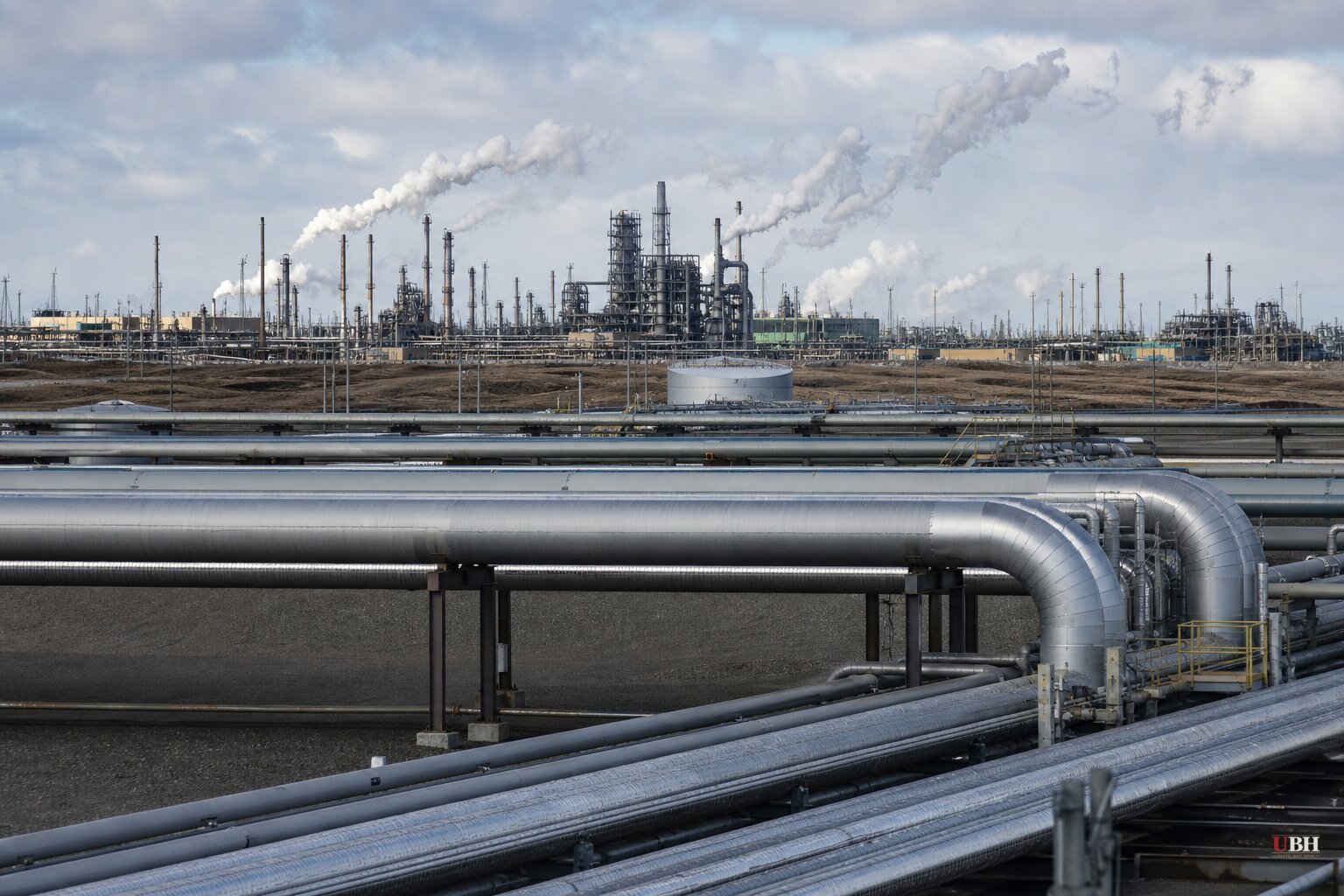
US refiners have spent months making up for oil that isn't flowing out of the Middle East. Now the backup plan has its own problem.
Canada normally ships more than 4 million barrels a day of crude to US refineries, most of it heavy oil sands crude out of northern Alberta, according to Bloomberg reporting carried by Rigzone. That supply is about to shrink. Rystad Energy told Bloomberg that seasonal maintenance across the oil sands will pull roughly 300,000 barrels a day offline starting in September, with Suncor Energy and Canadian Natural Resources among the operators taking equipment down, including delayed work at the Syncrude upgrader.
Normally a maintenance dip like this gets absorbed by pulling oil out of storage. Not this time. Storage at Hardisty, Alberta is near its lowest level since records began in 2017, and the second-lowest since March 2025, according to Briefs.co. Rigzone reported that stockpiles are the lowest in more than a year. There's no cushion.
A second hit: wildfires
On top of the maintenance shutdowns, wildfires are burning within about 20 kilometers of oil sands facilities responsible for roughly half a million barrels of daily output, concentrated in the Lac la Biche area, according to Bloomberg reporting cited by Drop Site on X. That's a separate threat layered on top of the planned maintenance cuts, not the same event.
Two pipeline operators are already signaling they expect lower volumes. Enbridge said it won't ration space in September on its Mainline system, Canada's largest oil export network, which Rigzone and OilPrice.com both flagged as a sign the company expects less crude to ship, not more.
Why this lands hardest in the Midwest
Midwest refineries get about 70% of their crude from Canada, according to both Rigzone and Briefs.co, and they can't easily swap in seaborne barrels the way coastal refineries can. US crude imports from Canada already fell the most since May, per Energy Information Administration data cited by Rigzone.
The timing is brutal. American refiners are processing the most crude in eight years, chasing diesel margins that hit a record this month, according to Rigzone. Diesel-rich Canadian synthetic crude's premium over US futures jumped to almost $20 a barrel, the highest since an April price spike tied to the Iran war.
Venezuela and the Middle East aren't picking up the slack
Other sources can't fill the gap, at least not yet. Venezuela exported 1.16 million barrels a day last month, down slightly from June, and state oil company PDVSA had to draw down storage to hit even that number, according to a Reuters report cited by OilPrice.com. Exports to the US hit 786,000 barrels a day in July, the highest since early 2019, but that's still a fraction of what Canada alone sends south, and supermajors remain wary of returning to large-scale Venezuelan operations given the country's unsettled political and fiscal situation.
Middle East supply hasn't normalized either, despite White House claims. Fox News interviewed petroleum geologist Art Berman, who said roughly 8 million barrels a day of Persian Gulf production remains shut in, even with the Strait of Hormuz open to tanker traffic. The International Energy Agency's August 12 report put Gulf output 8.3 million barrels a day below pre-war levels. The EIA's own estimate for July shut-ins was 5.5 million barrels a day, and the agency raised its August forecast for continued constraints. The two agencies don't agree on the exact number, but both say the shortfall is real and won't fully resolve until early 2027 at the earliest, per EIA's own forecast.
Prices are actually falling right now, for a different reason
Despite all this, WTI crude dropped more than 3%, about $2.80, to near $82 a barrel on Monday, according to the Epoch Times, as traders reacted to Washington's decision to hit Iran with expanded sanctions instead of military strikes. Treasury Secretary Scott Bessent warned that any country facilitating Iranian oil transactions "will be targeted," a clear signal aimed at China, which buys roughly 90% of Iran's oil exports. Saxo Bank strategists told the Epoch Times the market "remains in limbo," warning that tight crude and refined product availability leaves prices "vulnerable to renewed price spikes."
Today's price move is about sanctions policy and Iran, not about the Canadian supply crunch, which hasn't hit yet. The Canadian squeeze is a September story. The Canadian shortfall and wildfire risk are supply-side problems building toward Labor Day, separate from the sanctions-driven price drop happening this week.
Drop Site's characterization on X that wildfires are "at the worst possible time" reflects Bloomberg's own reporting on the timing, not editorializing added on top. AP News reports that Canada is separately preparing retaliatory tariffs against the US, a trade dispute running on its own track that hasn't yet been tied by any source to the oil supply squeeze.
The open question is how much of this reaches the pump. Rigzone and Briefs.co both point to Labor Day as the moment US drivers may feel it. Whether that turns into a modest bump or something sharper depends on how fast the wildfires spread and whether Canadian producers can restart maintenance work on schedule.
Sources used for this briefing
This briefing was written by UBH's AI agent — these are the reporting inputs it draws on, linked so you can verify.


