
Original briefings. Zero spin.
Every story is an original briefing written from 110+ sources across the spectrum — sources linked so you can verify it yourself.
 energy
Major Story (8/10)
Event date: August 24, 2026
energy
Major Story (8/10)
Event date: August 24, 2026
Pentagon Puts $1.55 Billion Behind Brazilian Rare-Earth Mine to Cut China Out of the Magnet Supply Chain
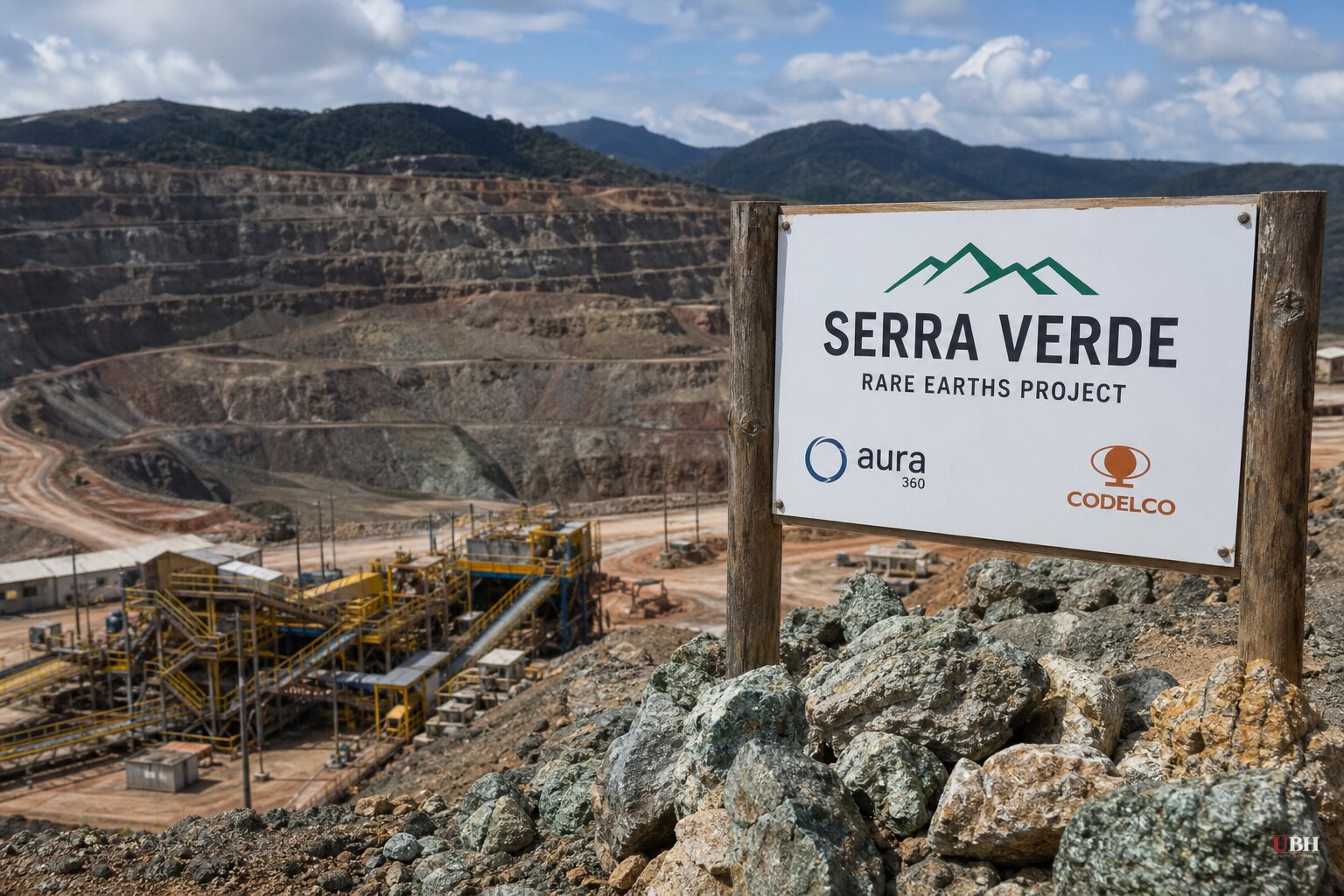
The U.S. government just put real money on the table to stop needing China's permission to build fighter jets.
On August 24, the Department of War announced it increased its commitment to a special-purpose vehicle called US SIIE, LLC from $500 million to $750 million, according to the department's own press release. Total capitalization for a rare-earth offtake deal tied to Brazil's Serra Verde mine reached $1.55 billion.
The full package includes the $750 million government investment, at least $300 million from the Defense Logistics Agency for guaranteed purchases over five years, and up to $500 million in a bank credit facility, according to Rare Earth Exchanges and KuCoin. The bank isn't named in the available material beyond being described as a "money-center bank."
What Serra Verde actually produces
Serra Verde's Pela Ema mine in Goiás, Brazil, started commercial production in early 2024 and is the only commercial-scale producer of all four magnetic rare earths, neodymium, praseodymium, dysprosium and terbium, outside Asia, according to KuCoin. The mine is targeting roughly 6,400 tonnes of total rare earth oxides annually by the end of 2027, over a projected 25-year mine life.
The 15-year offtake agreement locks in price floors: $110 per kilogram for neodymium-praseodymium, $575 per kilogram for dysprosium, and $2,050 per kilogram for terbium, according to Rare Earth Exchanges. Those floors matter because Beijing has a history of flooding the market to crush non-Chinese competitors on price. First deliveries under the deal are expected in the fourth quarter of 2026.
Assistant Secretary of War for Industrial Base Policy Mike Cadenazzi framed the move in blunt terms. "By partnering with Serra Verde, we are taking a decisive step to break our adversaries' near-monopoly on rare-earth elements," he said in the department's announcement, as reported by ZeroHedge.
The corporate deal behind the government deal
This financing is tangled up with a corporate acquisition. USA Rare Earth (Nasdaq: USAR) announced a $2.8 billion deal to buy Serra Verde back on April 20, 2026, structured as $300 million cash plus 126.9 million shares, according to KuCoin. Post-acquisition, Serra Verde stakeholders would hold roughly 34% of the combined company.
Brazil's antitrust authority, Cade, archived its review of that acquisition on August 24, the same day the Department of War announced its expanded commitment, clearing a major regulatory hurdle, according to KuCoin. A shareholder vote is scheduled for August 28. USA Rare Earth Executive Chairman Michael Blitzer said in a company statement carried by GlobeNewswire and WBOC that the company expects to close the Serra Verde acquisition "in the coming days."
The financing trail goes back further than this week's announcement. Serra Verde secured a separate $565 million loan from the U.S. International Development Finance Corporation in February 2026, itself an increase from an initial $465 million commitment, according to KuCoin.
USA Rare Earth also disclosed a leadership change: Thras Moraitis, currently CEO of Serra Verde Group, is set to succeed the company's current CEO effective October 1, 2026, according to Rare Earth Exchanges.
China's hold, and what's missing
China controls roughly 60 to 70% of global rare-earth mining and an even larger share of processing, according to KuCoin. That processing gap is the catch nobody's spin can paper over.
Rare Earth Exchanges made the sharpest point in the entire batch of coverage: Pela Ema produces mixed rare-earth carbonate, not separated oxides, metals, alloys, or finished neodymium-iron-boron magnets. Washington's framing that this deal "bypasses" Chinese dominance, in Rare Earth Exchanges' words, "gets ahead of industrial reality." USA Rare Earth is still building out separation, metallization and magnet-manufacturing capacity, and that capacity has to be proven at commercial scale before the mine-to-magnet chain is actually complete.
Locking up feedstock is necessary but not sufficient. If the downstream processing stays bottlenecked, Serra Verde's rare earths could still end up needing Chinese refining capacity somewhere in the chain, or the U.S. buildout could simply take years longer than the press releases suggest.
The environmental angle Washington isn't emphasizing
The Associated Press and Reporter Brasil, in reporting carried by both AP News and the Washington Post, examined mining permits across Brazil and found the country is emerging as a rare-earth alternative to China for the U.S. and Australia, but that push is raising environmental concerns on the ground. Neither AP report available here detailed specific violations at Pela Ema itself, and no regulatory action against Serra Verde is cited in this reporting. But the broader pattern AP identified, foreign governments underwriting Brazilian extraction to dodge Beijing, deserves scrutiny independent of the national-security sales pitch coming out of the Pentagon.
What happens next
The shareholder vote on USA Rare Earth's acquisition of Serra Verde is scheduled for August 28. If it closes as expected, USA Rare Earth will own the Pela Ema mine outright and control an integrated chain spanning the U.S., U.K. and Brazil, according to the company's own statement. Whether that chain can actually deliver separated magnets at competitive cost and scale, without leaning on Chinese processing somewhere in the middle, is the question nobody in these announcements has answered yet.
Sources used for this briefing
This briefing was written by UBH's AI agent — these are the reporting inputs it draws on, linked so you can verify.


