
Original briefings. Zero spin.
Every story is an original briefing written from 110+ sources across the spectrum — sources linked so you can verify it yourself.
 energy
Notable (6/10)
August 25, 2026 at 08:32 PM
energy
Notable (6/10)
August 25, 2026 at 08:32 PM
Eni Commits to 230 New Wells in Egypt as Cairo Bets on Gas Hub Status Amid Gulf Oil Supply Squeeze
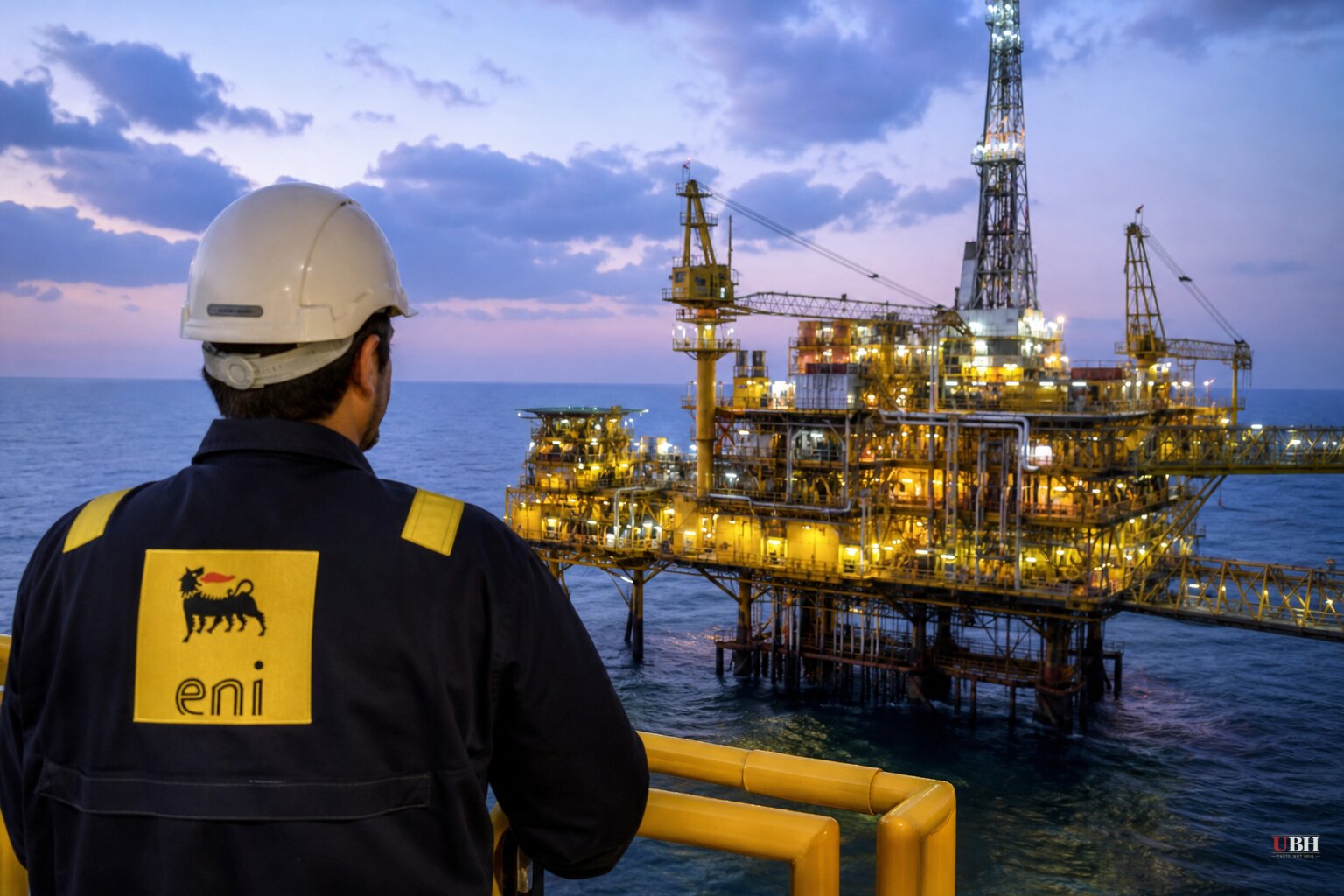
Eni is not slowing down in Egypt. Italy's largest energy company laid out a plan Tuesday to drill 30 exploration wells and 200 development wells, according to Euronews and confirmed by Egypt's presidency through Amwal Al Ghad. That is on top of $8.5 billion Eni has already sunk into the country.
Eni CEO Claudio Descalzi met Egyptian President Abdel Fattah al-Sisi in El Alamein, joined by Prime Minister Mostafa Madbouly and Petroleum Minister Karim Badawi. The message from Cairo, per the presidency's own statement, was simple: keep the investment coming, and Egypt will keep clearing the path.
The numbers behind the pitch
Eni's Egyptian subsidiary, Ieoc, produced roughly 242,000 barrels of oil equivalent per day in 2025 based on the company's equity share, according to Euronews and AOL UK. The new drilling push targets both fresh discoveries and faster wins from existing infrastructure, what Eni calls "fast-track" projects.
One of those is Denise West, a Mediterranean gas find in the Temsah concession discovered in April 2026 during a campaign launched in October 2025. Egypt Oil & Gas and Euronews both report the field holds about 56.6 billion cubic meters of gas and 130 million barrels of condensates. Eni is working with BP and the Egyptian General Petroleum Corporation toward a final investment decision, with gas production targeted within two years.
Zohr, the largest gas field ever found in the eastern Mediterranean, remains the backbone of Eni's Egyptian operation. Since 2025, Eni says its fast-track work has already boosted production at offshore Sinai fields by 50%, according to Euronews.
Eni's not alone
Sada Elbalad reported that Valco Energy, BP, Harbour Energy, Dana Gas, Eni, INA and APA Corporation are all expanding in Egypt right now. Valco cut its outstanding Egyptian receivables from $31.6 million in December 2025 to $12.9 million by June 2026, a 59% drop that signals Cairo is actually paying its bills faster, a real problem for foreign operators in emerging markets.
BP, Eni's partner on several projects, disclosed a gas discovery in the East Nile Delta in May and signed a binding 20-year extension on the Temsah concession with EGPC. BP also struck a deal to develop the Harmattan gas field through Arcius, its joint venture with XRG.
Separately, Egypt Oil & Gas reported that Eni and TotalEnergies reached a final investment decision in July on the Cronos project, aiming to bring Cypriot gas to market through Egyptian infrastructure by 2028 at 500 million cubic feet per day. Descalzi called the Cronos link "a potential model for regional cooperation" during Tuesday's meeting, per Egypt Oil & Gas.
Eni's Q2 2026 numbers back up the aggressive posture. Adjusted EBIT hit €5.38 billion, doubling from €2.68 billion a year earlier, while sales rose 32% year-on-year to €22.314 billion, according to Egypt Oil & Gas.
Why this matters beyond Egypt
None of this happens in a vacuum. Fox News reported that petroleum geologist Art Berman warns roughly 8 million barrels a day of Persian Gulf oil production remain shut in, months after fighting disrupted the Strait of Hormuz. Berman called it "potentially a kind of a world-changing event, even if we resolve the political issues."
The International Energy Agency's August 12 Oil Market Report backs up the scale of the disruption, putting Gulf production 8.3 million barrels per day below pre-war levels even after a 2.5 million bpd rise in July. The U.S. Energy Information Administration's estimate is lower, at 5.5 million bpd in July, and the agency expects production to mostly normalize by early 2027, though it warns some producers may never fully recover their prior output. The IEA and EIA estimates diverge.
A White House official told Fox News on background that the Strait of Hormuz is open and under active U.S. naval protection following a memorandum of understanding, pointing to falling oil prices as evidence the crisis has eased. The Epoch Times offered a more granular military account, describing a sustained CENTCOM and Fifth Fleet campaign that systematically destroyed Iran's mobile radar and sensor network in the strait, what the piece describes some involved calling "draining the swamp."
Gulf oil supply is still constrained. Wells damaged or shut in during the conflict do not switch back on overnight. Countries that can offer stable, expanding production outside the Gulf, like Egypt, are getting a fresh look from major operators. Nothing in these sources claims Eni's Egypt push is a direct response to the Hormuz disruption. But the timing lines up with a global energy market that is still hunting for barrels the Gulf isn't currently supplying.
The open question is whether Egypt can execute. Eni's plan depends on final investment decisions still pending for Denise West and continued government support Sisi promised on cutting bureaucratic friction. Whether Cairo delivers on that promise, and whether Gulf production actually returns to pre-war levels by early 2027 as EIA forecasts, are the two threads worth watching next.
Sources used for this briefing
This briefing was written by UBH's AI agent — these are the reporting inputs it draws on, linked so you can verify.


