
Original briefings. Zero spin.
Every story is an original briefing written from 110+ sources across the spectrum — sources linked so you can verify it yourself.
 energy
Major Story (8/10)
Event date: August 24, 2026
energy
Major Story (8/10)
Event date: August 24, 2026
Six Months Into the Iran War, Nearly Half the World's Oil Now Comes From Conflict Zones
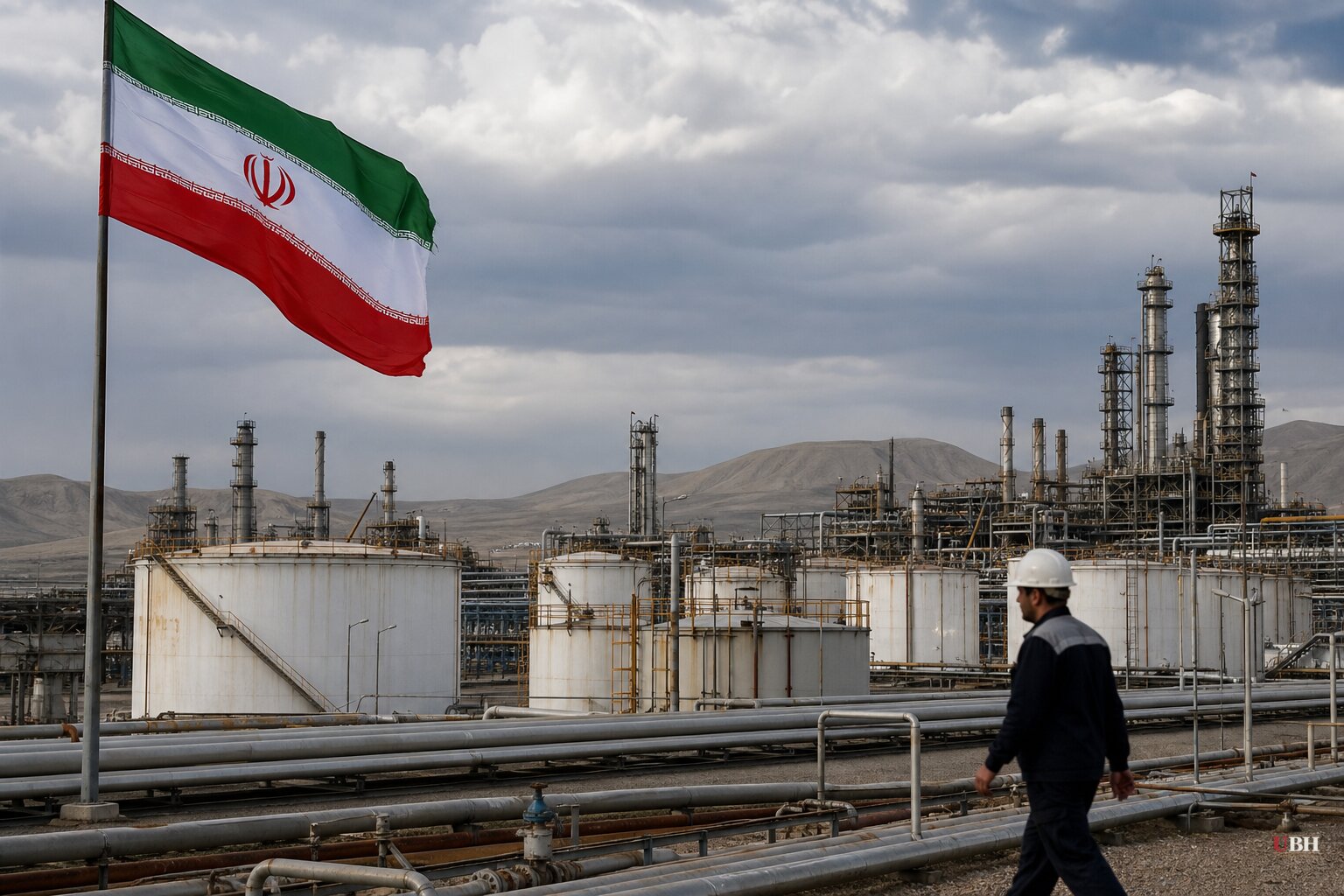
Six months after U.S. and Israeli strikes hit Iran in late February 2026, the global oil map looks like a war map. According to Reuters calculations using International Energy Agency data, countries touched by active conflict, Iran, Russia, Libya, and Venezuela, produced roughly 45 million barrels per day based on 2025 output. That's more than 43% of world supply now sitting in territory shadowed by war or sanctions.
Reuters calls it the largest oil supply crisis on record, with no clear resolution in sight. The numbers show up identically across Reuters' own distribution to Euronews, Internazionale, and U.S. News & World Report.
Iran's Oil Exports Have Cratered
The number that matters most: Iran is loading an average of about 287,000 barrels of crude per day so far this month, according to tanker-tracking data from commodities firm Kpler cited by Iran International. Before the war, that figure was roughly 2 million barrels per day. That's a drop to about one-seventh of pre-war output.
China, Iran's largest customer, has taken in roughly 523,000 barrels per day this month, down from more than 1.7 million barrels per day at the war's start. Kpler estimates more than 40 million barrels of Iranian crude are effectively stuck on tankers in the Persian Gulf and Gulf of Oman since the U.S. reimposed a maritime blockade in mid-July.
Fuel oil exports tell the same story. Iran shipped about 61,000 barrels per day this month, down from roughly 220,000 barrels per day in January and February, while liquefied petroleum gas exports have nearly stopped entirely, according to Iran International. Oil and fuel oil brought Iran $57.5 billion last year, about 55% of total exports, per Iranian central bank data.
Bessent Promises an 'Economic D-Day'
Treasury Secretary Scott Bessent said on Aug. 23 that Washington is preparing what he called an 'economic D-Day' for Tehran, framing it as the next phase after military strikes dismantled Iran's weapons production. 'We are now entering the endgame,' Bessent said, according to the Epoch Times. 'At dawn begins an economic D-Day, the single greatest financial offensive ever marshaled against an adversary.'
Bessent wrote in an Aug. 23 Financial Times op-ed that the U.S. intends to target countries that keep buying and shipping Iranian oil, though he didn't name specifics. Iran's response was blunt. Mohsen Rezaee, secretary of Iran's Supreme National Security Council, threatened on social media to block oil shipments through the Persian Gulf and Strait of Hormuz if Tehran is targeted for isolation, and warned any country backing the sanctions effort would face treatment as if it had committed 'an act of war.'
Iran has already shown it will hit tankers. The UAE's state oil company ADNOC said two of its vessels were attacked while transiting the Strait of Hormuz, CNN reported, with no group claiming responsibility. Reuters notes the Gulf disruption currently sits around 5 million to 7 million barrels per day, held down partly by Saudi Arabia rerouting oil through the Red Sea and Gulf exporters quietly moving barrels out of the strait through workarounds.
Where the Pain Is Showing Up
The Russia-Ukraine war has cut into supply too. Ukraine has struck deep into Russian refining infrastructure, including a plant near Omsk roughly 1,680 miles from Ukrainian-held territory, according to Reuters. Russia has responded by banning gasoline and diesel exports as it deals with domestic fuel shortages. Combined, the Gulf and Ukraine conflicts have knocked out about a tenth of global refining capacity.
That's showing up at the pump and in the macro numbers. U.S. diesel prices have hit record highs even with refiners running flat out, per Reuters. Higher fuel costs have fed inflation and higher borrowing costs, which Reuters ties to America's debt climbing to a record $40 trillion. The IEA has already drawn down record volumes from emergency stockpiles to soften the blow, and those releases are now mostly exhausted while global inventories keep shrinking.
NATO's response has been cautious. Gen. Alexus Grynkewich, the alliance's top military commander, convened a videoconference on Aug. 19 with defense chiefs from interested allied nations to discuss possible contributions toward protecting Hormuz shipping lanes, according to Fox News citing Reuters. Notably, this would not be a formal NATO mission, reflecting how reluctant the alliance is to get directly entangled in a Gulf shooting war.
A legitimate question sits beneath all this: does squeezing Iran's economy into collapse actually end the conflict faster, or does it push Tehran toward exactly the kind of desperate strait-blockade retaliation Rezaee is threatening? Bessent's team is betting isolation forces capitulation. Iran's own officials, including President Masoud Pezeshkian defending an earlier 60-day negotiation memorandum that expired in August, insist they haven't capitulated and won't. Neither side has offered proof the other will blink first, and the tanker data suggests the economic damage to Iran is real and accelerating regardless of who's right.
The open question for American drivers and global markets alike is simple: with IEA emergency stockpiles largely drained and refining capacity down a tenth, how much more disruption from a new sanctions round, a Hormuz incident, or a Russian refinery strike can the system absorb before diesel and gasoline prices break higher again.
Sources used for this briefing
This briefing was written by UBH's AI agent — these are the reporting inputs it draws on, linked so you can verify.


