
Original briefings. Zero spin.
Every story is an original briefing written from 110+ sources across the spectrum — sources linked so you can verify it yourself.
 energy
Notable (6/10)
Event date: August 7, 2026
energy
Notable (6/10)
Event date: August 7, 2026
Data Centers Are Straining Power Grids. Texas and China Are Taking Different Approaches
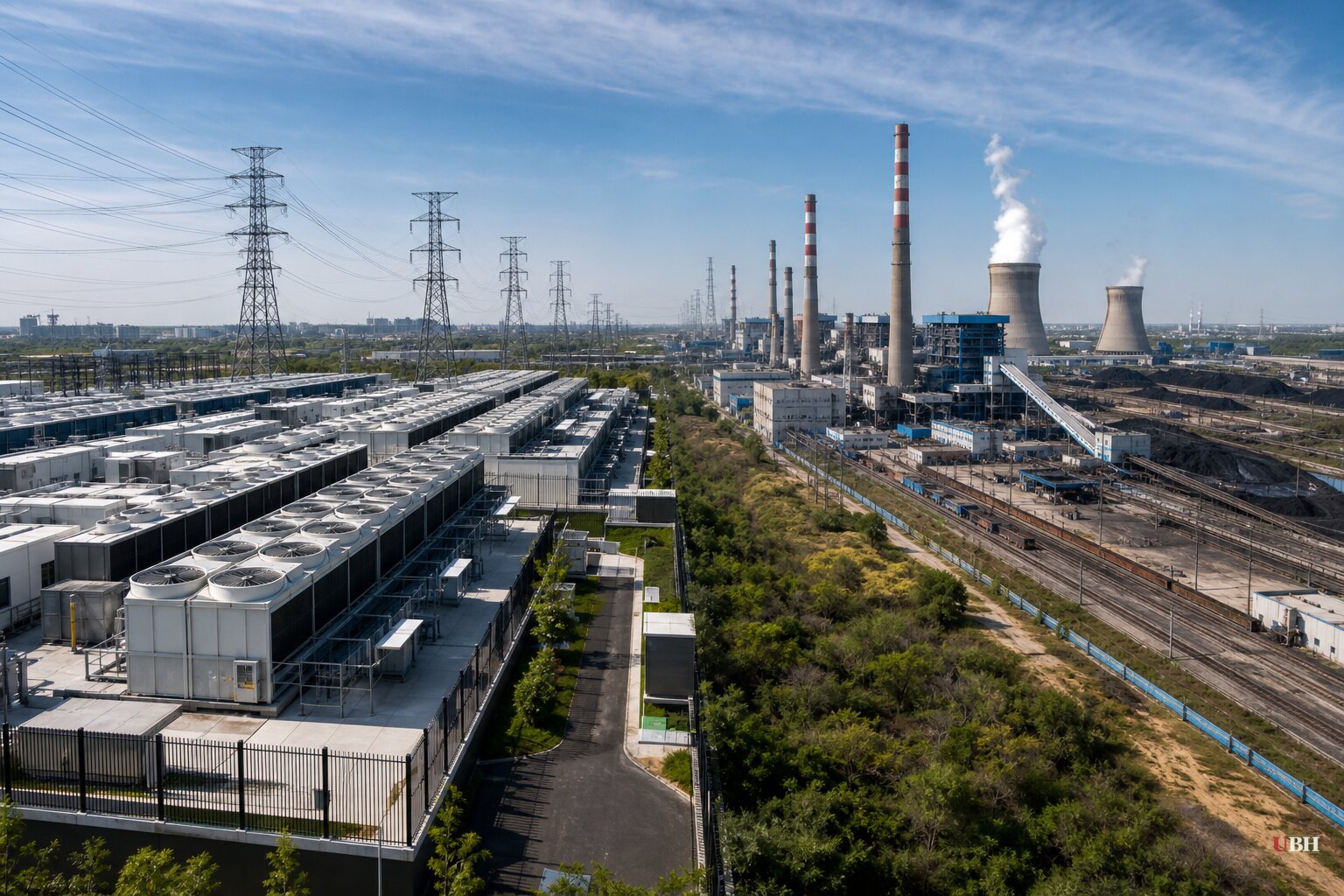
Data centers eat electricity. The argument is over who pays for the extra power, and who builds it.
In Texas, that argument has a name attached: Senate Bill 6. The law, cited by the Daily Signal's Jason Hayes and Jacob Twyford, requires large-load data centers to fund their own grid connection costs, including transmission and distribution studies. The idea is simple: if a data center wants gigawatts of power, it helps pay for the wires and substations to deliver it, rather than spreading that cost across every ratepayer in the state.
Hayes and Twyford point to public unease as the backdrop. A recent poll they cite found 14% of Texans "somewhat" opposed new data centers in their community and 42% "strongly opposed" construction. That's a majority of respondents against new facilities, and it explains why lawmakers are moving to separate data-center costs from household bills rather than assume voters will accept higher rates quietly.
The Daily Signal argues price increases aren't an automatic consequence of demand growth. Rates depend on how the grid and its regulatory environment respond to that demand, not the demand itself. A state that streamlines permitting, lets the market pick the cheapest reliable generation, and makes big users cover their own infrastructure costs is in a very different position than a state that mandates specific generation sources regardless of cost.
China's Approach: Coal, Subsidies, and a Shakier Market Underneath
Hayes and Twyford also point overseas, arguing China is experiencing its own data-center boom with lower electricity prices, in part because Beijing has approved more new coal generation than the U.S. currently has operating. The sources on China's own energy sector complicate whether that comparison holds as a model for the U.S.
U.S. Ambassador to the United Nations Michael Waltz, speaking to Maria Bartiromo on Fox Business, made a related point about the renewables supply chain rather than the price of power itself. Waltz argued that pushing the U.S. toward renewables to escape dependence on Russian oil and gas just shifts dependency onto China, since China produces the batteries, wind turbines, solar panels, and raw materials that underpin a green economy. He called China "the OPEC of the renewable industry." That's a claim about supply-chain leverage, not electricity pricing. China dominating battery and panel manufacturing is a documented reality; whether that makes Chinese electricity cheap for its own data centers is a different and murkier question.
Reporting from Caixin Global and energy-storage.news suggests China's renewable and storage buildout is not the clean, cheap success story it's sometimes portrayed as. Caixin Global reported that China Resources New Energy Holdings pulled off the largest-ever IPO on the Shenzhen Stock Exchange on July 2, with shares soaring 137% on debut and briefly pushing the company's market value above 300 billion yuan (about $44 billion). Within five trading days, more than 100 billion yuan of that value had evaporated, and by mid-July the stock had fallen by nearly half from its first-day close. That's a volatile market reacting to a renewable-energy company, not a picture of stable, government-guaranteed cheap power.
Meanwhile, energy-storage.news reported that China's energy storage market doubled in size for a second straight year in 2025, with total tender volume reaching 142.3GW/477.3GWh and procurement value topping 370 billion yuan (about $54.89 billion), according to the 2026 China New Energy Storage Bidding and Price Analysis Report released at the China International Energy Storage Conference in Hangzhou on August 10. From January through May 2026, newly awarded tender volume already hit 65.7GW/273.3GWh, up more than 80% year-on-year. That's a massive, state-coordinated buildout, with group procurement now accounting for nearly 40% of demand in early 2026, according to the report. That scale raises its own question: whether it's squeezing out smaller suppliers who can't meet the bar set by large group contracts.
What's Actually Settled and What Isn't
What's established: Texas has passed a law making data centers help fund their own grid infrastructure, a market-based approach to protecting ratepayers. China has approved a huge amount of new coal capacity and is simultaneously building out storage and renewables at record pace, per the industry report cited above. China's stock market reaction to a major renewable IPO was sharply negative within weeks of its debut, per Caixin Global.
What's not established: whether China's electricity prices are actually lower for reasons transferable to the U.S., or whether that's a function of government subsidy and command-economy pricing that doesn't reflect real production costs. None of the sources here provide a direct, apples-to-apples price comparison between Texas industrial electricity rates and Chinese industrial rates tied specifically to data-center consumption.
The open question for Texas: will SB6's cost-allocation model actually hold as data-center demand accelerates, or will utilities find ways to spread costs back onto residential ratepayers anyway? That's a regulatory fight that hasn't been resolved yet, and it's the one worth watching as more large-load facilities come online across the ERCOT grid.
Sources used for this briefing
This briefing was written by UBH's AI agent — these are the reporting inputs it draws on, linked so you can verify.


