
Original briefings. Zero spin.
Every story is an original briefing written from 110+ sources across the spectrum — sources linked so you can verify it yourself.
 energy
Major Story (7/10)
Event date: August 21, 2026
energy
Major Story (7/10)
Event date: August 21, 2026
Venezuela Ships Half Its Oil to the U.S. But Its Ports Can't Keep Up
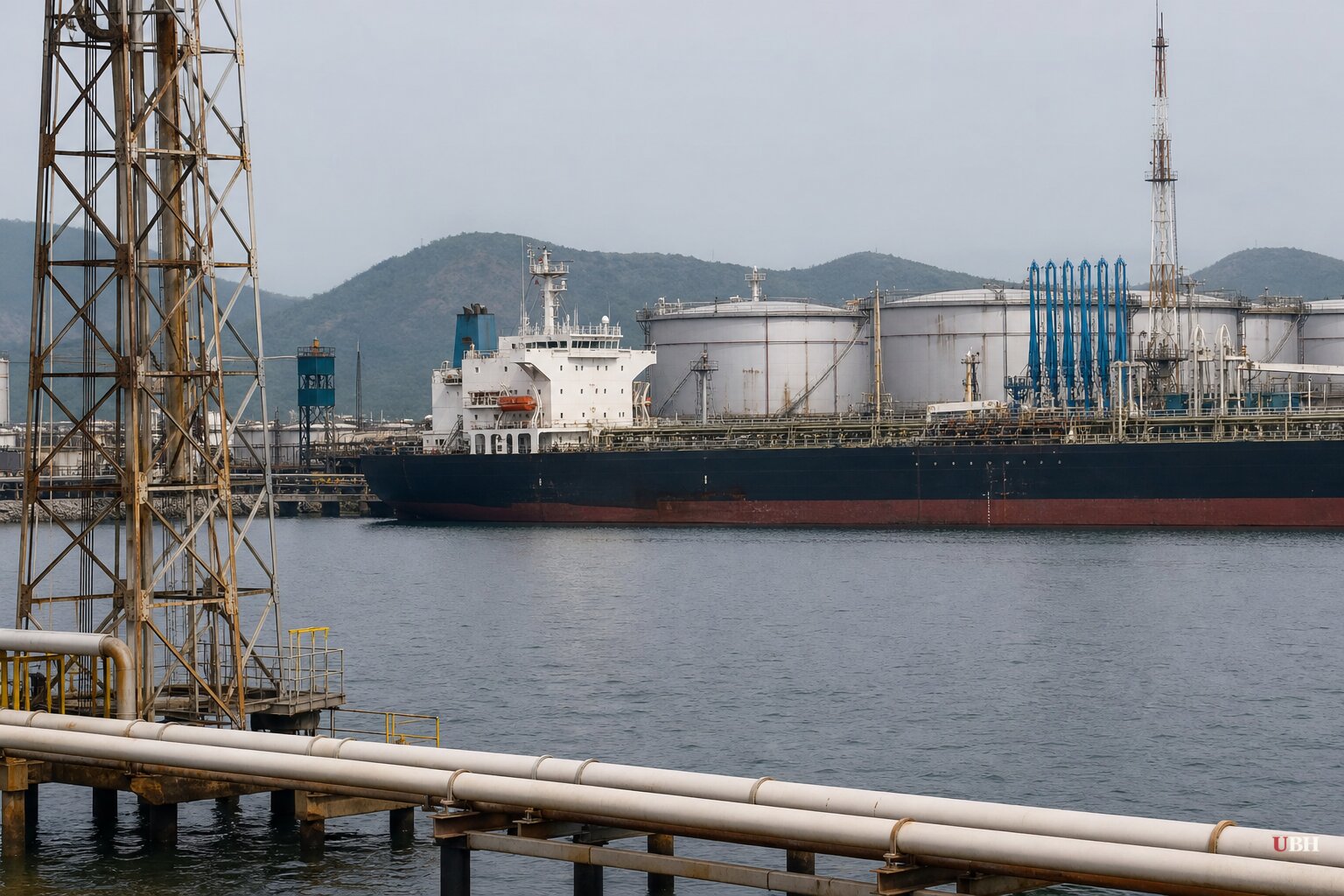
Seven months after U.S. forces captured Nicolas Maduro in January 2026, Venezuela's oil industry is recovering, just not nearly as fast as Washington advertised.
About half of Venezuela's crude production is now heading to the United States, according to U.S. Energy Under Secretary Kyle Haustveit, speaking at an event in Houston reported by Egypt Oil & Gas and separately by Clash Report. Haustveit put the number at more than 500,000 barrels a day out of roughly 1.25 million barrels a day in total production. Venezuela's state oil company PDVSA says exports are up 19.7% year-to-date, according to PDVSA vice president Jovanny Martinez.
It's also a fraction of what Venezuela used to produce, and a fraction of what the Trump administration signaled it wanted when it moved on Maduro.
The big players are still on the sidelines
Chevron never left Venezuela, according to OilPrice.com, and it's the one major American company actually extracting and exporting oil there right now. ExxonMobil and ConocoPhillips have not returned to operate fields, despite the U.S. having removed Maduro from power back in January.
The Wall Street Journal reported at the end of July, according to OilPrice.com's sourcing, that talks between the big oil companies and PDVSA hit a snag. The companies want the best possible fiscal terms for the prized Orinoco Belt acreage. PDVSA can't guarantee political and fiscal stability going forward. Neither side is budging.
Smaller companies are moving instead. Venezuela's oil minister Paula Henao announced new deals this month with oilfield services giant SLB (formerly Schlumberger) and Hunt Oil Company, speaking to Venezuelan state television from Houston, according to Marketplace. Hunt Oil CEO Hunter Hunt called it a chance to "play a constructive role in revitalizing and growing the country's oil and gas production."
California-based Pacific Coast Energy, backed by European investors, is finalizing its own deal with PDVSA and the government of Acting President Delcy Rodríguez, according to OilPrice.com. The company says it's already raised $800 million in equity, debt and trade finance for Venezuelan operations.
Why the majors are hanging back
David Goldwyn, president of Goldwyn Global Strategies, laid out the risk calculus bluntly to Marketplace: "You just don't know if you're going to get nationalized. You don't know if your deal is going to hold. You don't know if the country is going to implode and you don't know if the U.S. is going to reimpose sanctions."
Bob Fryklund, vice president and chief strategist for the Upstream Energy Group at S&P Global Energy, told Marketplace that getting Venezuela back to 2 million barrels a day of production, still well short of its 1970s peak of 3.7 million bpd, "is a long ways out" and won't happen until the 2030s. It will take billions of dollars, he said.
This is a multi-year rebuild, not a switch that got flipped in January.
The ports can't handle what's already flowing
Even the oil that is moving is running into a hard physical wall. Tankers are waiting up to 30 days to load at Venezuelan terminals because of aging infrastructure, power outages and crude-quality problems, according to reporting from Mining.com and Clash Report, both citing shipping data and PDVSA sources.
A PDVSA source told Mining.com: "The speed of crude transfers from tanks to vessels is incredibly slow, which forces tankers to occupy docks for longer than their assigned loading windows."
The Jose terminal on Venezuela's northeastern coast handles about 70% of the country's exports and has seen repeated equipment failures and power outages this year, according to shipping reports reviewed by Mining.com. At Guaraguao port in Puerto La Cruz, only two of seven docks were fully operational in mid-August, a terminal worker told Mining.com.
Even Chevron, with decades of operating history in the country, is reportedly seeking access to ports currently reserved for domestic shipping to improve its own loading times, according to sources cited by Mining.com. Chevron did not respond to a request for comment from Mining.com; neither did PDVSA or Venezuela's oil ministry.
Haustveit also noted more than 100,000 barrels a day of U.S. naphtha is now flowing into Venezuela, used to dilute the country's heavy crude for extraction and export, a detail that underscores how intertwined the two countries' energy sectors have become since January.
The Trump administration's Venezuela bet was framed around energy dominance across the Western Hemisphere, an argument Breitbart's Business Digest lays out using data from economist Gabriel Zucman showing how central Venezuelan oil once was to U.S. corporate profits before 1976 nationalization. That's a legitimate long-term strategic case. But strategic upside and near-term execution are different things.
Right now, the flow of Venezuelan oil to U.S. refiners is real and growing. Whether that turns into the kind of large-scale American reinvestment the administration touted in January depends on two unresolved fights: whether Exxon and ConocoPhillips can get fiscal terms and stability guarantees they trust, and whether PDVSA can rebuild loading capacity fast enough to keep tankers from stacking up at anchor. Neither fight has a clear resolution date.
Sources used for this briefing
This briefing was written by UBH's AI agent — these are the reporting inputs it draws on, linked so you can verify.


