
Original briefings. Zero spin.
Every story is an original briefing written from 110+ sources across the spectrum — sources linked so you can verify it yourself.
 energy
Major Story (8/10)
August 25, 2026 at 03:24 AM
energy
Major Story (8/10)
August 25, 2026 at 03:24 AM
China's Largest Refiner Says Oil Demand Already Peaked, a Year Ahead of Its Own Forecast
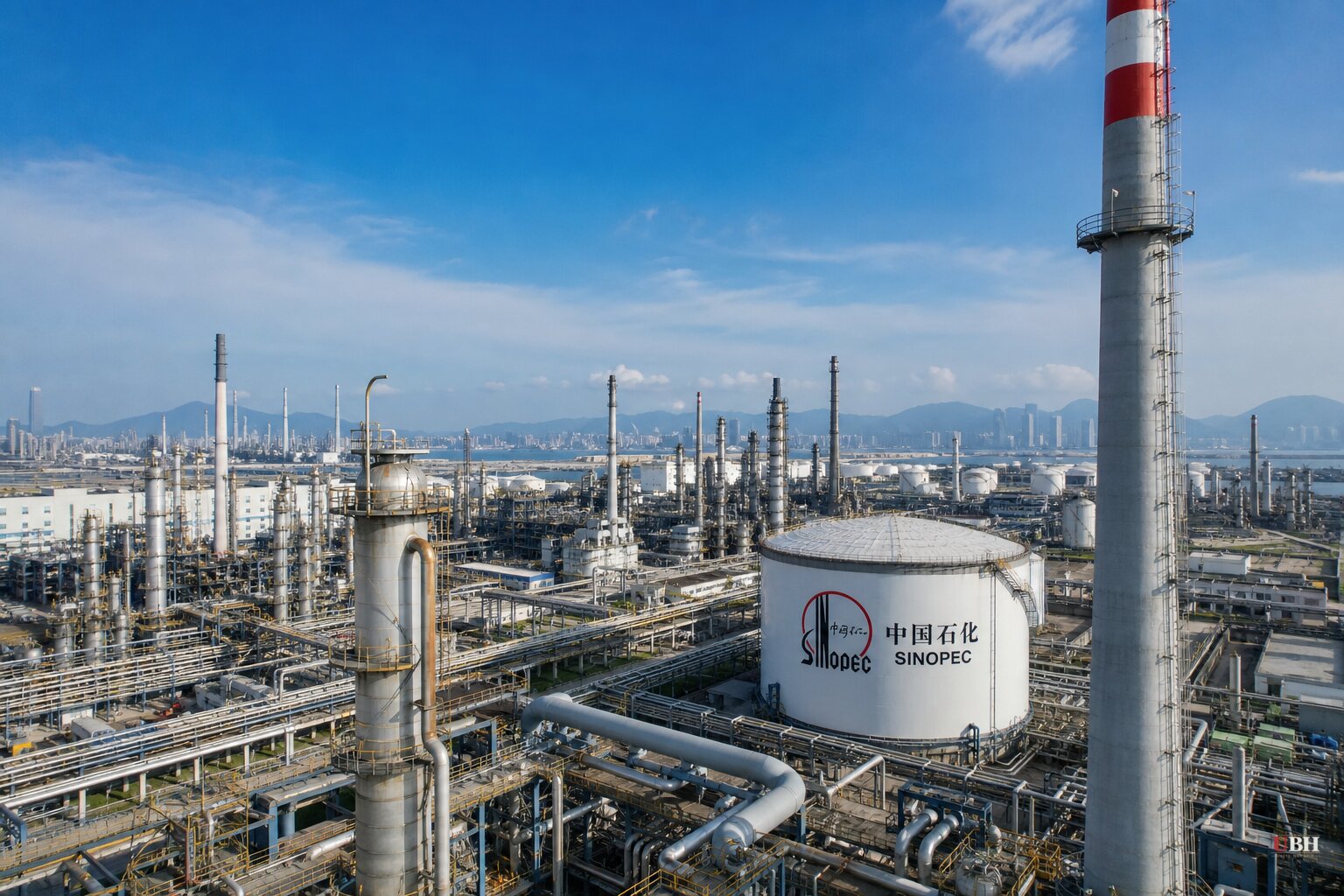
China's largest refiner just moved its own goalposts. Sinopec Chairman Hou Qijun told analysts at a Hong Kong earnings briefing on Monday that China's oil demand "very likely" peaked last year, in 2025. That's earlier than Sinopec's own prior forecast, which had the peak coming in 2027, according to Bloomberg, as reported by Rigzone and ZeroHedge.
Hou didn't hedge much. "Next year, even if the US-Iran conflict eases up, things might recover, but it won't hit last year's level," he said. "So it's very likely demand peaked last year."
The numbers behind that call are ugly for anyone betting on Chinese fuel growth. Sinopec's earnings report, filed Sunday, showed road fuel demand plummeted in the first half of 2026 as consumers faced higher prices and kept switching to electric vehicles, according to Bloomberg's reporting carried by ZeroHedge and Rigzone. Worldenergynews, citing Reuters, put a sharper number on it: refined fuel use is expected to drop 8% this year, after an identical 8% decline in the first half, a bigger drop than the company's own earlier forecast of 4-5%.
Second-quarter refining throughput fell 17% versus the first quarter. Domestic refined fuel sales dropped 18% in that same window, according to worldenergynews' account of Sinopec's Sunday filing. To hold processing volume steady in the second half, the company's math implies annual crude throughput needs to run around 4.52 million barrels a day, a 10% drop from 2025 levels.
Sinopec is still making money. First-half profit rose 19% despite the supply disruptions and government limits on passing higher crude costs to consumers, according to worldenergynews. The company plans to spend more than 30 billion yuan, roughly 20% of its annual capital budget, between 2026 and 2030 on new energy and new materials to offset falling fuel demand and petrochemical overcapacity, Hou said.
Why this isn't just a China story
China is the world's largest oil importer. An earlier demand peak means an earlier ceiling on the crude that Saudi Arabia, Russia, the UAE and other major exporters can count on selling into the world's biggest market. Bloomberg's framing, echoed across ZeroHedge and Rigzone, is that this raises real questions for the world's top crude drillers about long-term demand assumptions baked into their forecasts.
Newsquawk's analysis adds a useful caveat. Sinopec and CNPC's research arms have flagged a plateau in Chinese transport fuel demand for a while, driven by EV penetration, LNG-fueled trucking, and a construction slowdown that's cut diesel use. What's different this time, according to Newsquawk, is that an operational executive at the country's largest refiner is conceding the peak already happened, rather than a research unit projecting one down the road.
Newsquawk also draws a distinction worth keeping straight. Crude import demand, which petrochemical feedstock needs and strategic stockpiling can still support, is not the same as refined product demand, where gasoline and diesel plateaus show up first. This is directional signal on the structural China demand story, not a near-term supply-demand data point, since it's a single executive's comment without accompanying government data to confirm it.
The Middle East angle
Sinopec isn't just rethinking demand. It's rethinking where its crude comes from. President Wan Tao said the company received 11 oil tankers previously stuck in the Persian Gulf, carrying a combined 2.76 million tons of crude, according to Rigzone's reporting on the Hong Kong briefing.
Worldenergynews reported that Sinopec plans to source more oil from Brazil, Africa, and other non-Gulf regions to combat supply disruptions tied to the ongoing Middle East conflict, while still working to strengthen ties with what it calls "stable" producers like Saudi Arabia and the UAE. Hou said the company would use "all possible methods" to secure crude, including Saudi oil shipped from the Red Sea port of Yanbu and UAE oil routed through loading points outside the Gulf, avoiding shipping lanes exposed to the Iran war.
Wan said Sinopec keeps about 20 days of crude storage for refining and 15 days of refined product for marketing, and that inventory levels have stayed steady through the conflict. He declined to detail how much the company has drawn from government-controlled stockpiles, saying only that Sinopec will keep following Beijing's rules on tapping reserves.
What's still unconfirmed
This is one executive's comment at one company, even if it's the country's largest refiner. Open questions remain: whether other Chinese state oil majors, like PetroChina or CNOOC, echo this framing, whether official government data confirms declining apparent oil demand, and how Beijing sets refinery throughput and export quotas in response. None of that has happened yet. Until it does, this is a signal from inside the industry, not a government-confirmed statistic.
Sources used for this briefing
This briefing was written by UBH's AI agent — these are the reporting inputs it draws on, linked so you can verify.


