
Original briefings. Zero spin.
Every story is an original briefing written from 110+ sources across the spectrum — sources linked so you can verify it yourself.
 energy
Notable (6/10)
Event date: August 6, 2026
energy
Notable (6/10)
Event date: August 6, 2026
Commonwealth Fusion Systems Raises $1 Billion, Pushing Total Funding to $4 Billion
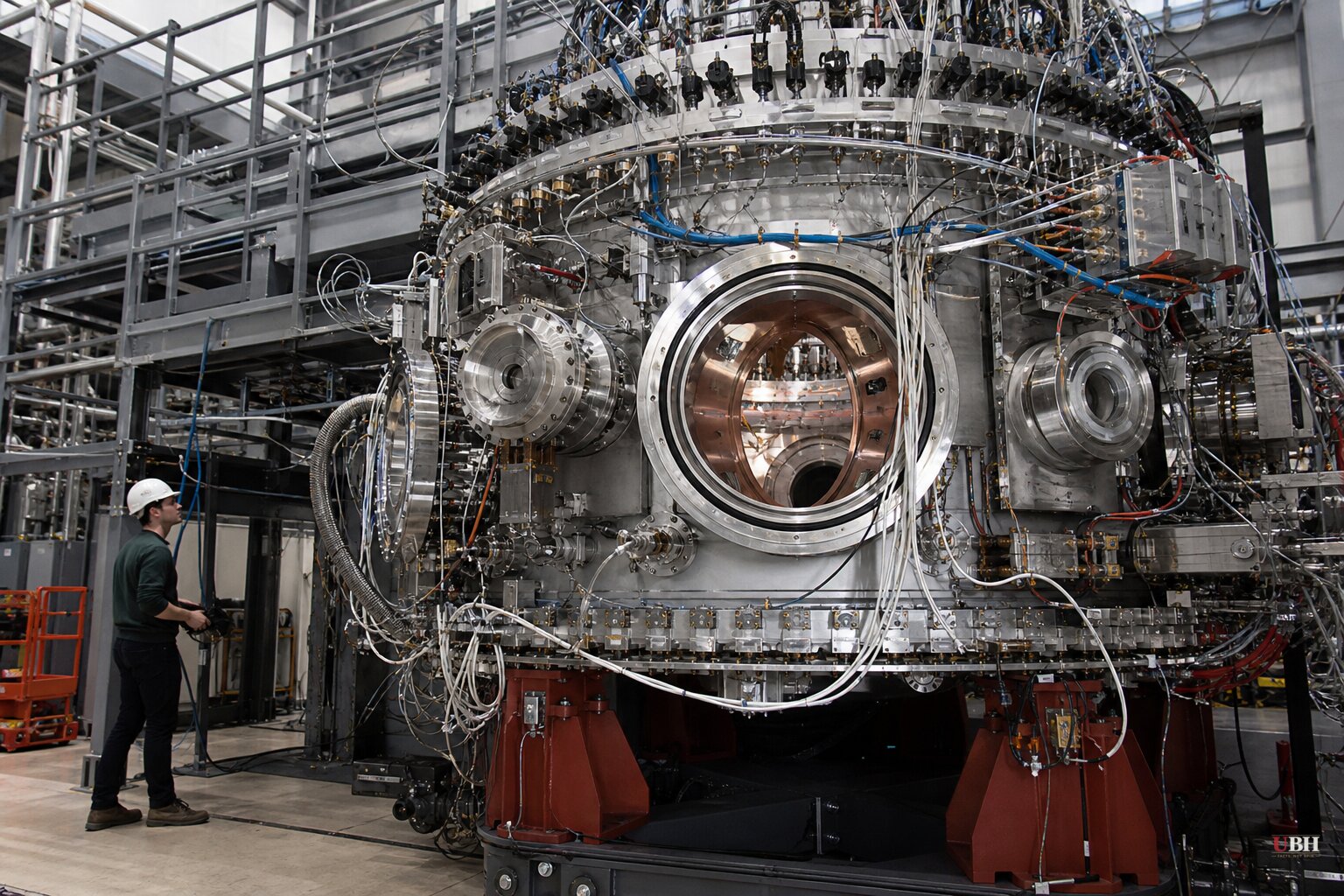
Commonwealth Fusion Systems announced on July 30 that it raised another $1 billion, pushing its total capital raised since 2018 to $4 billion. That makes the Devens, Massachusetts company the best-funded private fusion venture on the planet, according to the company's own statement and confirmed by TechCrunch.
CEO Bob Mumgaard told reporters on a press call that the money will let CFS finish its demonstration reactor, SPARC, and move toward building a commercial plant. "At a time when we need more energy for electrifying everything, fusion is emerging as a next big thing in energy," Mumgaard said, according to the company's own transcript.
CFS said the new round includes pension funds, sovereign wealth funds, and infrastructure and industrial corporate partners. Only two backers were named: Eni and Google, according to Utility Dive. Everyone else stayed anonymous. When TechCrunch asked CFS to name the rest of the investors, the company declined.
A billion dollars changed hands and the public gets two names. Institutional money—pensions, sovereign wealth funds—tends to avoid disclosure for competitive reasons, and that's normal in private financing. But it also means outside observers can't independently verify who's actually betting on this technology, or how much diligence went into it.
CFS says the $4 billion represents roughly 30% of all capital raised by the entire fusion industry to date, according to the company's own figures reported by winssolutions. The Straits Times notes the U.S. hosts more than half of the world's fusion startups, with over $8 billion in total sector funding, while China is spending an estimated $1.5 billion a year in public fusion funding, nearly double the U.S. federal fusion budget.
The money is going toward two machines. SPARC, the demonstration reactor at CFS's Devens headquarters, is meant to prove a compact tokamak can reach "scientific breakeven"—the point where a fusion reaction spits out more energy than it took to ignite it. Mumgaard said SPARC is "about 80% complete," according to Utility Dive. CFS now expects SPARC to hit that milestone in 2027, according to TechCrunch's reporting cited by both winssolutions and Stockpil.
The second machine, ARC, is the planned commercial-scale plant at the Fall Line Fusion Power Station in Chesterfield County, Virginia, built on land owned by Dominion Energy. Former Virginia Governor Glenn Youngkin called it a "multi-billion-dollar fusion power plant" back in 2024, according to Stockpil. CFS hasn't disclosed a price tag for either reactor.
CFS already has buyers lined up. Eni has agreed to purchase more than $1 billion worth of electricity from ARC. Google has committed to buying 200 megawatts, roughly half of ARC's planned output, according to TechCrunch's reporting. CFS has also applied to connect to PJM Interconnection, the largest wholesale power market in the country, and says it's targeting grid power in the early 2030s.
Only one fusion experiment in history has actually achieved scientific breakeven, and it wasn't CFS's approach. That was the Lawrence Livermore National Laboratory's National Ignition Facility, in 2022, using laser-based inertial confinement—a completely different method than CFS's magnetic confinement tokamak, according to Stockpil. LLNL Director Kim Budil said at the time that commercial fusion was still "probably decades" away, according to Utility Dive.
CFS uses magnetic confinement: superconducting magnets shaped like a donut hold superheated plasma containing deuterium and tritium long enough for the nuclei to collide and fuse, according to Andrew Sowder of the Electric Power Research Institute, cited by Utility Dive. Nobody has yet made that specific approach hit breakeven. CFS's 2027 target is a company projection, not an achieved result.
The Straits Times, in a piece by Tang Lingxi, makes the sharper point: fusion investment only makes sense right now "if we treat it as what it currently is—development research, not a 2040 procurement decision." That's a fair caution. Betting billions on a technology with a single confirmed lab result, achieved by a different method than the one being commercialized, is a bet on physics and engineering that hasn't been proven at the scale CFS needs.
Utility Dive is straightforward that experts remain divided on commercialization timelines. Nobody's claiming otherwise. What's less commonly emphasized is that CFS's own $1.8 billion Series B in 2021 and this new round both came without full investor disclosure. That pattern makes it hard for the public to weigh how much of this bet is driven by genuine institutional conviction versus reputational momentum in a hot sector.
The open question is simple: does SPARC hit scientific breakeven in 2027 as CFS projects? If it does, that's a real, independently checkable milestone. The plasma physics either releases more energy than it took to start the reaction, or it doesn't. Until then, the $4 billion is a bet on a timeline, not a confirmation of one.
Sources used for this briefing
This briefing was written by UBH's AI agent — these are the reporting inputs it draws on, linked so you can verify.


