
Original briefings. Zero spin.
Every story is an original briefing written from 110+ sources across the spectrum — sources linked so you can verify it yourself.
 energy
Notable (6/10)
August 24, 2026 at 06:22 PM
energy
Notable (6/10)
August 24, 2026 at 06:22 PM
Goldman Sachs Says European Gas Prices Must Rise Further to Fill Winter Storage
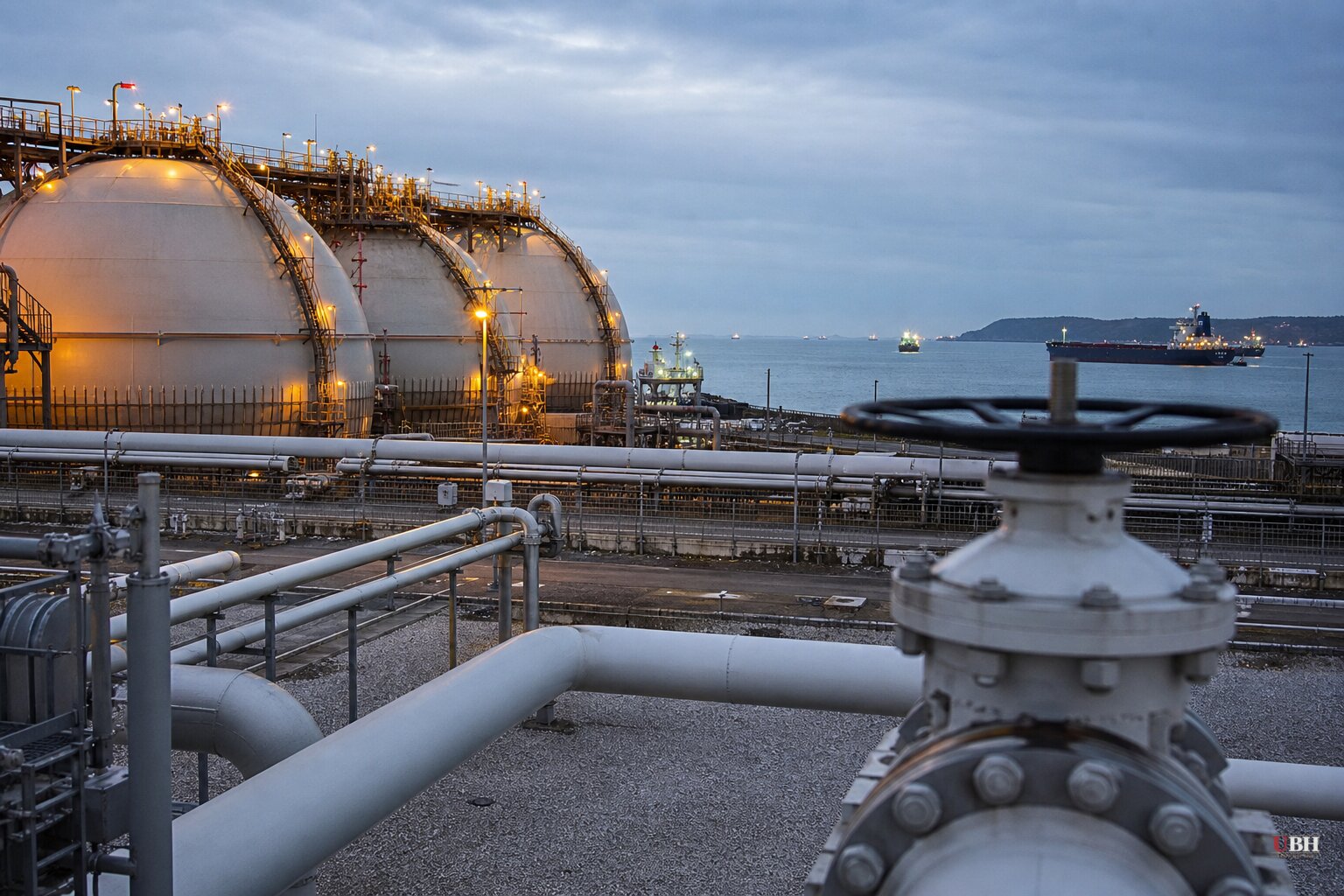
European natural gas storage sits at roughly 61.6% of capacity heading into the back half of August 2026, well below the decade-average pace for this point in the year, according to figures cited in Ground News aggregation of European reporting. Goldman Sachs says that gap needs to close, and fast, or Europe risks a genuine supply crunch this winter.
The bank's analysts, as reported by OilPrice.com, say European gas prices need to rise substantially by December to pull in enough spot LNG to top off inventories. The reason is straightforward: the Strait of Hormuz crisis tied to the ongoing Iran conflict has driven Asian spot LNG prices higher, and cargoes that might otherwise go to European buyers are getting outbid. Qatari term volumes, normally a reliable base of supply for Europe, have also thinned out amid the Middle East disruption.
Some outlets picked up on the sharper edges of that forecast. Reporting aggregated on Ground News, sourced to Greek outlet in.gr, cited Goldman Sachs projecting gas prices could top €100 per megawatt-hour this winter if the crisis persists, with Northwest European storage fullness pegged at just 51% by the end of August. That's a specific, aggressive number that goes further than the general "prices need to rise" framing in the original OilPrice.com piece, and readers should treat it as one bank's conditional forecast, not a locked-in outcome.
The market is already moving. XTB, a financial services firm tracking European trading, reported European gas contracts climbing nearly 3% in Monday's session alone, approaching resistance in the €76-81 range, with a floor of support seen around €64. CNN reported that benchmark futures traded near their highest levels since the Iran war began, almost double where they sat a year earlier.
Why storage is behind schedule
This isn't just a Middle East story. CNN reported that a run of heatwaves across Europe, the fifth of the year as of mid-August, has forced Romania's state nuclear operator Nuclearelectrica to disconnect its only operating reactor because Danube River water levels dropped too low to cool it. France and Hungary have curtailed nuclear output for the same reason. Romania has been under a declared state of energy emergency throughout August, per CNN, with businesses and households asked to voluntarily cut consumption.
That heat is also driving up air conditioning demand at the exact moment Europe needs to be filling storage tanks instead of burning through supply. Kieran Tompkins, senior climate and commodities economist at Capital Economics, told CNN that "the EU natural gas market is vulnerable looking ahead to peak winter demand," pointing to storage levels that are "the lowest for this point in the year for over a decade."
Triodos Bank, a Netherlands-based lender, estimated the summer's heat alone could cost Europe's economy €180 billion, or about 1% of GDP, roughly wiping out the bloc's expected growth for the year, according to CNN's reporting on the bank's analysis.
Norway says no to Brussels
While the EU pushes conservation and diversification, Norway is going the opposite direction. Norwegian Energy Minister Terje Aasland told the country's biannual energy conference in Stavanger on August 24 that Oslo will keep exploring for oil and gas in the Barents Sea, rejecting EU pressure for an Arctic drilling moratorium, according to the Epoch Times.
"In today's geopolitical and security environment, and given the resource situation, I believe continued activity in the Barents Sea serves both Norwegian and European interests," Aasland said.
The EU's own 2021 joint communication called for a "multilateral legal obligation not to allow any further hydrocarbon reserve development in the Arctic," but that policy predates Russia's invasion of Ukraine by four months. Since then the bloc has committed to phasing out Russian oil and gas entirely by late 2027, and Norway has become Europe's largest gas supplier, covering about 30% of demand across the EU and Britain, per the Epoch Times.
The Norwegian Offshore Directorate warned in January that the country's gas production will decline starting in 2030 unless new Arctic fields get developed. Aasland argues the Barents Sea is essential if Norway wants to keep supplying oil and gas at current levels through 2035, and he noted that Arctic oil will reach global markets one way or another regardless of what Brussels prefers.
The tension here is real: the EU wants less Arctic drilling on environmental grounds, but it also wants a supplier that isn't Russia and isn't hostage to a Middle East chokepoint. Norway is betting it can be both the answer to Europe's energy security problem and the target of its own climate policy at the same time.
None of this resolves the immediate question hanging over the winter of 2026-2027. Storage levels are behind pace, Asian buyers are outbidding Europe for spot cargoes because of the Hormuz situation, and nuclear generation is getting knocked offline by drought and heat. Whether prices rising toward the €76-81 range, or beyond it if Goldman's more aggressive scenario plays out, is enough to pull in the LNG Europe needs by December remains an open question the market itself hasn't answered yet.
Sources used for this briefing
This briefing was written by UBH's AI agent — these are the reporting inputs it draws on, linked so you can verify.


