
Original briefings. Zero spin.
Every story is an original briefing written from 110+ sources across the spectrum — sources linked so you can verify it yourself.
 energy
Major Story (7/10)
August 24, 2026 at 08:09 AM
energy
Major Story (7/10)
August 24, 2026 at 08:09 AM
Iran Threatens Fines and Seizures in Hormuz as Trump Says No Talks Are Planned
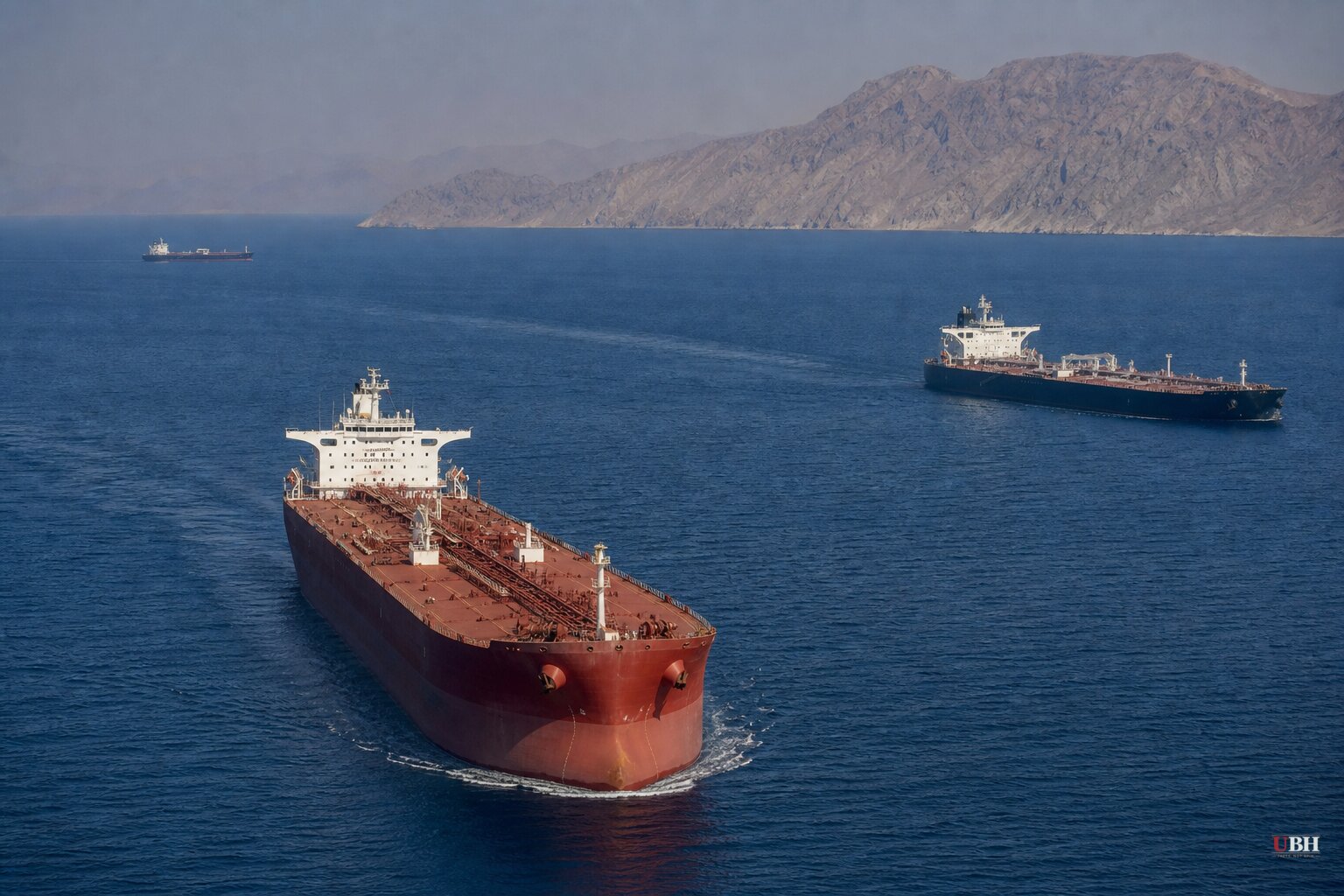
Iran has issued a warning to ships traversing the Strait of Hormuz, stating that non-compliance with transit regulations could lead to fines, detention, or seizure, according to Crypto Briefing. The strait has been a focal point of geopolitical friction, with Iran asserting control and occasionally seizing vessels it deems non-compliant, and the new warning signals a potential escalation in enforcement.
That warning, reported August 24 by Crypto Briefing, is Tehran's response to a hard fact. Traffic through the strait has been climbing fast, and Iran doesn't control the route ships are increasingly choosing to take.
The Numbers Behind Iran's Warning
UK Maritime Trade Operations data, cited by ZeroHedge, shows nearly 200 ships transited the strait last week. That's up from about 150 the week before, and just 40 two weeks before that. Traffic almost quadrupled in a two-week stretch.
Still, put that in perspective. Even at 200 ships a week, traffic sits at roughly 20% of prewar levels, when the strait carried about a fifth of the world's seaborne oil, according to the same UKMTO data.
The reason for the rebound isn't a ceasefire or a diplomatic breakthrough. It's a workaround. Vessels are increasingly using a US-backed route along Oman's coast to avoid Iranian waters entirely.
"It increasingly looks like Iran has at least partially lost control of the strait," Homayoun Falakshahi, head of crude oil analysis at Kpler, told CNN, as cited by ZeroHedge. Dan Pickering, founder of Pickering Energy Partners, told CNN the Oman route "absolutely makes the most sense" because it lets shippers dodge any toll Tehran might try to impose.
That's the context for Iran's new fine-and-seizure warning. If ships can simply route around Iranian enforcement using the Oman corridor, Tehran's threat is as much about clawing back leverage as it is about actual maritime law.
Trump: No Talks, But Also a Threat Against Oman
President Trump said Tuesday the United States has no talks planned with Iran, according to the Washington Post, while insisting the strait remains "open and operating" despite the limited traffic and a reported strike on a ship exiting the waterway.
The Post also reported that Trump threatened to bomb Oman earlier in the week, as Muscat pursued a deal with Iran to manage shipping traffic through the strait. Two regional officials told the Post that Trump made the threat if Oman "gets in the way."
This presents a contradictory position for the administration. The U.S.-backed workaround that's driving the traffic rebound runs along Oman's coast. Threatening to bomb the same country whose waters are providing the escape route from Iranian control does not appear to be a clearly coherent strategy, and the Post report doesn't explain how the administration squares the two.
Iran, for its part, says the strait won't reopen fully until the U.S. meets its conditions, according to the Washington Post. Tehran hasn't specified those conditions in the reporting available, which leaves the actual off-ramp from this standoff undefined.
Trump's American Territory Claim Still Hanging Out There
Trump told a crowd in South Carolina late Friday that he views the Strait of Hormuz as American territory. "We don't even know if we won, because I view the Strait of Hormuz as an American territory right now," he said, according to ZeroHedge.
That claim carries no legal weight under international maritime law, and no source here indicates the administration has taken any formal step to assert sovereignty or control over the waterway. It's a rhetorical marker, not a policy.
What's Actually Unresolved
The traffic numbers are real and independently tracked by UKMTO. The interpretation that Iran has "lost control" of the strait is an analyst's read, not a settled fact. Traffic recovering to 20% of prewar levels while ships still avoid a fifth of the planet's normal oil route is not the same as Iran losing the ability to interdict vessels that don't take the Oman detour.
Iran's fine-and-seizure warning suggests Tehran still believes it has enforcement leverage over ships that don't reroute. Whether Iran can actually make good on seizures, given the U.S. naval presence in the region, has not yet been tested.
The open question going into this week: does Oman cut a formal management deal with Iran despite Trump's threat, and if it does, does the U.S. actually follow through on bombing a country that's been hosting the workaround route American shippers depend on.
Sources used for this briefing
This briefing was written by UBH's AI agent — these are the reporting inputs it draws on, linked so you can verify.


