
Original briefings. Zero spin.
Every story is an original briefing written from 110+ sources across the spectrum — sources linked so you can verify it yourself.
 energy
Major Story (7/10)
Event date: June 25, 2026
energy
Major Story (7/10)
Event date: June 25, 2026
The Pentagon Can't Legally Buy the Tungsten It Needs, and China Controls Most of What's Left
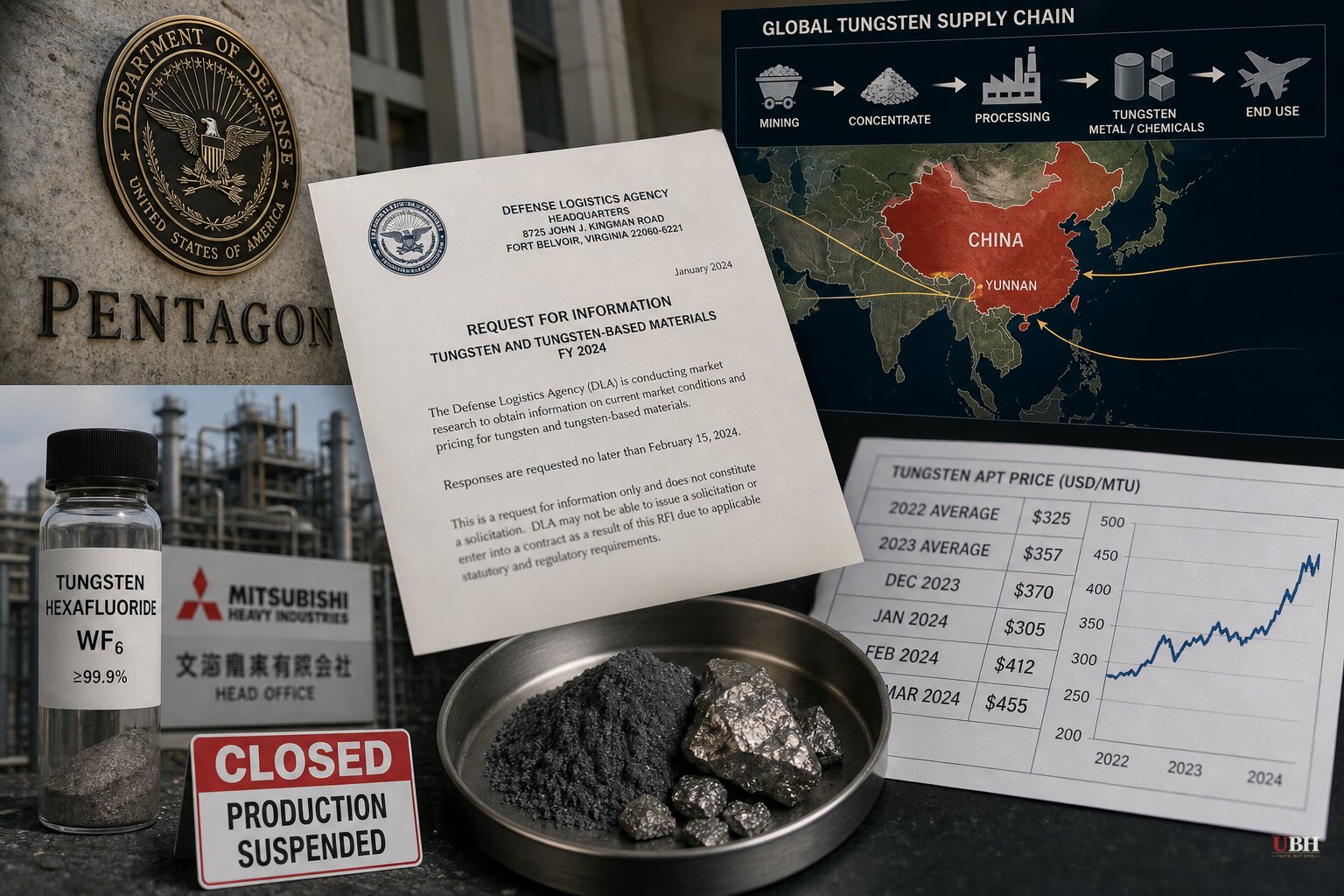
The Defense Logistics Agency, which manages America's strategic mineral reserve, went to the tungsten market earlier this year with a simple question: what would it cost to buy some. Not an order. Just a price check.
According to Almonty Industries CEO Lewis Black, writing in his company's investor newsletter, that question alone caused a small panic. Spot supply was already tight, prices were already climbing, and now the U.S. government was signaling it might step in and buy at scale. The manufacturers who already depend on tungsten to make military hardware complained loudly about a state-backed buyer entering their market. The DLA's request quietly disappeared.
There's a legal reason it went nowhere. Federal rules bar the DLA from using taxpayer money to move the market it buys in. That means the one buyer with the most urgent need, the U.S. military, can't legally purchase tungsten at the scale it actually needs without breaking its own procurement rules. Black also makes a sharper point: the day the DLA makes an open call for tungsten, it broadcasts to every rival nation exactly where America's supply chain is weakest.
That weakness didn't appear overnight. Black frames three decades of outsourcing production, mostly to China, as the root cause, comparing it to eating fast food every night for years and then being shocked by the diagnosis. Reshoring now means rebuilding mines, refineries and processing capacity that the West let atrophy. That's slow, expensive, and nowhere close to finished.
Two shutdowns nobody outside the industry noticed
The supply strain isn't limited to raw ore. According to a WEEX Crypto News report citing ZeroHedge and Almonty's Lewis Black, two Japanese chemical companies, Kanto Denka and Central Glass, together supplied roughly a quarter of the world's tungsten hexafluoride, known as WF₆. That's the gas used to lay down microscopic tungsten interconnects in advanced memory chips.
Both companies have halted WF₆ production since July 1, unable to source the high-purity tungsten powder the process requires. The raw material mostly comes from China, which tightened tungsten-related export controls starting in 2025, according to the same report.
Samsung and SK Hynix are now racing to qualify new WF₆ suppliers, and the market expects WF₆ prices to jump 70% to 90% in the second half of 2026, according to industry estimates cited in the WEEX report. A Chinese producer has separately announced plans to add 1,000 tons of annual WF₆ capacity, a reminder of how much of this supply chain still runs through Beijing regardless of who's short.
It's not just chips and missiles
Tungsten's biggest use isn't glamorous. About 60% of U.S. tungsten demand and roughly two-thirds of global demand goes into hard alloys for cutting tools and drill bits, not semiconductors or artillery shells, according to the WEEX report. That means the price pain spreads well beyond defense contractors and chipmakers into ordinary industrial manufacturing.
Ammonium paratungstate, the benchmark tungsten concentrate, is trading above $3,000 per metric ton unit of WO₃ in Western markets, according to an assessment from industry analyst Michael Dornhofer dated August 14, 2026, and cited in Almonty's newsletter. DigiTimes, in a separate report on South Korean semiconductor materials makers, cited industry tracking showing tungsten prices have surged sixfold amid tightening U.S.-China restrictions affecting chips, aerospace and defense supply chains.
Analysts quoted in the WEEX report argue that tungsten demand is inelastic in the near term. Automakers and aerospace manufacturers can't simply substitute away from it even as prices spike, because there's no drop-in replacement for tungsten's hardness in cutting tools.
The bigger AI-spending picture
This tungsten crunch is unfolding while Wall Street pours unprecedented money into AI infrastructure. CNN reported that Nvidia, now a $5 trillion company, arranged $500 billion in financing from Apollo, BlackRock, Goldman Sachs and other firms to fund customer chip orders. CNN also flagged the rise of "circular financing," where AI companies fund each other's purchases in ways that can inflate apparent growth, quoting Franklin Templeton's Max Gokhman warning that "circular financing will end badly," even as he said he still believes in the AI boom.
CNN's framing centers on financial risk: whether the money flowing into AI outpaces real profit before Wall Street's patience runs out. That's a legitimate and separate question from the physical supply chain problem laid out by Black, Dornhofer and the WEEX and DigiTimes reporting. Money can be raised in an afternoon. A tungsten mine, refinery, or a replacement for a shuttered Japanese WF₆ plant cannot be built that fast, no matter how much capital is available.
The open question is whether Washington finds a legal way to rebuild its stockpile without further spooking the market it depends on, and whether new non-Chinese mining projects, including ones Almonty and others are pursuing, come online before the current shortage forces automakers, toolmakers and chipmakers to absorb sustained price spikes that DigiTimes describes as already sixfold in some markets.
Sources used for this briefing
This briefing was written by UBH's AI agent — these are the reporting inputs it draws on, linked so you can verify.


