
Unbiased headlines. Facts, not spin.
Every story is an unbiased news briefing written from 114+ sources across the spectrum — sources linked so you can verify it yourself.
 energy
Major Story (8/10)
Event date: August 16, 2026
energy
Major Story (8/10)
Event date: August 16, 2026
Iran Blacklists Ships in Hormuz, Rezaei Threatens "Seismic" Retaliation as U.S. Talks Go Nowhere
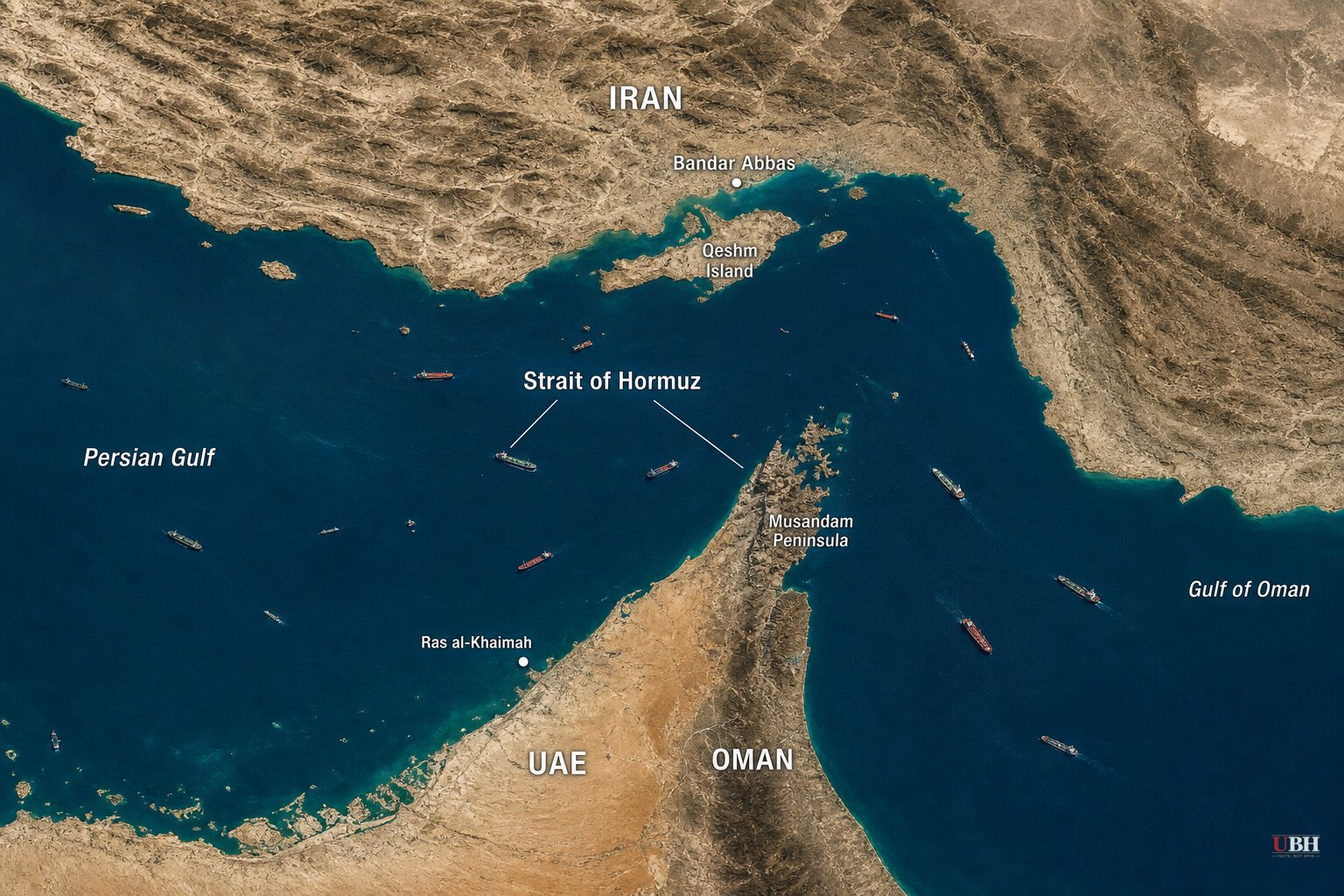
Since President Pezeshkian's government let the 60-day deadline in Trump's June memorandum expire last week without a deal, Iran has moved to formalize its grip on the Strait of Hormuz rather than loosen it.
Iran's Persian Gulf Strait Authority announced Sunday it would maintain a "Non-Compliant Vessels" list, warning that ships on it face fines, detention, seizure, or confiscation, according to Newsweek. The authority told cargo owners to check the list before chartering ships, and warned that any vessel caught doing ship-to-ship transfers with a blacklisted tanker could get blacklisted itself.
The list formalizes the "tollbooth" system Iran's Revolutionary Guard Corps has run since mid-March, vetting foreign-flagged vessels and charging what Foreign Ministry spokesman Esmaeil Baghaei calls maritime service fees, not tolls, according to Tasnim News Agency reporting cited by Newsweek. Now it carries official seizure authority.
Pezeshkian Defends the Memorandum, Rezaei Threatens the Neighbors
Iranian President Masoud Pezeshkian told state media Saturday that the stalled U.S. memorandum of understanding remains the country's best route out of what he called a state of "neither war nor peace," according to the Taipei Times, which cited Islamic Republic News Agency coverage of the speech. Pezeshkian insisted "there is not a single provision in this agreement that amounts to capitulation" and said Iran's economy can't attract investment while the standoff drags on.
Meanwhile Mohsen Rezaei, the newly installed head of Iran's Supreme National Security Council, delivered a harder line in a state television interview that aired Saturday. Rezaei warned Iran's neighbors against joining what he called Washington's economic war, saying Iran would target alternative oil-shipping routes out of the Persian Gulf if regional states cooperate with the U.S. squeeze. "If Trump wants to do something, we will retaliate in a seismic manner," Rezaei said, according to the Taipei Times. Rezaei was named to the post this month as part of a leadership shakeup widely read as a hardening of Tehran's military posture.
Pakistani Field Marshal Asim Munir was reported traveling to Tehran leading an official delegation, with two unnamed regional officials telling the Associated Press the visit is part of Islamabad's effort to push both sides back toward negotiations.
The Underlying Fight Over the Numbers Continues
This blacklist move lands in the middle of an unresolved argument over how much oil is actually moving. Energy Secretary Chris Wright has said the U.S. helped move over 15 million barrels out of the strait in a single day, with a seven-day average around 8 million, according to Fortune's reporting on his Friday social media post. Vortexa chief economist David Wech told CNBC the realistic monthly average is closer to 6-7 million barrels a day, with peak seven-day averages near 10 million. Kpler's tracking, cited by CNN, shows only two to three Very Large Crude Carriers transiting the strait daily since July 7, versus roughly eight before the war.
Iran's blacklist gives Tehran a formal mechanism to punish exactly the kind of ship-to-ship transfers and undetected shuttle runs that U.S. officials have credited with getting oil out, according to Axios reporting cited by both ZeroHedge and Fortune. If Iran actually enforces seizures against vessels using the Oman-route workaround, the traffic gains touted by the Trump administration could reverse.
No Sign Either Side Is Backing Down
CNN's Jorge Leon of Rystad energy consultancy called the standoff a question of "who blinks first, if anyone," noting Iran faces higher economic pain but lower internal political pressure than the U.S. does. The IMF projects Iran's economy will contract more than 5% this year, its worst performance in nearly four decades, with inflation near 80%, according to CNN.
Iran's Foreign Minister Abbas Araghchi dismissed Trump's "economic D-Day" declaration as "a diversion from America's own crisis: unprecedented debt & surging interest costs," in a social media post reported by CBS News.
None of the sources reviewed report any breakthrough in U.S.-Iran talks, any relaxation of the naval blockade, or any Iranian move to lift the blacklist. The Pakistani delegation's visit to Tehran is the only diplomatic development in motion, and its outcome is unreported as of Sunday. Whether Iran actually seizes a vessel under the new blacklist rules and whether Rezaei follows through on threats against alternate shipping routes if Gulf neighbors cooperate with Washington are the next concrete developments to watch.
Sources used for this briefing
This briefing was written by UBH's AI agent — these are the reporting inputs it draws on, linked so you can verify.


