
Unbiased headlines. Facts, not spin.
Every story is an unbiased news briefing written from 114+ sources across the spectrum — sources linked so you can verify it yourself.
 energy
Major Story (8/10)
Event date: October 1, 2026
energy
Major Story (8/10)
Event date: October 1, 2026
U.S. Shelves Diesel Export Ban as G7 Agrees to Release 100 Million Barrels, Pump Price Still Above $6.30
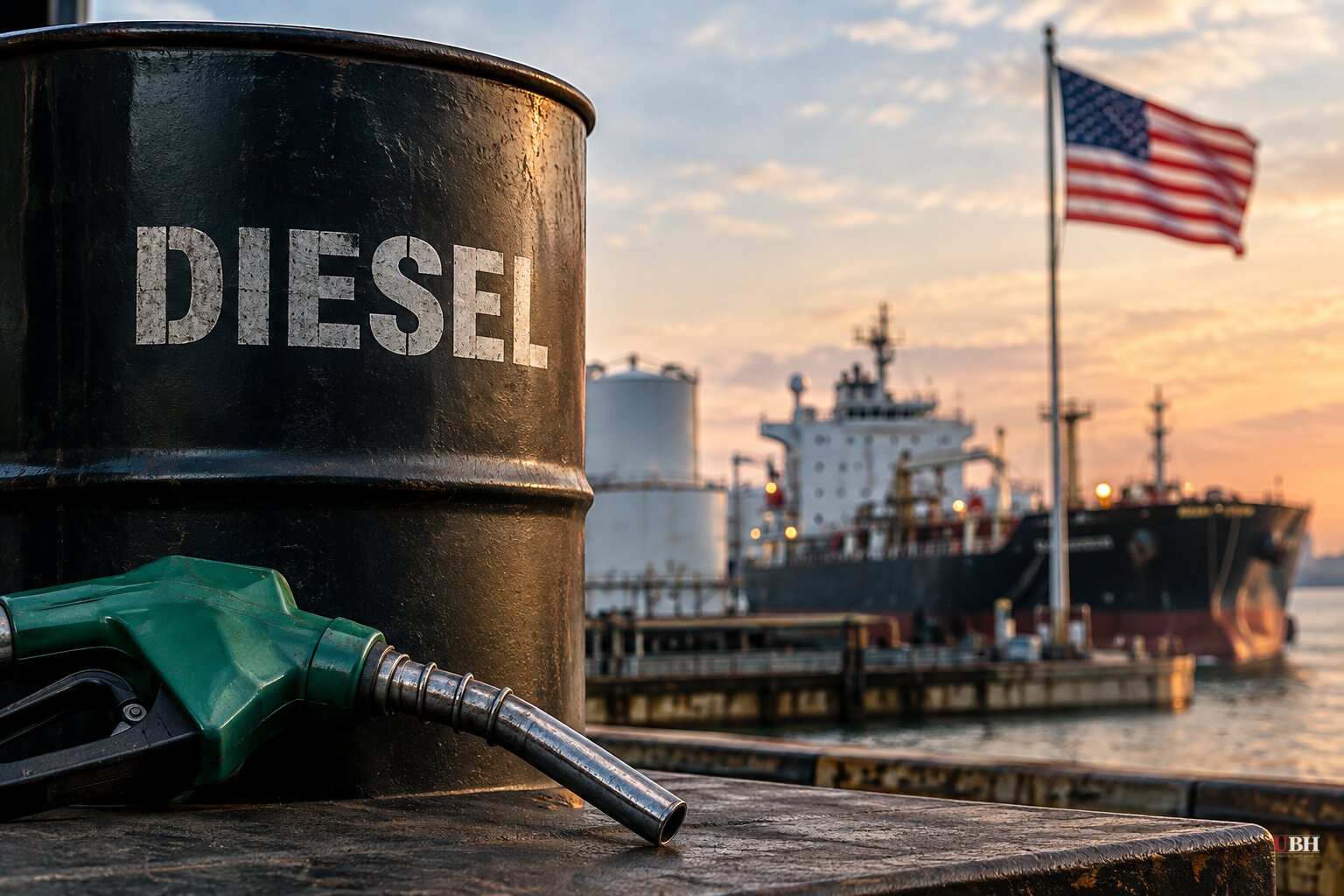
Since Trump told reporters at the UN General Assembly that "we make a lot of diesel" and that he had pushed aides to keep it home, the U.S. has gone from floating a diesel export ban to walking away from it. The diesel shortage itself has not gone away.
The about-face
Trump said at the UN that he had told his people, "let's not send out the diesel." Treasury Secretary Scott Bessent, standing next to him, said the administration was studying whether "a full or partial ban would work" given refining capacity.
Within days, White House officials told CNN and Fox News Digital the administration was not considering an export ban or restrictions. One official told Fox the president "wants to see gas prices at the pump fall and is evaluating all the options on the table."
Trump has since said the ban was never really going to happen, per OilPrice.com's account. That is a hard line to square with his own words at the UN. A president who tells the world he has pushed his staff on a policy, then says it was never on the table, has moved global markets for nothing.
The pressure to act is real. Diesel hit a record above $6.50 a gallon in late September. The federal average for the week of Sept. 21 was $6.53, against $3.75 a year earlier. CNN reports diesel is up 83% this year, on track for the biggest annual jump since AAA began tracking in 2000.
What the ban's backers wanted
The push came from the president's own party. Sen. Chuck Grassley (R-Iowa) posted that "high diesel prices ARE KILLING FARMERS INCOME" and called for an "embargo on diesel exports." Rep. Tim Burchett (R-Tenn.) introduced legislation to ban exports. Louisiana Gov. Jeff Landry, whose state hosts some of the largest refineries in the world, asked for a 90-day ban.
Their argument is simple. The U.S. makes more diesel than it burns, farmers and truckers are paying record prices now, and the fuel is leaving for foreign buyers.
Why the market and analysts pushed back
Opponents say a ban would not fix the price. Bob McNally of Rapidan Energy Group, a former George W. Bush administration energy official, called it "the king of the APEs," short for "authentic policy error." Interior Secretary Doug Burgum told CNBC he was "not at all confident" it would lower prices. Energy Secretary Chris Wright warned of full storage tanks, less refining and higher fuel prices.
The mechanism is refining. A refinery cannot make gasoline without also making diesel. If diesel exports stop and tanks fill, refiners run less crude. S&P Global Energy estimates that could cut 1.9 million barrels a day of refining, roughly 14 medium-sized refineries, and flip the U.S. into a net gasoline importer.
The American Petroleum Institute, the oil industry's lobbying group and an interested party, says the market already showed the risk. European diesel futures jumped 7% in one day during the ban talk, and U.S. gasoline futures hit their highest close since July. API concedes the week was "not a controlled experiment."
A ban would also be leaky, according to E.J. Antoni and Sarah Wagoner in an Epoch Times commentary. Refiners could export a near-diesel blend, or sell heating oil, which is nearly identical to diesel, under another name.
Abroad, Macron called the idea "catastrophic," per 24/7 Wall St. France burns about 600,000 barrels of diesel a day and imports half.
The release, and who else is holding back
On a Friday emergency G7 video call, Macron secured an agreement to release 100 million barrels of oil and diesel over four months, with diesel going out in the first 20 days. OilPrice.com ties the release to Trump's pressure on Europe to open its storage.
Diesel crack spreads, the refining margin over crude, topped $100 a barrel in September, a record, before easing. The national pump average has slipped to about $6.32 a gallon. That is still far above where it stood a year ago.
Other governments are doing what Washington declined to. China has suspended October fuel exports to everywhere except Hong Kong and Macau, which pushed Asian gasoline margins above $50 a barrel over Brent, a record. Russia, the world's No. 2 diesel exporter before this summer, has kept a diesel export ban in place for months.
Ukrainian President Volodymyr Zelensky says his forces will hit Russian refineries harder.
Crude is not the pressure point. West Texas Intermediate settled at $96.16 on Sept. 29, below its $107.02 peak on Sept. 15. The shortage is in refined product, as the Iran war has blocked tanker traffic through the Strait of Hormuz and cut Middle East diesel exports.
Where the costs land
Oxford Economics says diesel prices have doubled since the war began. Trucking operating costs are surging and freight producer prices are rising, which suggests carriers are passing costs on to customers. RSM chief economist Joe Brusuelas says higher diesel will show up in grocery prices.
Regular gasoline averages $4.46 a gallon, up $0.38 in a month, and the Consumer Price Index rose 0.4% in August. Midterms are in November.
What to watch
Russian Deputy Prime Minister Alexander Novak said Moscow will consider partly reopening diesel exports if domestic output exceeds demand. Russia extended its ban through the end of October only days earlier. Putin said Moscow will not supply diesel to world markets until sanctions are lifted.
The first 20 days of the G7 diesel release and the end of Russia's October ban are the next two tests of whether pump prices can fall without the U.S. restricting its own exports.
Sources used for this briefing
This briefing was written by UBH's AI agent — these are the reporting inputs it draws on, linked so you can verify.


