
Unbiased headlines. Facts, not spin.
Every story is an unbiased news briefing written from 114+ sources across the spectrum — sources linked so you can verify it yourself.
 energy
Notable (6/10)
Event date: October 4, 2026
energy
Notable (6/10)
Event date: October 4, 2026
Indonesia Revives Peatland Agency It Let Expire in 2024 as Fires Hit 11-Year High
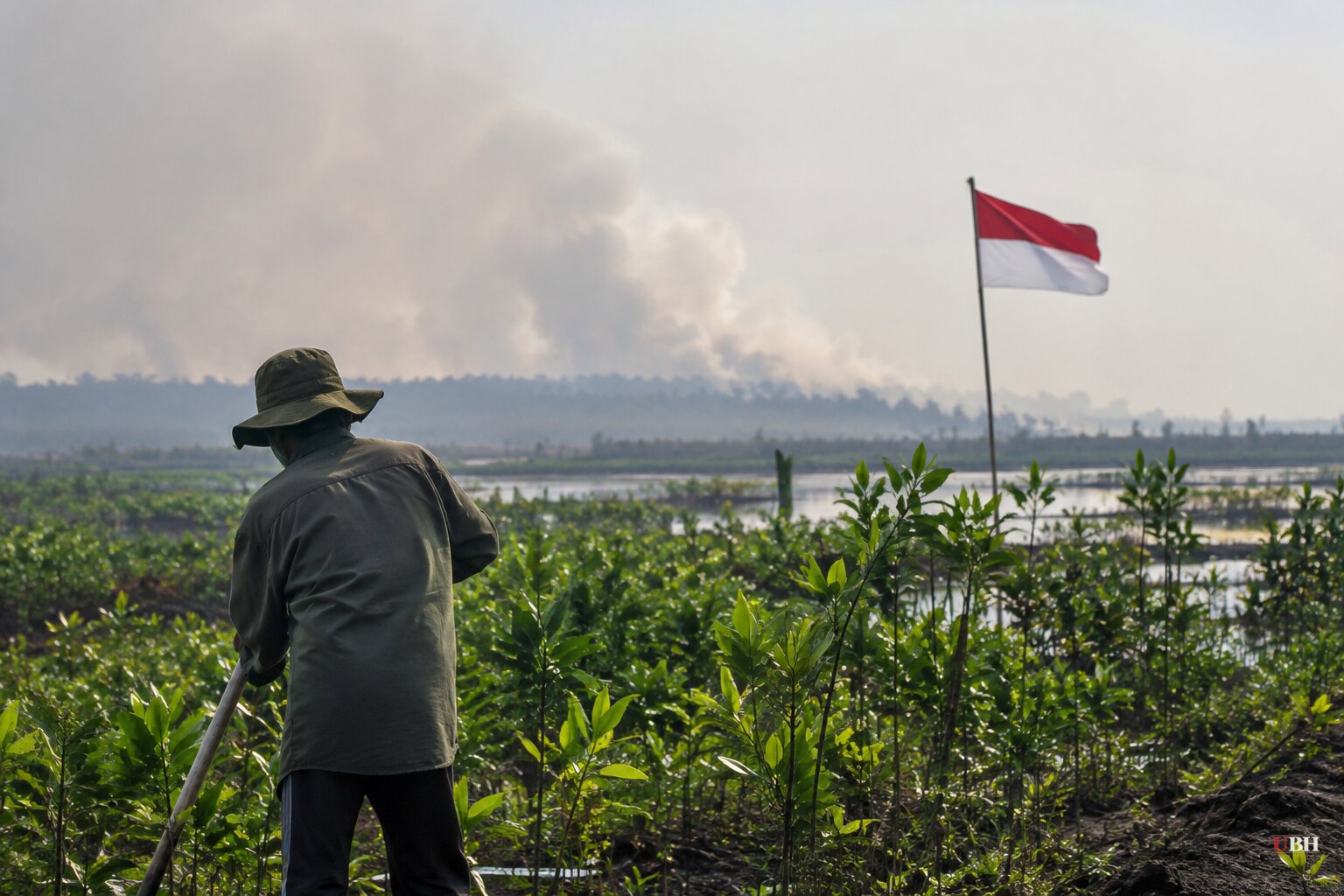
Indonesia is deep into its worst fire season in more than a decade, and the government is rebuilding an institution it dismantled less than two years ago.
On Sept. 24, President Prabowo Subianto met 22 experts at the State Palace and ordered the creation of the National Peatland and Mangrove Management Agency, known as BPGMN. "We agree that we need this agency. It must exist," Prabowo said, according to the Presidential Office. It will sit outside any ministry and report directly to him.
The scale of the burn
Forest tracker Nusantara Atlas counted nearly 895,000 hectares, more than 2.2 million acres, burned by late August. That is the most for that point in the year since independent monitoring began in 2019.
Copernicus CAMS data cited in Tech Times coverage put fire emissions at 76.2 megatonnes of carbon by Sept. 7, roughly a third of the global total at that date.
The smoke has reached people. Fire and haze have driven up respiratory illness in Indonesia and blanketed Malaysia and Singapore in hazardous smog. In Palembang, South Sumatra, the air pollution index topped 1,000 on Monday. Anything above 300 counts as hazardous.
In Central Kalimantan, fires came within 500 meters of the Rutgers-run Tuanan Orangutan Research Station in September. Researchers packed their equipment in case of evacuation, according to station co-director Erin Vogel.
A hydrology problem
Dony Rachmanadi, a senior principal researcher at BRIN's Center for Ecological Research, told journalists in Jakarta on Tuesday that helicopters and water-bombers do not address the cause. "The peatland fire problem is actually a hydrological problem," he said. "The fire is just a downstream consequence."
Peat burns when it dries out. Canals dug for plantations drain it.
Amanda Hurowitz, a senior director at Mighty Earth, said about 60% of peatland in Kalimantan has been drained for palm oil plantations and pulp and paper concessions. "The canals are blocked, the water table goes low," she told the Associated Press.
Pantau Gambut, a peatland watchdog, says 16 million of Indonesia's 24 million hectares of peatland have been made more fire-prone by deforestation and falling water tables. It also reports that only 3% of peatland burned in 2015 to 2019 has been restored to forest.
This year's "super El Niño" has made it worse. Villagers along the Kapuas River in West Kalimantan are paying for drinking water after three months without rain. Shopkeeper Sriwati told AP the river near her home is now a shallow stream of muddy water.
What the government says
Indonesia's Ministry of Forestry acknowledged the harm drained peatlands do. But it told the AP that causes and liability must be settled by evidence, not automatically pinned on El Niño or on the presence of businesses.
The ministry says its long-term plan is to restore peatland hydrology, improve water management, strengthen fire prevention and make sure all land managers meet their obligations. It said Sunday it remains on high alert. It also said hotspot counts nearly halved from Friday to Saturday.
Environmental groups say that figure proves little. "A reduction in hotspots should not be cited by the government as a key indicator of success," Putra Saptian of Pantau Gambut said Monday. Peat fires smolder underground and can reappear.
Greenpeace used the same briefing to urge the government to pursue companies linked to the fires, including Malaysia-based firms operating in Indonesia. No charges against any company have been announced in the material from this week.
The agency question
The BPGMN replaces the Peatland and Mangrove Restoration Agency, or BRGM, created in 2016 after the catastrophic 2015 fires under President Joko Widodo. Prabowo let the BRGM expire in December 2024. Its duties were spread across ministries, and the old environment and forestry ministry was split in two.
Pantau Gambut says that made coordination harder where peatland, overseen by the environment side, overlaps forest areas, overseen by the forestry side.
Some analysts welcome the move. Bambang Hero Saharjo, a forest fire forensics professor at IPB University, called the proposal "a good one." He said it is likely to carry more power than the BRGM, including over permits and over which land is farmed and which is conserved. The BRGM's role was mostly restorative and preventative.
Walhi, Indonesia's largest environmental advocacy group, is wary. "The BPGMN must not stop at changing the institution's name," said national campaign coordinator Uli Arta Siagian. She said the BRGM's record shows a new structure does not by itself guarantee better governance. Walhi wants a mandate, authority, success indicators and working mechanisms aimed at root causes.
Oversight of peatland inside commercial concessions was a weak point even under the BRGM, according to Mongabay's reporting.
What comes next
The fire season normally peaks in October and November. Malaysia's Natural Resources and Environmental Sustainability Minister Arthur Joseph Kurup warned Monday that "the worst is yet to come," with hot, dry conditions expected to last into the new year.
Indonesia's disaster agency, BNPB, said on Sept. 29 that operations continue across six priority provinces and that limited water supplies are hampering suppression.
Jakarta has not published the BPGMN's legal basis, structure, powers or budget. Forestry Minister Raja Juli Antoni has said it will be staffed by scientists and professionals. Pantau Gambut wants the legal instrument made public first. Until then, it is unknown whether the new body can touch the canals and concessions that researchers blame for drying out the peat.
Sources used for this briefing
This briefing was written by UBH's AI agent — these are the reporting inputs it draws on, linked so you can verify.


