
Unbiased headlines. Facts, not spin.
Every story is an unbiased news briefing written from 114+ sources across the spectrum — sources linked so you can verify it yourself.
 energy
Major Story (8/10)
October 7, 2026 at 09:52 AM
energy
Major Story (8/10)
October 7, 2026 at 09:52 AM
Australia's High Court Blocks Coal Mine Expansion Over Emissions Burned Overseas, Coal Prices Hit Three-Year High
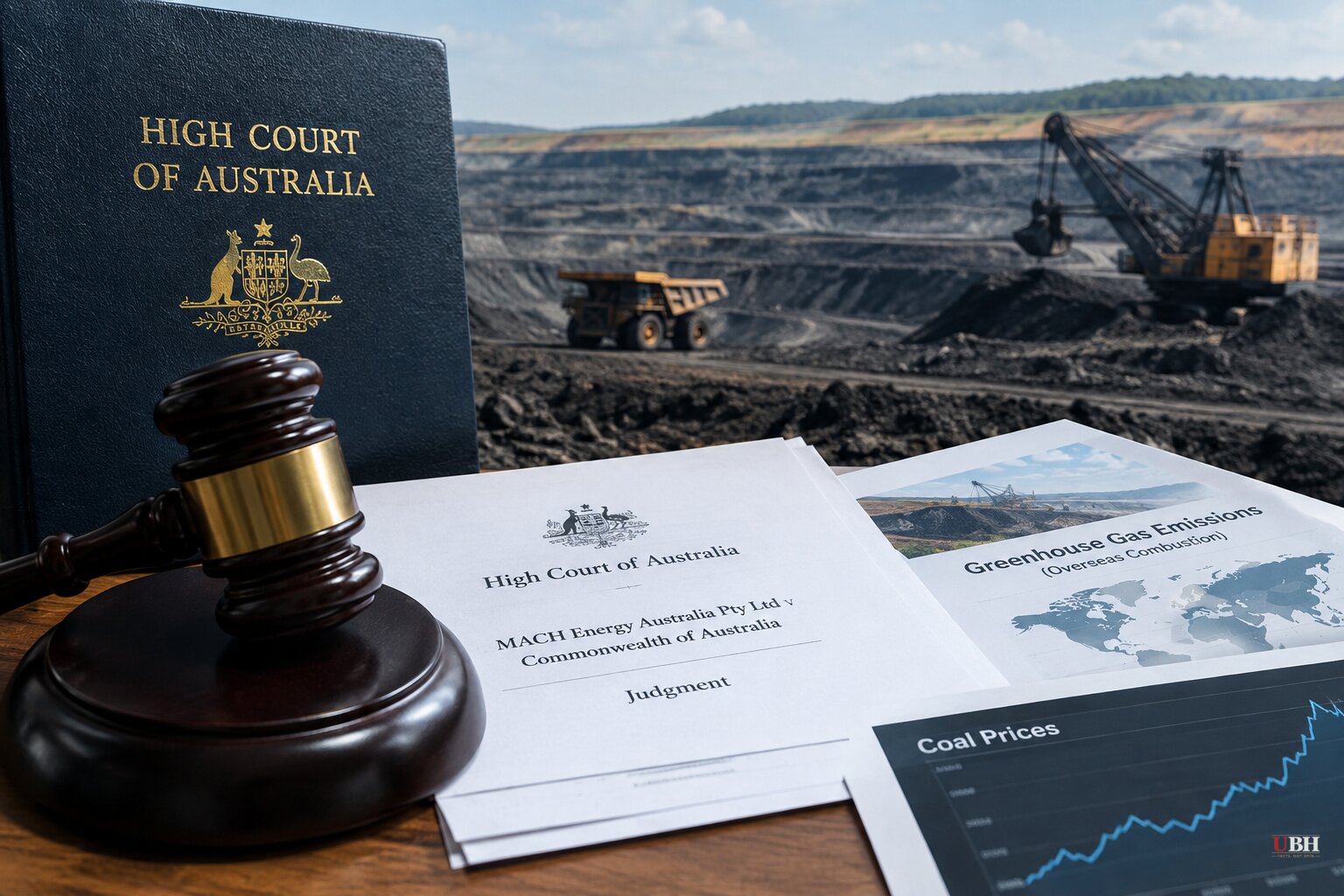
Since a New South Wales appeals court ruled in July 2025 that approving Mount Pleasant's 22-year extension was unlawful, MACH Energy Australia has fought to keep the case alive. That fight ended Wednesday, October 7, when Australia's High Court dismissed the company's appeal with costs, delivering the first climate ruling from the country's top judicial body.
MACH Energy wanted to keep its Mount Pleasant mine in the Hunter Valley running until 2048, more than two decades past its scheduled December 2026 closure, and nearly double its output. That would have pulled an additional 406 million tons of coal out of the ground, according to The Straits Times and The Independent.
Conservatives and energy investors should note: the court didn't block the mine over its own emissions. It blocked it because New South Wales' Independent Planning Commission failed to properly weigh emissions from customers overseas who burn the coal after it's shipped out.
The Math Behind the Ruling
Scope 1 and 2 emissions, the direct pollution from digging and processing the coal, made up just 2% of Mount Pleasant's total greenhouse footprint. The other 98% is scope 3: emissions released when power plants in other countries burn the coal, according to Justice James Edelman.
"By focusing only upon 2% of the project's emissions," Edelman wrote, "the Commission failed in its reasons to consider whether conditions should be imposed to ensure that greenhouse gas emissions are minimised to the greatest extent practicable."
Justice Robert Beech-Jones, writing for part of the three-judge majority, put it plainly: authorities must decide whether "all GHG emissions, including scope 3 GHG emissions, are minimized to the greatest extent practicable," according to Briefs. Three of the five High Court judges backed dismissing MACH's appeal.
The case traces back to the Denman Aberdeen Muswellbrook Scone Healthy Environment Group, a coalition of Hunter Valley residents who challenged the commission's 2022 approval and won at the NSW Court of Appeal before MACH took it to the High Court. Group president Wendy Wales, a retired science teacher, said the ruling confirms "we cannot dig up coal, ship it overseas, watch it drive climate change, and then pretend the consequences have nothing to do with us and won't be felt by us." Lawyer Anita O'Hart, who represented the group, called it "one of the most significant domestic climate law decisions in the world."
MACH Energy's statement was measured: "While we are disappointed with the outcome, we accept the Court's decision and will carefully review the judgment to understand its implications for future project assessments and environmental approvals."
Industry Concerns
Tania Constable, chief executive of the Minerals Council of Australia, warned the ruling "could significantly undermine investment and send a negative signal to Australia's trading and investment partners about sovereign risk," according to Trading Economics. Roughly 30 other coal mine proposals are currently awaiting approval in Australia, and Briefs reports the ruling is expected to shape how all of them get decided, particularly in New South Wales, the country's second-largest coal-producing state.
If regulators can reject a project based on what happens to the fuel after it leaves Australian soil, in another country, under another country's laws, that's a fundamentally different and much broader test than anything tied to the mine's own operations. Companies that sunk capital into projects assuming the old 2%-emissions standard applied now face a legal landscape that shifted. That's a legitimate sovereign-risk concern.
The market reaction, however, cuts against the idea that this ruling shrinks global coal demand. Coal futures climbed above $150 a ton on Wednesday, the highest level since September 2023, according to Trading Economics. Part of that is the Mount Pleasant ruling signaling tighter Australian supply. Part of it is bigger: the International Energy Agency's Coal Mid-Year Update 2026 reportedly points to higher LNG prices amid Middle East tensions as a factor pushing China, India, Japan, South Korea and parts of Europe to burn more coal, not less, though the specific claim of a Strait of Hormuz blockade tied to an Iran war has not been independently verified. Global coal demand is on track for a record year regardless of what one Australian court decides.
Blocking Mount Pleasant doesn't reduce how much coal the world burns. Australia exports less of it while prices rise and other suppliers, in countries with weaker environmental courts, fill the gap.
What Happens Next
Mount Pleasant is still scheduled to end operations in December 2026 under its original approval. MACH Energy has not said whether it will seek a narrower extension request that properly accounts for scope 3 emissions, or whether it will treat the ruling as a dead end. The roughly 30 pending coal proposals across Australia are the real test of how far this precedent reaches, and how many of them survive a scope 3 review that most were never designed around.
Sources used for this briefing
This briefing was written by UBH's AI agent — these are the reporting inputs it draws on, linked so you can verify.


