
Unbiased headlines. Facts, not spin.
Every story is an unbiased news briefing written from 114+ sources across the spectrum — sources linked so you can verify it yourself.
 energy
Major Story (7/10)
Event date: October 2, 2026
energy
Major Story (7/10)
Event date: October 2, 2026
Tajikistan and Kyrgyzstan Turn to Iranian Oil as Russian Fuel Supplies Dry Up
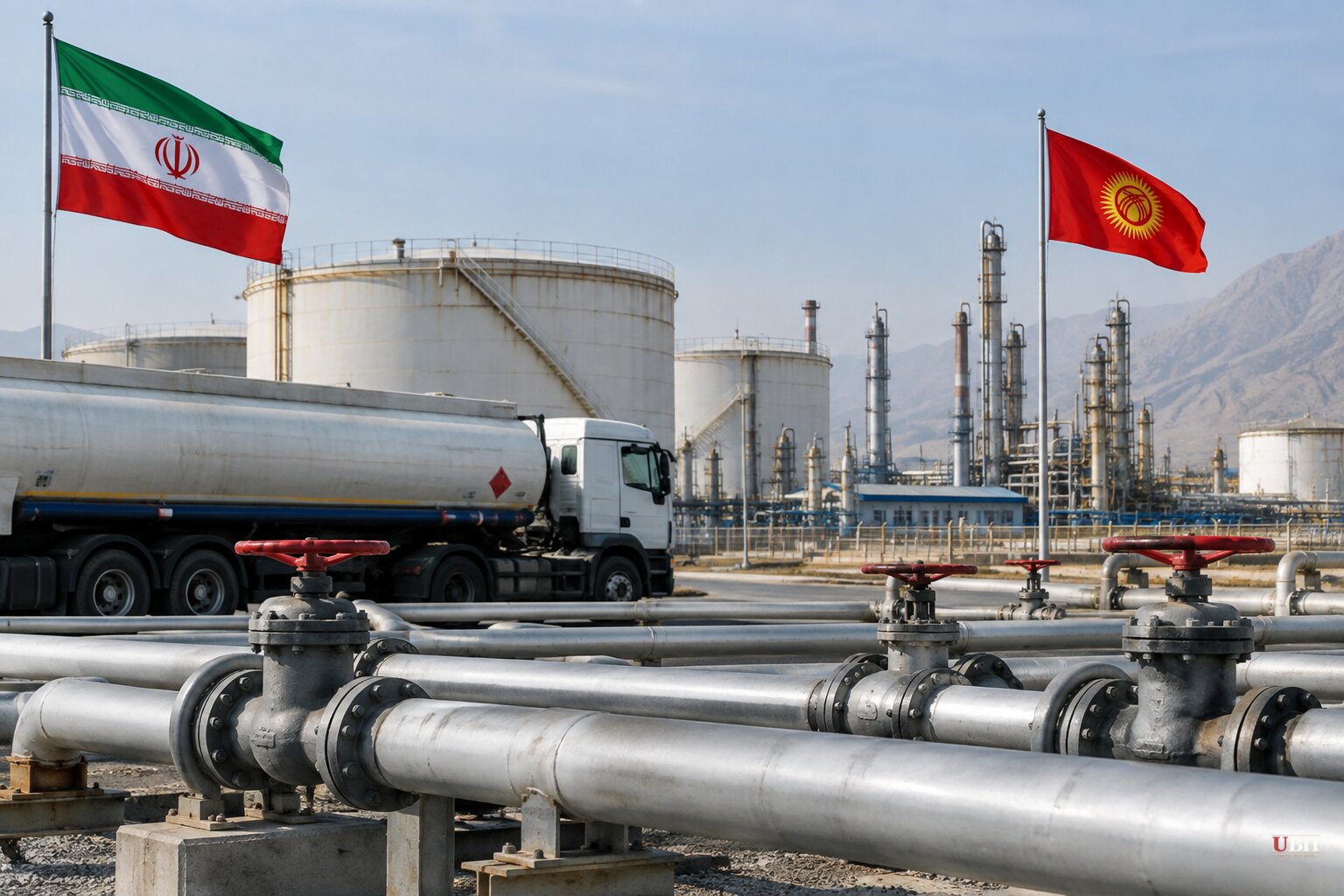
Since Tajikistan's Energy and Water Resources Ministry confirmed to the Asia-Plus news agency on September 24 that Iranian oil deliveries began in late August, Dushanbe's decades-long dependence on Russian fuel is cracking at the seams.
The numbers explain why. Russia supplied 91.1 percent of the 599,500 tons of petroleum products Tajikistan imported in the first half of 2026, according to The Diplomat's Kulobiddin Norov. That supply has been gutted by Ukrainian drone strikes that have knocked out an estimated quarter to half of Russia's total refining capacity, including the Omsk refinery, which went offline in early July.
Moscow responded by banning petrol and jet fuel exports and extending a diesel export ban month by month, most recently through October 31, according to NewsBeep. Russian drivers and their neighbors in Central Asia alike are now limited to 20-30 liters per fill-up at the pump. By July, Tajik diesel prices had climbed to $1.40 to $1.66 per liter, Norov reported.
The Iran Pivot
Tajik Energy Minister Daler Juma and Transport Minister Azim Ibrohim met Iranian Oil Minister Mohsen Paknejad in Tehran on August 15 and agreed to form a working group toward a long-term supply deal, according to The Diplomat. Dushanbe asked for up to 2.55 million tons a year: 2 million tons of crude, 300,000 tons of diesel, 150,000 tons of gasoline and 100,000 tons of jet fuel, along with discounted prices and a dedicated rail corridor through Iran.
Tajikistan's ministry has not disclosed the volume of fuel actually delivered, the price, or how it's being transported, according to OilPrice. Iran separately agreed in August to build a joint refinery in Kyrgyzstan and supply it with crude, Al Jazeera reported. Kyrgyzstan sources more than 90 percent of its petrol from Russia and, unlike Tajikistan, belongs to the Russia-led Eurasian Economic Union.
Galiya Ibragimova, a Central Asia expert with Carnegie Politika, told Al Jazeera that Tajikistan's cheap Russian fuel historically came as "payment for political loyalty, not because Putin is so kind." Edward Lemon, president of the Oxus Society for Central Asian Affairs, told OilPrice the Iran deal reflects a broader warming between Dushanbe and Tehran, two countries with shared linguistic and historic ties dating to 1992, with bilateral trade hitting $438 million in 2025.
The Sanctions Question Nobody's Answered
U.S. Treasury spokeswoman Gigi O'Connell told RFE/RL the department won't comment on specific sanctions allegations but warned that "anyone operating in that sector incurs that risk themselves" when it comes to Iran's petroleum and petrochemical industries, as reported by OilPrice. No sanctions action against Tajikistan or Kyrgyzstan has been announced.
That warning sits oddly next to a separate claim from Treasury Secretary Scott Bessent, cited by Breitbart, that Iran loaded zero crude oil onto tankers in September, the first time that's happened in Iranian history. The two facts aren't automatically in conflict. Tajikistan and Kyrgyzstan are landlocked, so Iranian supply would move by rail or pipeline, not tanker, and wouldn't show up in tanker-tracking data. But since the transit route for the Tajik shipments hasn't been disclosed, how Iran is actually moving this oil overland and in what volume remains an open question.
Iran's Shrinking Leverage at Hormuz
The Central Asia opening comes as Iran's grip on its traditional chokepoint weakens. Marine tracking firm Kpler reported that Middle East oil shipments excluding Iran reached at least 16.5 million barrels per day in September, with about 40 percent of Gulf crude now leaving without transiting the Strait of Hormuz, up from 17 percent before the U.S.-Israeli conflict with Iran began in late February, according to the Epoch Times. Saudi Arabia and the UAE have been racing to build pipeline and port capacity specifically to route around the strait.
"Iran's regime has lost control of the Strait of Hormuz," Alexander Stahel, founder of Burggraben Holding, said in a post cited by the Epoch Times. Goldman Sachs separately estimated Gulf exports have returned to roughly 23.3 million barrels per day, near 2025 averages.
A Deeper Russia-Iran Architecture
A 44-page Russian government roadmap obtained by Fox News Digital, titled "Plan for Cooperation Between the Russian Federation and the Islamic Republic of Iran for 2024-2026" and approved September 2, 2024, lays out plans for alternative financial channels, nuclear cooperation, Iranian production of Russian aircraft components and new transport routes toward the Persian Gulf. Keti Korkiya of the Foundation for Defense of Democracies told Fox News the document's value isn't any single project but the "architecture" Moscow is building to blunt Western sanctions pressure. Fox News noted the document predates the current U.S.-Iran war by more than a year, so it doesn't establish which of those projects are still active.
The picture is a Kremlin-Tehran relationship deepening on paper even as Russia's own fuel crisis pushes its Central Asian client states toward Iranian suppliers, and as Iran's maritime oil leverage erodes in the Gulf. Whether Washington treats the Tajik and Kyrgyz deals as sanctionable activity, or looks the other way given the humanitarian fuel shortage driving them, is still unanswered. Treasury has issued a warning. It has not issued a penalty.
Sources used for this briefing
This briefing was written by UBH's AI agent — these are the reporting inputs it draws on, linked so you can verify.


