
Unbiased headlines. Facts, not spin.
Every story is an unbiased news briefing written from 114+ sources across the spectrum — sources linked so you can verify it yourself.
 energy
Notable (6/10)
October 7, 2026 at 04:03 AM
energy
Notable (6/10)
October 7, 2026 at 04:03 AM
Venezuela's Cardón Refinery Shuts Down After Gas Line Explosion, No Injuries Reported
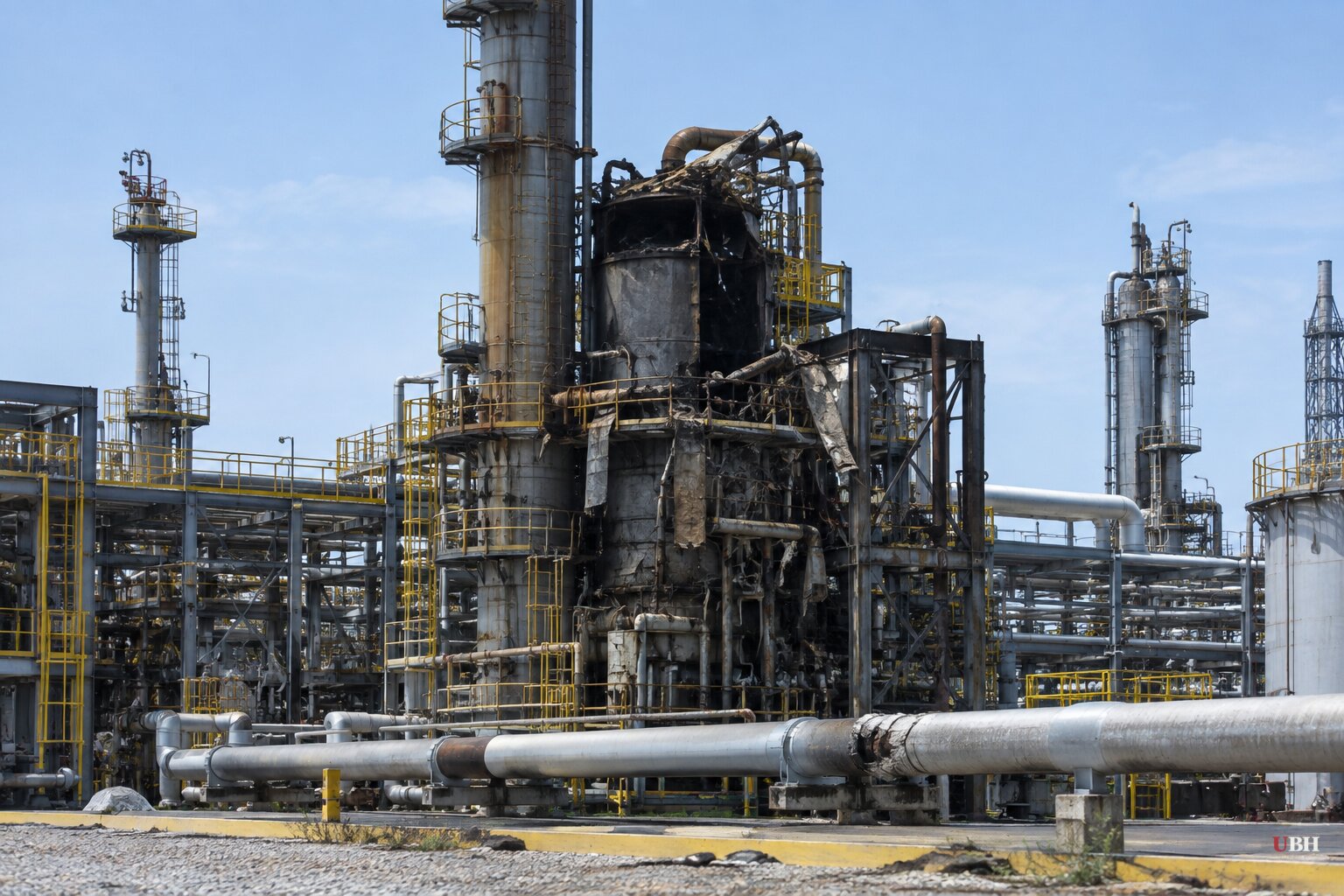
Venezuela's energy infrastructure took another hit this week. Around 3:20 p.m. local time on Tuesday, October 6, a gas line tied to the diesel hydrotreater at the Cardón refinery in Punto Fijo, Falcón state, ruptured and ignited, according to Reuters reporting cited by both ZeroHedge and Energy News Beat. Eight sources told Reuters the explosion forced a full shutdown of the plant, including its boilers.
The fire broke out in the lubricants area near the facility's flare stack, according to Anadolu Agency, which reported that PDVSA's industrial firefighters and Venezuela's National Risk Management System deployed emergency protocols. The blaze was brought under control in under an hour, Energy News Beat reported, and no injuries have been reported by any outlet covering the incident.
Cardón is the second-largest refinery in Venezuela, with nameplate capacity of 310,000 barrels a day. It forms half of the Paraguaná Refining Center alongside the larger Amuay refinery (645,000 bpd), making Paraguaná one of the biggest refining complexes in the world on paper, rated at roughly 955,000 bpd combined, according to ZeroHedge and Energy News Beat.
The U.S. Energy Information Administration, cited by ZeroHedge, says Paraguaná "has been operating at a fraction of capacity for the last decade because of lack of maintenance." Energy News Beat's reporting backs that up with numbers: system-wide, PDVSA's refining network processed about 450,000 bpd in February 2026, only 35% of its 1.29 million bpd of installed capacity, and that fell further to roughly 399,000 bpd, or 31%, by April. Paraguaná itself was running somewhere between 237,000 and 287,000 bpd in that stretch, a shadow of its rated output.
Cardón was already partly crippled before Tuesday's fire. Its crude distillation unit and fluid catalytic cracker had been shut down last month for lack of feedstock, according to Energy News Beat. PDVSA had not issued a damage assessment or restart timeline as of the latest wire reports.
No official cause has been confirmed. A local source cited by El Nacional's José Gregorio López suggested unofficially that the fire may have started from a compressor malfunction, but that account is unverified and PDVSA had not issued an official version of events. Nobody in these reports, including the Venezuelan government, has alleged sabotage or any deliberate act. Given the plant's documented record of deferred maintenance, equipment failure is the far more obvious explanation than any external cause, and no source makes a different claim.
What it actually does to the oil market
Newsquawk's trading desk analysis offers the most useful framing for anyone wondering if this moves prices. Unplanned outages at Venezuelan refineries are, in Newsquawk's words, "a recurring feature of that country's output picture" driven by chronic underinvestment and unreliable utilities, not an isolated shock.
A refinery fire isn't the same as a crude supply disruption. It reduces domestic product output and can actually push more raw crude onto the export market if the unit can't restart quickly, according to Newsquawk, which means the near-term effect is tighter product markets paired with slightly looser crude balances, not a straightforward price spike.
The bigger question, per Newsquawk, is whether this fire hit "core process units" that take months to fix, as opposed to a contained blaze with a short restart. Given that Cardón's crude distillation and cracking units were already offline for feedstock shortages last month, the practical difference between "down for maintenance" and "down from an explosion" may be smaller than it sounds.
Who actually feels this
This hits Venezuela's own fuel supply far harder than it hits anyone in Washington or Beijing. Energy News Beat notes that Paraguaná has historically split output roughly 55% domestic, 45% export, but in practice finished-fuel exports have collapsed as utilization cratered, forcing Venezuela to import naphtha and gasoline components just to cover its own shortfalls.
The commercial link between Venezuela and U.S. Gulf Coast refiners runs mainly through crude oil shipments, not finished Cardón products, according to Energy News Beat, which also notes that under broader U.S. authorizations, Venezuelan product shipments to the United States rose sharply in the first half of 2026, mostly residual fuel oil and unfinished oils rather than gasoline. ZeroHedge adds that increased U.S. involvement in Venezuela's oil sector has likely rerouted some Paraguaná flows that once went to China, Singapore and Cuba.
For ordinary Venezuelans already living through 16-hour blackouts and watching protests spread across nine states, a knocked-out refinery means one more thing: longer lines at the pump in a country sitting on some of the largest proven oil reserves on Earth. PDVSA has not said when Cardón will restart.
Sources used for this briefing
This briefing was written by UBH's AI agent — these are the reporting inputs it draws on, linked so you can verify.


