
Unbiased headlines. Facts, not spin.
Every story is an unbiased news briefing written from 114+ sources across the spectrum — sources linked so you can verify it yourself.
 energy
Major Story (7/10)
October 7, 2026 at 10:09 AM
energy
Major Story (7/10)
October 7, 2026 at 10:09 AM
America's Power Grid Faces a New Risk Map, and a Costlier Winter to Go With It
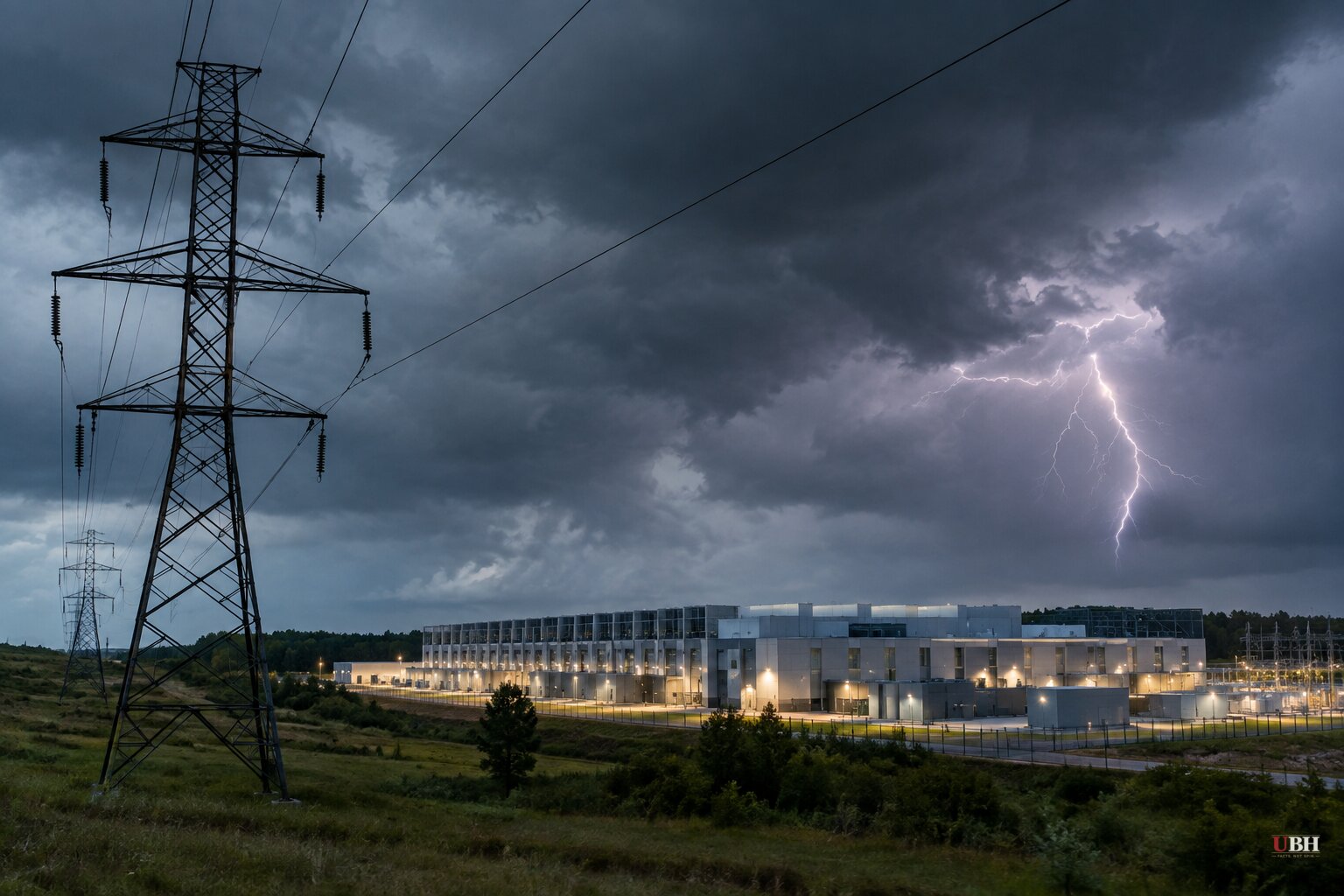
The storm threat has shifted, and so has the exposure
Hurricanes used to be the headline risk for America's power grid. Not anymore.
Severe thunderstorms now account for 40% of modeled global insured catastrophe risk, compared with 27% for hurricanes, according to analysis from risk analytics firm Verisk, reported by Axios. That is a structural shift in where the money and the damage are concentrated.
Part of the problem isn't the weather itself. It's what America keeps building in its path. New energy infrastructure and data centers are going up in storm-prone areas, according to Axios, which means developers and insurers have more to lose every time a storm rolls through.
Verisk's Jay Guin offered a reality check that cuts against the easy narrative. He told Axios that growing exposure, more than climate change, is the dominant driver of rising insured losses. Translation: it's not just that storms are worse, it's that more expensive property keeps getting built where storms already happen. This changes the policy conversation from "stop climate change" to "stop building in flood plains and tornado alleys." Guin's bottom line, per Axios: "There is no ... safe climate zone."
The geography of the risk is also moving. Tornado activity has increased about 10% in the Mid-South while declining by a similar amount from the Texas Panhandle through western Kansas, according to NOAA scientist Harold Brooks, cited by Axios. For infrastructure specifically, Brooks said the biggest thunderstorm-related concern isn't wind. It's flooding.
Winter heating bills are set to climb hard
Americans are facing a rougher winter on cost. The National Energy Assistance Directors Association projects home energy costs will rise 8.7% this winter, more than double the latest annual inflation rate of 3.4%, according to TIME.
That hits hardest in the Northeast, where nearly 5 million households depend on heating oil, per TIME. Heating oil costs specifically are projected to rise more than 31% this winter. TIME attributes a large share of that increase to broader geopolitical tensions in the Middle East, including strain between the U.S. and Iran, pushing up oil prices globally.
Gas prices back that up on the consumer side. A 14-gallon tank now costs about $62, compared with $44 a year ago, based on AAA's national averages cited by TIME. For someone filling up weekly, that's roughly $912 in added annual fuel costs if the gap holds.
TIME also cites a CNBC poll finding 63% of U.S. adults are living paycheck to paycheck, meaning there's little room left to absorb a bigger heating bill without cutting something else, whether that's groceries, medical care, or safety margins on home heating itself.
A louder, less certain warning
The Daily Wire, in an opinion piece, goes further, framing the situation as a potential "historic energy crisis" rather than a cost squeeze. It cites unnamed analysts at major financial institutions, including JPMorgan, warning the global energy system could approach an operational floor, where pipelines lose pressure and refineries are forced to shut down. No specific JPMorgan report or named analyst is cited in the piece, and the claim should be read as a warning scenario, not a confirmed event.
The same Daily Wire piece undercuts the simple "Middle East tensions cause high gas prices" story it opens with, pointing out that most Middle East oil exports go to Asia, not the Americas. It leans instead on Germany's nuclear phase-out and a firewood shortage as a cautionary tale about energy policy choices elsewhere in the world. That's a real anecdote about Europe, but it is not evidence of an imminent U.S. fuel shortage, and the piece does not establish a direct supply mechanism connecting German firewood prices to American refinery capacity.
Remote grids and the rise of going it alone
For states and territories with isolated grids, the exposure is structural, not just cyclical. The National Governors Association reconvened state and territory leaders from Alaska, American Samoa, the Commonwealth of the Northern Mariana Islands, Guam, Hawai'i, and Puerto Rico on September 15 in Anchorage, in partnership with Alaska Gov. Mike Dunleavy and with support from the Department of Energy's Office of Cybersecurity, Energy Security, and Emergency Response. The focus: communities at the "end of the line" can face weeks or months of recovery time after an outage, and heavy dependence on diesel fuel leaves them exposed to tight supplies and high prices.
Some communities aren't waiting on utilities or federal agencies to fix this. In Hunters Point, an 86-home planned community in Cortez, Florida, rooftop solar and garage battery storage let residents keep power through hurricanes Helene and Milton in 2024 while neighboring areas went dark for days, according to National Geographic. Resident William Fulford told the outlet: "In both these hurricanes, we never lost power, zero."
The U.S. now has more than 5,000 microgrid projects in operation, according to research firm Wood Mackenzie, cited by National Geographic, though they still generate less than 1% of the nation's power. More than 600 have come online in recent years, per the Business Council for Sustainable Energy. Matt Abele of the North Carolina Sustainable Energy Association called it a shift away from relying on one centralized, utility-controlled plant toward communities generating their own power.
What's still unresolved: whether NEADA's 8.7% heating-cost projection holds up once winter weather actually arrives, and whether federal or state resilience funding, like the DOE programs discussed at the Anchorage roundtable, scales fast enough to help islanded grids before the next major outage rather than after it.
Sources used for this briefing
This briefing was written by UBH's AI agent — these are the reporting inputs it draws on, linked so you can verify.


