
Unbiased headlines. Facts, not spin.
Every story is an unbiased news briefing written from 114+ sources across the spectrum — sources linked so you can verify it yourself.
 energy
Major Story (7/10)
October 7, 2026 at 09:53 PM
energy
Major Story (7/10)
October 7, 2026 at 09:53 PM
Syrian Oil Chief Says Iraq Asked to Truck Crude to Baniyas, First Convoys Possible by Mid-October
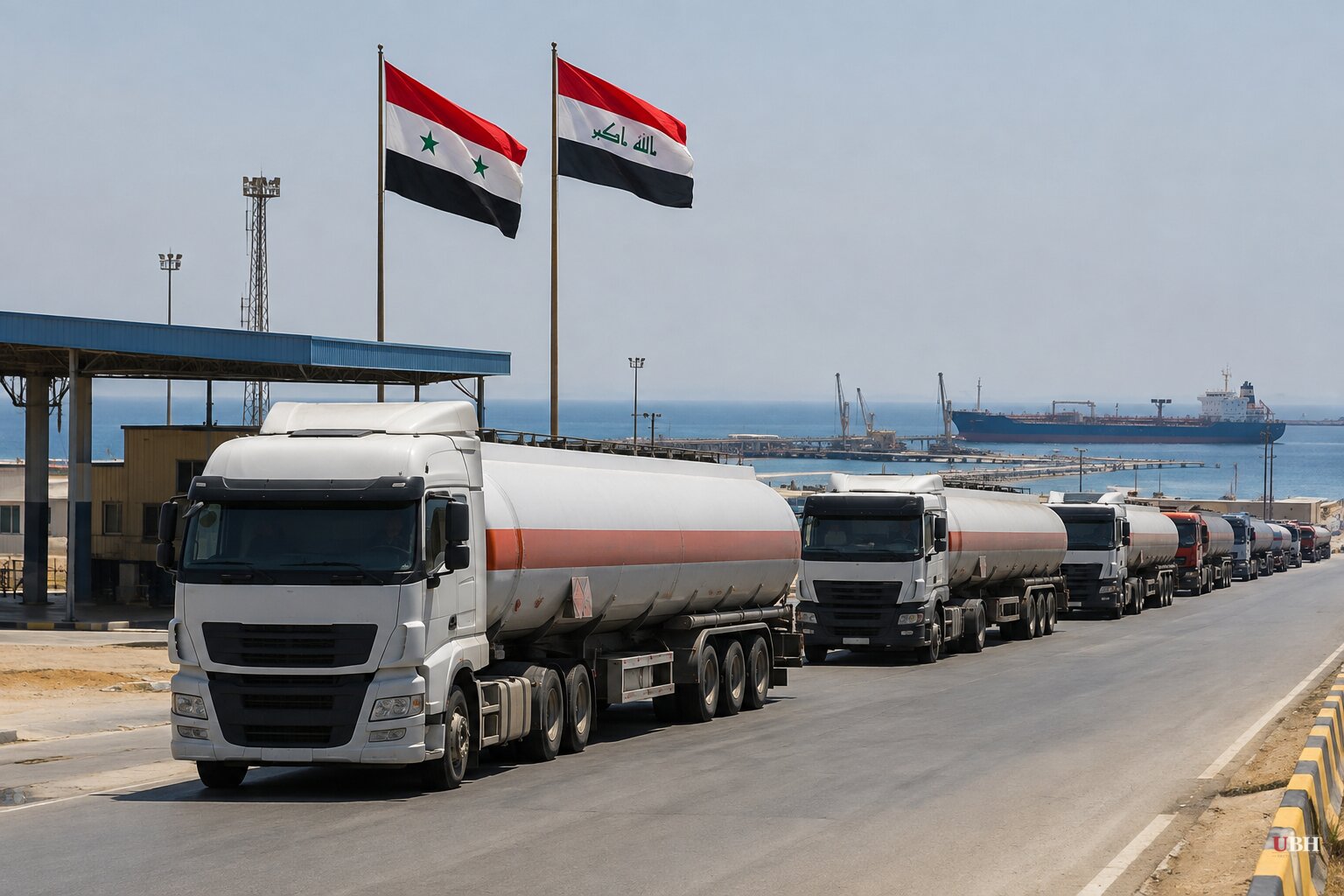
Since the Strait of Hormuz closed, Iraq's crude exports have fallen from 3.3 to 3.5 million barrels a day before the war to about 2.6 million a day through Sept. 21, according to the Oil Ministry. Now Baghdad wants a land route out.
Yousef Qiblawy, CEO of the Syrian Petroleum Company, told Bloomberg that Iraq has asked Syria to help export crude in addition to the fuel oil already crossing the border. An agreement between the two governments is "nearing completion," he said, though it is not yet signed.
What Syria says it can handle
Qiblawy said the first crude convoys could reach the Syrian port of Baniyas by mid-October. His company plans to supply storage tanks there so the oil can sit before being loaded onto ships.
The corridor already exists. Qiblawy said about 1,000 trucks a day carry Iraqi fuel oil, at 220 barrels each. He expects a similar or larger fleet for crude.
A thousand trucks at 220 barrels equals 220,000 barrels a day. That is roughly 8% of Iraq's September export average and about 6 to 7% of its prewar level.
Ahmed Qubbaji, the company's deputy chief executive for transportation and storage, told Syria's state news agency SANA on Sept. 27 that between 1,000 and 1,200 trucks cross Syrian territory daily.
Traffic is running both ways
In late September, Syria began moving imported gasoline from Baniyas to Iraq under a renewable three-month agreement. The Qatar-based conglomerate UCC buys the fuel, and Syria manages transport and collects transit fees. Trucks run through al-Tanf in southeastern Syria.
Qubbaji told the Associated Press that Syria is working toward 200 vehicles a day on that gasoline run. He also said Syria is thinking "strategically for the long term," including pipelines from Iraq to Syria.
Syria's interim president, Ahmad al-Sharaa, ousted Bashar Assad in December 2024. His government is plainly courting the transit business.
Pipelines are still on paper
The larger prize is the Haditha-Baniyas pipeline, historically tied to the old Kirkuk-Baniyas route. SANA reported in July that Syria signed agreements with Iraq and an international consortium to advance it, targeting 2 million barrels a day. That is planned capacity. The line is not an operating export route.
TotalEnergies CEO Patrick Pouyanne said he intends to take part in an Iraq-to-Syria pipeline. "It's obvious to me that I need to participate in this infrastructure," he said, adding that the industry must shift "from a just-in-time to a just-in-case mindset."
Others are less eager to write checks. Chevron CEO Mike Wirth said his company signed an initial agreement earlier this year to study pipelines to Ceyhan in Turkey or Baniyas. He cautioned that "it's not the kind of thing we tend to put a lot of our own capital into" and that Chevron would be one player in a multi-party consortium.
BP CEO Meg O'Neill said she was not sure such a project would be a good use of BP shareholder money, though it might suit other investors. BP is trying to cut debt.
Kuwait Petroleum Corporation's chief executive, Shaikh Nawaf Al-Sabah, said importers share the burden. "We cannot throw the responsibility completely upon the producers," he said.
Iraq is working other angles
On Oct. 4, Iraqi Oil Tankers Co. loaded a very large crude carrier with 2 million barrels and arranged for it to sail through Hormuz "for the first time in decades," Director General Ali Qais Abdul Jabbar said in comments on the Oil Ministry's Facebook page. Previously, buyers sent their own ships to Basra. He did not name the vessel, its owner, the buyer or the destination.
Oil Minister Basim Mohammed Khudair said Iraq is seeking funding to buy tankers. He did not say how many. Baghdad is also pursuing the northern route through Turkey.
The urgency is financial. Iraq depends on oil sales for government revenue, and the Hormuz disruption has cut into it. Iraq devalued the dinar about 13% this week.
What is still open
The Syria deal is a statement from one side. Baghdad has not publicly confirmed the terms, and no signed agreement has been announced. Qiblawy's mid-October date says the first convoys "could" arrive, not that they will.
Trucking is also a stopgap. Moving a few hundred thousand barrels a day across desert roads is a fraction of what the strait handled, and the sources give no figures on cost per barrel or on security along the route.
If the deal closes on Qiblawy's timeline, the first crude trucks would reach the Baniyas storage tanks within the next two weeks.
Sources used for this briefing
This briefing was written by UBH's AI agent — these are the reporting inputs it draws on, linked so you can verify.


