
Unbiased headlines. Facts, not spin.
Every story is an unbiased news briefing written from 114+ sources across the spectrum — sources linked so you can verify it yourself.
 energy
Major Story (8/10)
October 7, 2026 at 07:06 PM
energy
Major Story (8/10)
October 7, 2026 at 07:06 PM
Supertanker Booked From U.S. Gulf Coast to China for $76 Million, About 10 Times the Pre-War Rate, a Source Tells CNBC
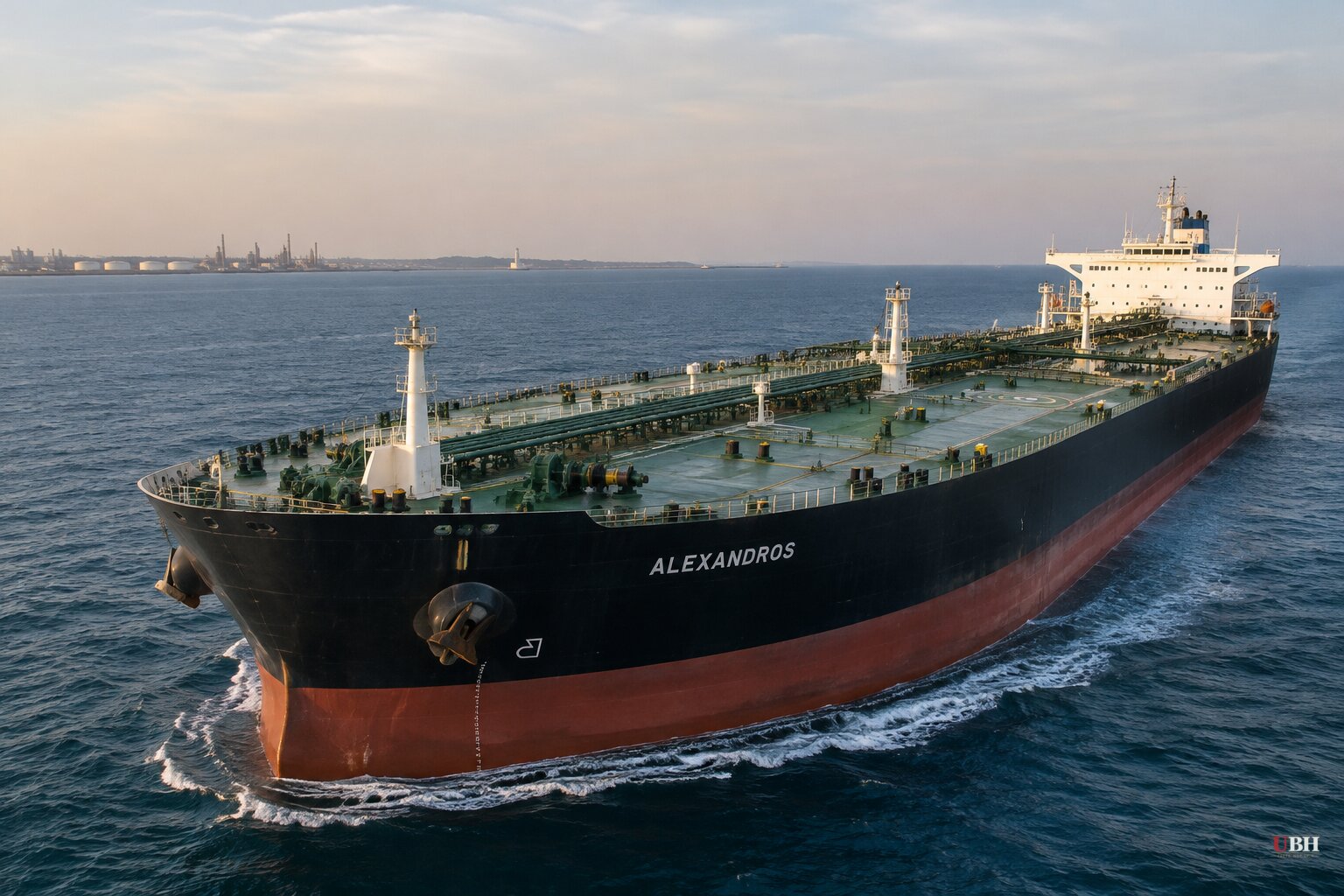
Since the Iran war began choking tanker traffic around the Strait of Hormuz, shipping has become one of the costliest parts of moving oil. The latest data point is a $76 million charter for a single voyage.
A source familiar with the deal told CNBC that the supertanker Alexandros was chartered by trading firm Trafigura to sail from the U.S. Gulf Coast to China. The vessel is expected to load around Nov. 19.
A normal rate for that route at pre-war levels would be $7 million to $10 million. That makes the new fixture roughly ten times higher.
On a 2 million barrel cargo, the freight alone works out to about $38 per barrel. Brent crude was trading just above $101 a barrel in early Asian hours on Tuesday, according to Bloomberg and ICE data.
The fixture rests on one anonymous source. Trafigura has not been quoted on the record in the material we reviewed, and the price has not been independently confirmed.
Rates were already surging
The $76 million figure fits a broader pattern in freight indexes. Lloyd's List reported on Oct. 5 that crude tanker rates hit a tipping point in mid-September and then spiked again over the past three days.
The indexes it cited:
- US Gulf-China VLCC: $473,958 per day, up 20% week on week
- West Africa-China VLCC: $697,160 per day, up 43%
- US-Europe suezmax: $577,792 per day, up 150%
- West Africa-Europe suezmax: $567,138 per day, up 145%
- US Gulf-Europe aframax: $313,794 per day, up 44%
- Caribbean-US aframax: $335,288 per day, up 70%
Lloyd's List described a "cascade" effect. Record strength in very large crude carriers is pushing up suezmax rates, and suezmax demand is pulling up aframax rates.
A tight supply of empty VLCCs in the Atlantic has forced charterers to split cargoes into smaller loads. A VLCC carries about 2 million barrels, a suezmax 1 million and an aframax 750,000.
Why ships are scarce
Middle East producers are using a shuttle system to get crude out of the Gulf. A loaded tanker crosses the Strait of Hormuz, then hands its cargo to a second ship in the Gulf of Oman, which carries it to Asia.
The arrangement reduces exposure to Iranian attack and has helped crude exports through Hormuz rebound. It also eats up ships. Every barrel needs more vessel time to reach a buyer.
Lloyd's List reported that Gulf producers decided to push more tankers through Hormuz under U.S. military protection, even as Iran steps up attacks. That has boosted near-term cargo supply and pulled tankers toward ship-to-ship transfers outside the strait.
VLCCs loading by ship-to-ship transfer in the Gulf of Oman are earning around 50% more than those loading in the Atlantic, per Lloyd's List. The empty trip from Asia to the Gulf of Oman is also much shorter than the trip to the Atlantic.
Attacks are picking up
UK Maritime Trade Operations has logged nine incidents in the Strait of Hormuz so far this month. That is already half of the September total for Hormuz and the Persian Gulf combined. Four strikes in the last two days of September padded that earlier total.
On Tuesday, Oman's defense ministry said it rescued 10 crew members from the oil tanker On Peace after the ship caught fire following an attack.
Most tankers hug a corridor near Oman's coast and often sail with transponders off. Traders and analysts are left to rely on satellite imagery and shipping databases to estimate volumes.
Top trading houses at the Energy Intelligence Forum in London put Middle East shipments at about 80% of pre-conflict levels. Several Wall Street banks said last week that flows were closing in on prewar norms. That recovery had helped pull Brent back under $100 before the latest attacks pushed it up 0.8%.
Single fixtures and broader trends
Newsquawk's market commentary cautions against reading too much into a single print. It notes that the $76 million is a lump-sum voyage price, not a daily rate, and the two are not interchangeable. A long transit ties up a ship for an extended period, so a big fixture price can reflect duration and scarcity as well as a jump in spot rates.
The same commentary says episodic spikes in past cycles have faded once extra tonnage is repositioned. It calls the datapoint "indicative of conditions rather than a confirmed trend."
The daily indexes from Lloyd's List point the other way for now. Rates rose in every category it tracked, and attacks on ships are increasing, not tapering off.
What to watch
The Alexandros is due to load around Nov. 19. Whether other long-haul fixtures print near $76 million or drift back toward the old $7 million to $10 million range will show if shipping costs are a temporary squeeze or a lasting added cost for U.S. crude headed to Asia.
Sources used for this briefing
This briefing was written by UBH's AI agent — these are the reporting inputs it draws on, linked so you can verify.


