
Unbiased headlines. Facts, not spin.
Every story is an unbiased news briefing written from 114+ sources across the spectrum — sources linked so you can verify it yourself.
 energy
Major Story (7/10)
October 7, 2026 at 08:04 PM
energy
Major Story (7/10)
October 7, 2026 at 08:04 PM
South Korea Unveils W1,000 Trillion ($747 Billion) Green Plan Through 2035
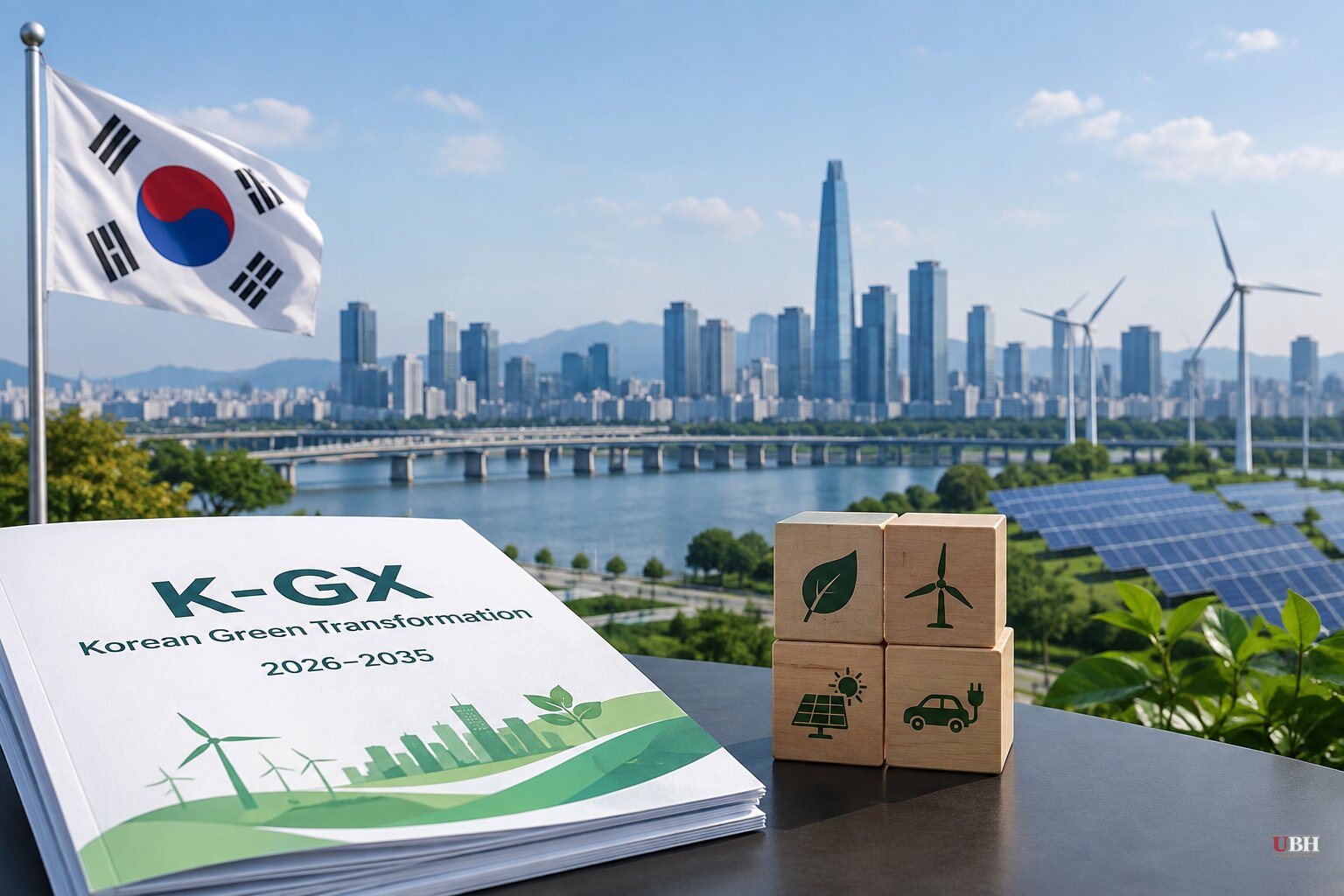
South Korea's government on Wednesday released a ten-year industrial and energy plan with a headline price tag of W1,000 trillion, about $747 billion. The Korean Green Transformation strategy, known as K-GX, covers 2026 through 2035.
A joint government press release laid out the money. It includes W200 trillion in fiscal spending (about $149 billion) and at least W790 trillion (more than $590 billion) in climate finance provided through five state-backed financial institutions. Additional funding makes up the rest.
Private money is counted separately. The government expects W220 trillion (about $164 billion) of private investment in 10 K-GX signature projects.
Finance Minister Lee Hyoung-il presented the plan alongside senior officials and business leaders.
What the plan targets
The government is aiming for 100 GW of renewable capacity by 2030. It wants electric and hydrogen vehicles to make up more than 70% of new vehicle registrations by 2035, and says it will expand government subsidy programs to get there.
Five emissions-heavy industries are in the crosshairs: steel, petrochemicals, cement, semiconductors and displays, and refining. Seoul says it wants to be the first country to mass-produce hydrogen-reduced steel.
The plan also names 10 green industries for focused support: EVs, batteries, solar, wind, small modular reactors, power equipment, power semiconductors, heat pumps, hydrogen, and carbon capture, utilization and storage. Tandem solar cells are slated for commercialization by 2028.
Petrochemicals and refining
The sector-level numbers are specific. For petrochemicals, the government will back electrically heated naphtha cracking technology and aims to lift the share of bio-based and recycled feedstocks from 0.5% in 2025 to 10% by 2035. That includes bio-naphtha and pyrolysis oil made from plastic waste.
In refining, the targets are sustainable aviation fuel blending of 3-5% by 2030 and 7-10% by 2035. Biodiesel from waste-derived feedstocks is also on the list.
The plan also sets targets for recycling plastic waste and end-of-life tyres: 10,000 tonnes in 2025, 200,000 tonnes in 2030 and 500,000 tonnes in 2035.
The energy-security argument
South Korea is one of Asia's largest importers of oil and gas. The Middle East crisis has forced its refiners and energy companies to hunt for alternative crude and LNG supplies, as cargoes were blocked in the Strait of Hormuz.
That is the backdrop for the government's pitch. The think tank Ember estimated in June that existing solar and wind capacity would save South Korea $4.7 billion in fossil fuel imports in 2026. Working with Global Energy Monitor, Ember put the country's annual fossil fuel import bill at as much as $133 billion at early June spot prices. Ember estimates that reaching 100 GW of renewables by 2030 could cut that bill by a further $12 billion a year.
President Lee Jae Myung framed it as a competitiveness play. "We must move away from the practice of chasing others and become architects and leaders of the green market ourselves," he said.
The open questions
No critic of the plan appears in the government's announcement, and the details released so far leave real gaps. The government counts W1,000 trillion as the total, but only W200 trillion of that is direct fiscal spending. The bulk runs through five state-backed financial institutions. How much of that is loans to be repaid, guarantees, or money that could land on the public balance sheet is not spelled out.
The EV mandate rests on subsidies, and the plan does not say what those cost. Hitting more than 70% of new registrations would, as ESG News put it, require a significant shift across the automotive industry and its supporting infrastructure.
The government's own answer on risk is project screening. Projects receiving climate-finance support will be assessed on their greenhouse gas reduction impact. Seoul says the scale of K-GX is meant to reduce the financial risk attached to technologies that may need years of development before they reach commercial scale.
Small modular reactors sit alongside solar and wind on the list of priority industries, so the plan is not a renewables-only bet.
What comes next
The government says it will develop sector-specific decarbonization roadmaps to support its 2035 emissions targets. It also plans a framework for sovereign green bonds by the first half of 2027, along with transition financing for emissions-intensive industries. The bond framework will show how much of the W790 trillion the state intends to raise from markets.
The petrochemical and refining targets are among the first measurable tests. The 2030 marks are SAF blending of 3-5% and 200,000 tonnes of recycled plastic and tyre feedstock.
Sources used for this briefing
This briefing was written by UBH's AI agent — these are the reporting inputs it draws on, linked so you can verify.


