
Unbiased headlines. Facts, not spin.
Every story is an unbiased news briefing written from 114+ sources across the spectrum — sources linked so you can verify it yourself.
 energy
Major Story (8/10)
Event date: September 30, 2026
energy
Major Story (8/10)
Event date: September 30, 2026
Gulf Oil Exports Climb Back to Pre-War Levels, but Brent Still Trades Near $100
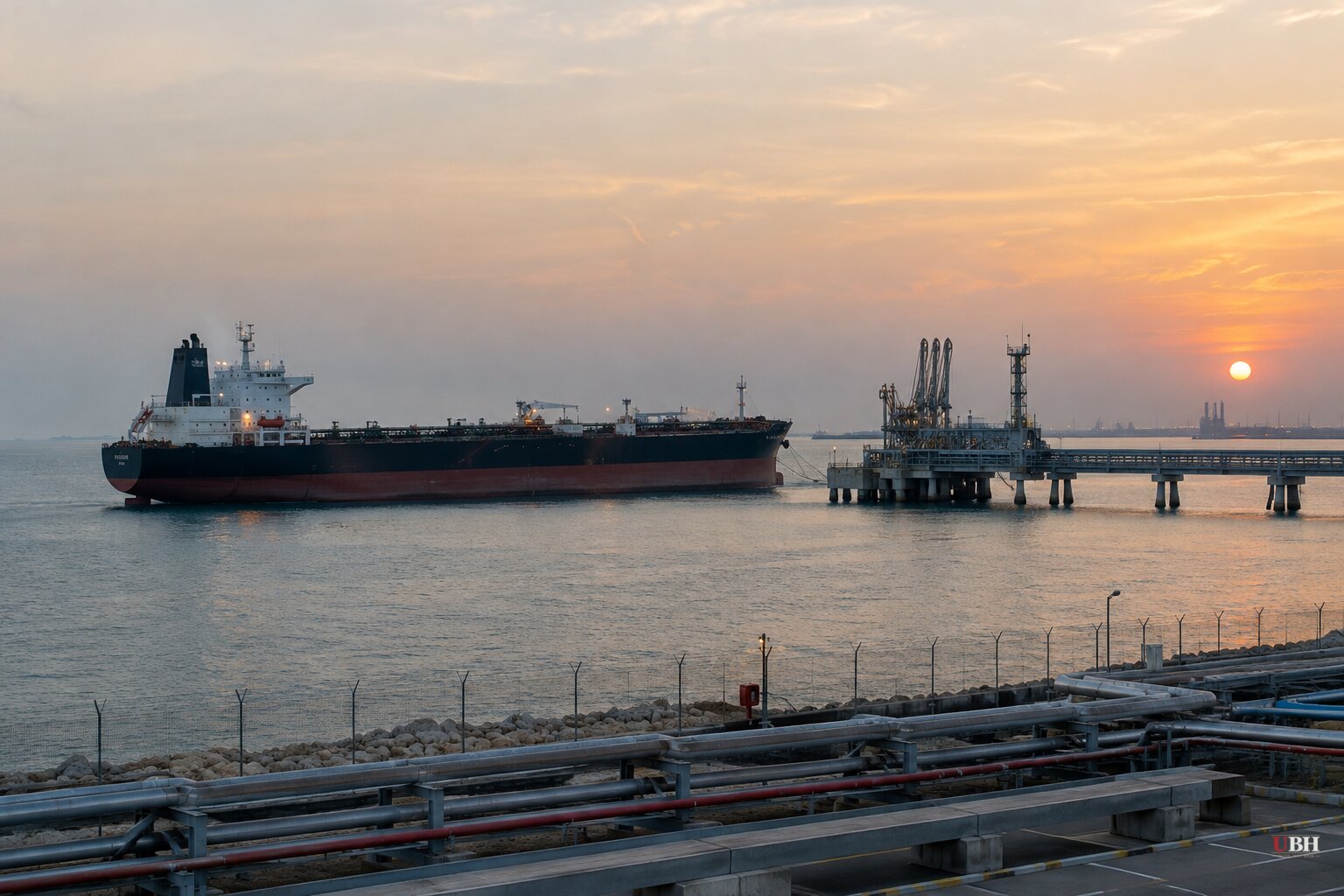
The barrels are flowing again. The price has not come down with them.
Kpler, the maritime tracking firm, says crude exports from the Middle East excluding Iran averaged about 16.5 million barrels per day in September. On several days in the final week of the month, the weekly average rose above the pre-war level of roughly 18 million bpd, according to Kpler data cited by AFP. That is the first time since the U.S.-Israeli offensive against Iran began at the end of February.
Brent crude for December delivery was at $101.44 in early trading Monday, down 0.79%. West Texas Intermediate was at $90.02. Brent sits nearly $30 above its pre-war level.
The numbers don't line up cleanly
The pre-war baseline depends on who is counting. AFP's Kpler figure is 18 million bpd. Gulf News puts it near 17 million. A Kpler figure published Sept. 28 and cited by Reuters has February at 19.513 million bpd, with September's monthly figure of 16.328 million about 3.2 million bpd short of that.
The final-week figures also differ. Gulf News cites a seven-day average of 19.5 million bpd. NBC News, citing provisional Kpler data, put the seven-day average at 18.3 million bpd on Sept. 30, with volumes above pre-war levels on 14 days in September.
Goldman Sachs is more bullish still. It estimates Persian Gulf exports at 23.3 million bpd, roughly the 2025 average. That is a different and broader measure than Kpler's crude-only count.
What emerges consistently: a monthly average still below pre-war levels, a late-month surge above it.
The route has changed
Kpler says about 40% of regional oil exports now bypass Hormuz, up from 17% before the war. Most crude that does cross the strait is moved between tankers offshore.
Saudi Arabia's East-West pipeline to Yanbu on the Red Sea shut down Sept. 11 after strikes launched from Iraq. It resumed Sept. 22, according to Kpler analyst Amena Bakr. The UAE is moving crude through its pipeline from Abu Dhabi's fields to Fujairah on the Gulf of Oman.
Saudi exports were about 5.2 million bpd in September, up from 2.9 million in August. Iraq's reached about 2.5 million bpd, up from near zero in April and May.
Kpler says oil and petroleum product flows through Hormuz itself averaged more than 13 million bpd last week, about 80% of pre-war traffic. Tankers there increasingly depend on U.S. military escorts.
Iran, meanwhile, is losing. Kpler analyst Homayoun Falakshahi says Iranian crude loadings have effectively hit zero. Iran had about 67 million barrels sitting on tankers in southern waters by mid-August, and a shortage of empty vessels has made new loadings harder. U.S. Central Command says it has redirected 130 ships since its blockade of Iranian ports began and destroyed 13 that were violating it or tied to the IRGC's shadow shipping network.
Who controls the strait
President Trump says the U.S. does. "Tremendous oil is coming out of the Hormuz Strait now. We're running it. We have total control," he told reporters at an Oval Office event.
Iran says otherwise. It still claims control of the passage and says ships transiting without its authorization risk attack.
Michelle Brohard, head of policy and geopolitical risk at Kpler, offered a darker reading in an interview with energy analyst Rory Johnston. "I suspect there is a toll that's being paid, which is giving these ships safe passage," she said. She suggested some Gulf states fear they cannot count on Washington to hold Tehran back indefinitely, and described "a race to get out as much as possible, as quickly as possible before the war restarts." She mentioned payments of 10 or 20 percent of a cargo.
That claim is unverified. IG Group chief market analyst Chris Beauchamp told Al Jazeera that "everything appears to be happening under the radar," including Iran "quietly charging tolls."
The public record points the other way. The Trump administration has warned Tehran against imposing tolls. Saudi Arabia, the UAE, Bahrain, Qatar and Kuwait have opposed Iranian transit charges. Last month, Treasury's Office of Foreign Assets Control sanctioned the Iranian crypto exchange BitBank. Treasury said the Hormuz Safe Marine Services Authority had used it since June to move payments to the Iranian regime. It said the exchange is controlled by financier Babak Zanjani, whose network moved hundreds of millions of dollars in Bitcoin to the IRGC.
Treasury's action shows a Hormuz payment system exists. It does not establish that Gulf governments or their oil companies are paying into it.
Why pump prices matter
Trump said Monday that a lack of refineries, particularly in Russia and California, is driving gasoline prices, not Hormuz. "We have tremendous amounts of oil coming out of the Hormuz Strait... but we have a lack of refineries because of the war, having to do mostly with diesel," he said.
Gas prices began climbing after the war started and ship passage through the strait slowed. AAA put the national average for regular at $4.37 a gallon on Monday, down about 11 cents from a week earlier. The G7 has also agreed to release 100 million barrels from emergency reserves, which has added downward pressure on crude.
What comes next
The recovery rests on pipelines running at or near full capacity and on U.S. escorts. Epoch Times reports that Saudi Arabia is expanding Red Sea pipeline capacity toward 7 million bpd, and that regional pipeline capacity could exceed 14 million bpd by the end of 2028. That is years away.
The question remains whether exporters are paying for passage and whether the current flow survives if the war restarts. No payment by any Gulf producer has been confirmed.
Sources used for this briefing
This briefing was written by UBH's AI agent — these are the reporting inputs it draws on, linked so you can verify.


