
Unbiased headlines. Facts, not spin.
Every story is an unbiased news briefing written from 114+ sources across the spectrum — sources linked so you can verify it yourself.
 energy
Major Story (7/10)
Event date: October 3, 2026
energy
Major Story (7/10)
Event date: October 3, 2026
IEA: 25 Countries Have Announced Electrification Policies Since February, as COP31 Prepares to Weigh a 35% Pledge
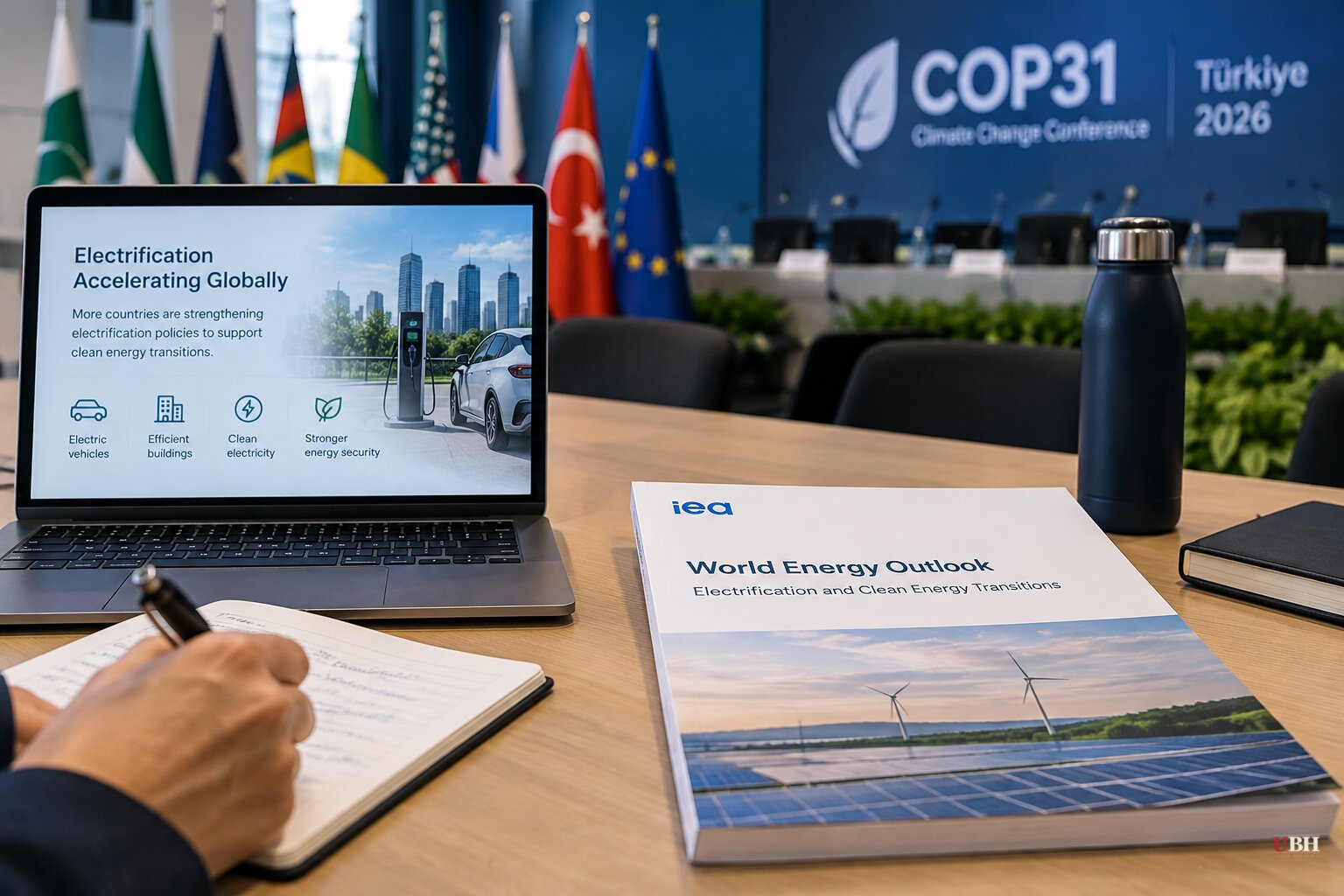
Energy security, not climate ideology, is the primary factor here.
The International Energy Agency's "Electrification: Special Report," released in September, says 25 countries have announced new electrification-related policies since February 2026. Sales of electrification technology have risen, the agency says, particularly in markets exposed to disruptions in energy shipments through the Strait of Hormuz.
The U.S. and Israel launched their military offensive against Iran in February. Iran responded by closing the strait, which carried about one-fifth of the world's oil and gas trade.
What governments are doing
Oxford University energy policy professor Jan Rosenow told ABC Australia the main driver is supply security. "Especially Europe, but also many of the Asian economies rely heavily on imports, and electrification allows them to use domestically generated electricity instead," he said.
The examples are concrete. Indonesia is converting gas-powered motorbikes to electric. Ethiopia's EV fleet has grown to more than 15 times its size three years ago. Australia is expanding a public kerbside EV charging program.
The UK has seen a surge in solar installations. It is also considering expanding natural gas production.
An Associated Press tally counts a wider group: 33 governments that have adopted policies to move off fossil fuels or improve efficiency. The gap with the IEA's 25 comes down to what counts as a policy.
The IEA's numbers
The agency says electric cars, motorcycles, trucks and buses already avoid about 2.3 million barrels of oil demand per day. Under its High Electrification Scenario, that rises to 18 million barrels per day avoided by 2035. Four-fifths of the reduction would come in fuel-importing regions.
The same scenario estimates fuel-importing countries could cut their energy import bills by about $400 billion a year compared with 2025 levels. Against 2026's higher prices, the savings could be larger.
These are modeled scenarios, not forecasts. They depend on governments following through.
The COP31 pledge
COP31 opens Nov. 9 in Antalya, Türkiye. Conference president Murat Kurum has said the technologies needed are largely available and the question is how to deploy them.
The host wants a voluntary pledge to meet 35% of global energy demand with electricity by 2035. Electricity accounts for 23% today. Backers describe the goal as within "striking distance."
Formal talks on fossil fuel phase-out targets remain stalled, according to coverage of the run-up to the summit. Electrification is the item that can get agreement. Because the pledge is voluntary, it commits no one to anything enforceable.
The skeptics
The AP spoke with a dozen experts with mixed assessments. Global greenhouse gas emissions rose slightly. Global wind and solar investment fell in the first half of 2026 versus the same period last year, according to Rhodium Group's Clean Investment Monitor. China accounted for most of the decline.
In the U.S., Europe and India, where economies are more exposed to oil and gas prices, solar investment grew and wind investment held steady or grew, Rhodium director Hannah Pitt said.
Pauline Heinrichs, a war studies lecturer at King's College London, said governments are "doing a dance between acknowledging the importance of clean power while continuing to support fossil fuel expansion." Indonesia illustrates it: solar replacing some diesel plants while the government doubles down on coal for heavy industry.
Stanford climate scientist Rob Jackson said in February it was "just wishful thinking" that the war would boost homegrown renewables, unless the conflict dragged on. Six months later, he said he did not expect oil to stay above $90 or $100 a barrel for this long. His condition is now met. "We need that action over years, to decades, to make a dent in the climate problem," he said Monday.
The U.S. position
The U.S. is on the other side of this dynamic. According to a Yale 360 report cited by OilPrice.com, 63% of emerging markets in Africa, Asia and Latin America generated more of their power from solar than the United States at the end of 2025. Brazil, Chile, El Salvador, Morocco, Kenya and Namibia are among countries said to have overtaken the U.S. in clean-energy transitions. The ranking depends on how it is measured.
Washington's own energy problem is more immediate. ABC Australia reports a proposal to ban U.S. diesel exports is prompting calls for rationing, with the war looking set to run into next year.
Whether the 25-country wave survives cheaper oil is the open question. Jackson's test is sustained action over years. The first checkpoint comes in Antalya, where delegates will decide whether a non-binding 35% goal gets any signatures.
The summit opens Nov. 9.
Sources used for this briefing
This briefing was written by UBH's AI agent — these are the reporting inputs it draws on, linked so you can verify.


