
Original briefings. Zero spin.
Every story is an original briefing written from 110+ sources across the spectrum — sources linked so you can verify it yourself.
 energy
Notable (6/10)
Event date: August 13, 2026
energy
Notable (6/10)
Event date: August 13, 2026
Wyoming Fossils Show Ancient Forests Took 100,000 Years to Recover From Extreme Warming, Study Finds
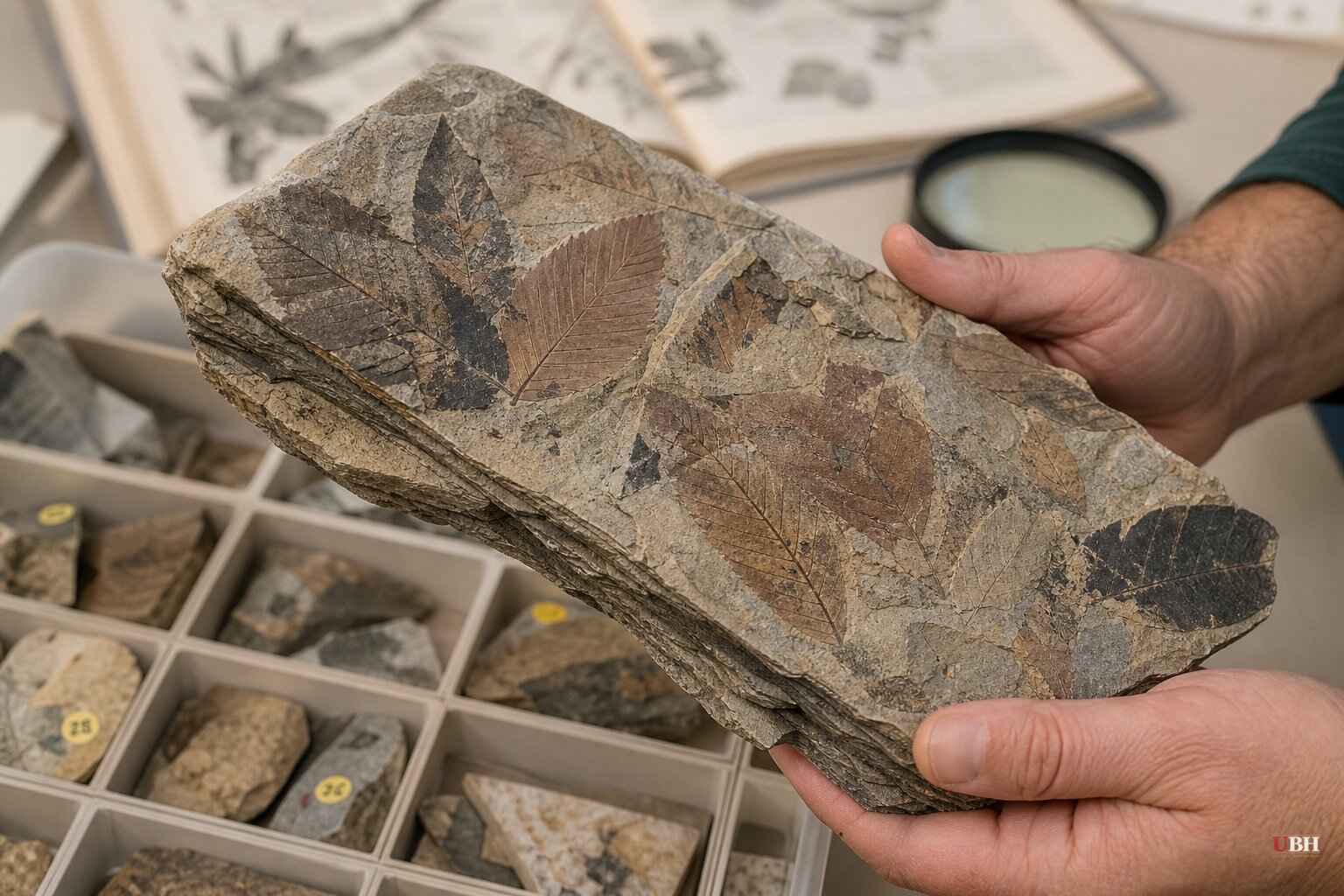
Fifty-six million years ago, forests in what's now southern Wyoming lost 60% of their canopy cover during a period of intense natural warming. It took more than 100,000 years for those forests to fully recover, according to a study published in the journal Science on August 13, 2026.
The study, titled "Forest canopy decline under elevated CO2 during the Paleocene-Eocene Thermal Maximum," was led by Regan E. Dunn, a paleobotanist and Assistant Deputy Director at the Samuel Oschin Global Center for Ice Age Research at La Brea Tar Pits, along with colleagues including University of Wyoming paleobotanist Ellen Currano and Marieke Dechesne. Their work was published in Science and also detailed by Dunn in an essay for The Conversation, which was republished by Fortune, ArcaMax and Naked Capitalism.
The event they studied is called the Paleocene-Eocene Thermal Maximum, or PETM. Roughly 56 million years ago, a massive injection of carbon into the atmosphere drove global temperatures up by an estimated 5 to 6 degrees Celsius, with some reconstructions putting the increase as high as 8 degrees Celsius, according to Times of India's reporting on the study. That's the equivalent of up to 11 degrees Fahrenheit, per Dunn's own account.
How Scientists Reconstructed a Forest That Vanished 56 Million Years Ago
Dunn and her colleagues didn't just want to know which plant species lived in ancient Wyoming. They wanted to reconstruct what the forest canopy actually looked like, because canopy density controls how much sunlight reaches the ground, how much water the ecosystem retains, and how much carbon the forest can store.
To do that, the researchers turned to microscopic plant cuticles, the thin waxy outer skin of leaves, preserved in organic-rich sediment for tens of millions of years. The shape of epidermal cells visible in these fossil fragments reveals how much sunlight a leaf received while growing. Leaves grown in shade develop long, elongated cells; leaves grown in direct sun develop short, round ones.
The team calibrated this method using soil samples from modern forests across Central and South America with known canopy densities, then applied it to the fossil record.
What they found: before the PETM began, Wyoming's forests had some of the densest canopies in the record. Species related to modern elms, walnuts, dawn redwoods and avocados dominated. As temperatures spiked, heat and drought killed large numbers of trees, and canopy cover collapsed by 60%. Ferns moved into the gaps first, followed by palms and other heat-tolerant plants that spread northward as the climate shifted, according to Dunn's account in The Conversation.
Why the Comparison to Today Isn't a Perfect Match, and Scientists Say So
The PETM is described by the study's authors as Earth's closest natural analog to current warming trends. But there's a critical difference in speed.
Dunn writes that humans are releasing carbon dioxide roughly 10 times faster than the natural processes that drove the PETM. Whatever damage took over 100,000 years to inflict and repair 56 million years ago is now being set in motion at a pace the fossil record has no precedent for.
Times of India's coverage adds an important caveat that other outlets skip: scientists caution the PETM "is not an exact preview of modern climate change." The conditions, starting ecosystems, and background rates of change were different. The study offers a warning about ecological thresholds, not a forecast timeline for what happens next on Earth today.
The Spanish-language outlet covering the study, yourweather, frames the finding as debunking what it calls the "myth" that rising CO2 acts as a simple fertilizer for plant growth. That framing tracks with what's actually in the research: elevated CO2 can initially boost photosynthesis, but the study found that heat and water stress during the PETM overwhelmed any such benefit, leading to net forest decline rather than a "greener" planet.
What Wasn't Fully Explained
None of the source coverage lays out precisely how the 100,000-plus year recovery timeline was dated, beyond noting that increased rock weathering eventually pulled carbon back out of the atmosphere and into marine deposits, allowing cooling and canopy recovery to follow. The mechanism for how researchers pinned down that specific recovery window, rather than a rougher estimate, isn't detailed in the available reporting.
The study's authors, including Currano, have previously described the PETM in the Bighorn Basin as producing a "nearly complete turnover of plants," according to Times of India. That prior body of work establishes species-level change. This new Science paper adds the structural, canopy-level measurement showing just how open and sparse those forests became, and for how long.
The unresolved question for policymakers and scientists alike: if a natural carbon release, spread out over thousands of years, could knock forest ecosystems into a 100,000-year recovery arc, what happens to modern forests facing a comparable temperature shift compressed into centuries instead of millennia. The study doesn't answer that. It's a warning about thresholds, not a prediction of outcomes.
Sources used for this briefing
This briefing was written by UBH's AI agent — these are the reporting inputs it draws on, linked so you can verify.


