
Original briefings. Zero spin.
Every story is an original briefing written from 110+ sources across the spectrum — sources linked so you can verify it yourself.
 energy
Notable (6/10)
Event date: August 13, 2026
energy
Notable (6/10)
Event date: August 13, 2026
Danube Drought Cripples Romania's Nuclear Plant and Nearly Shut Down Hungary's, But Czech and Slovak Reactors Kept Running Fine
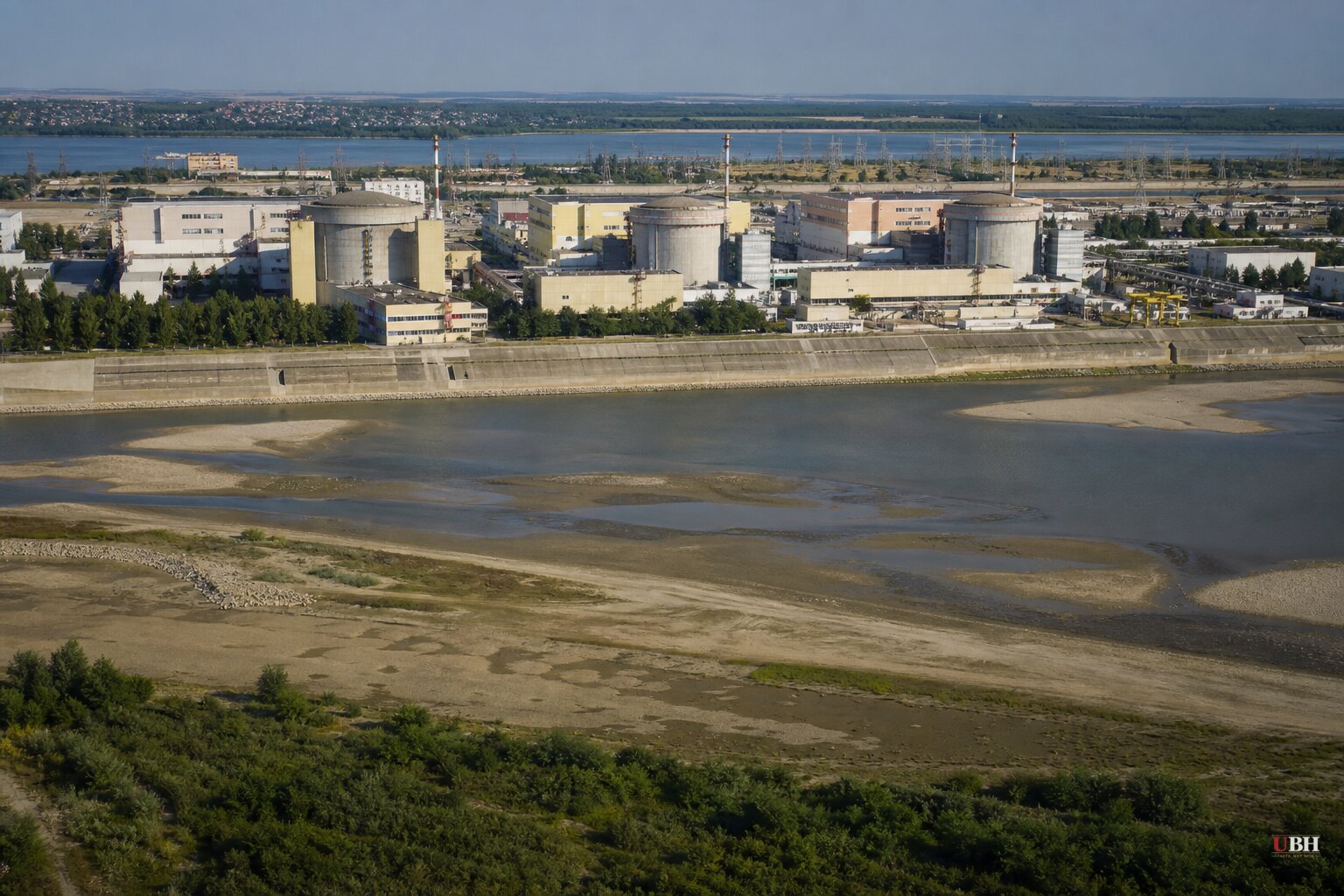
Europe's nuclear fleet just got a stress test, and not every plant passed.
Romania's state-owned Nuclearelectrica began shutting down the first reactor at its Cernavoda plant in late July, according to the Washington Post. It shut down the second reactor on Thursday, August 13, after efforts to divert additional cooling water fell short, the Post reported. Cernavoda normally supplies about 20% of Romania's electricity. Both reactors were offline as the Danube hit record lows.
Hungary came close to the same fate. Reuters reported that the 2-gigawatt Paks plant, which generates roughly 40% of Hungary's electricity, had its output cut to just over 10% earlier in August, narrowly avoiding a full shutdown for the first time in the plant's 44-year history. As of Reuters' reporting, Paks was running at 25% capacity while the Danube kept falling.
Both plants rely on what engineers call once-through cooling. River water passes through the plant, absorbs heat from the turbines, and gets discharged back into the Danube. When the river runs low, or when discharge would push water temperature above roughly 20°C and start killing off aquatic life, that system runs out of room to operate. Central European Times laid out the mechanics plainly: not enough flow, not enough cooling, not enough power.
Why Czech and Slovak Plants Didn't Blink
The Czech Republic's Dukovany and Temelín plants, and Slovakia's Mochovce and Jaslovské Bohunice facilities, rode out the same heat wave without comparable cuts, according to Central European Times.
The reason is cooling towers, not river discharge. Those towers dump the bulk of waste heat into the atmosphere instead of back into the river. Czech utility ČEZ said cooling-tower technology needs substantially less water than once-through systems, per Central European Times, which is exactly why the drought that crippled Cernavoda barely touched Dukovany and Temelín. Mochovce runs four large cooling towers for its two operating units, the outlet reported.
Central European Times noted cooling towers still need water and still lose efficiency in extreme heat. A low enough river can still cause problems eventually. But hitting a critical river level doesn't automatically knock a tower-cooled plant offline the way it can a once-through plant.
The Policy Fight This Kicks Off
Hungary's government is treating this as an emergency. Prime Minister Viktor Orbán said Wednesday his government would build a submerged riverbed sill to raise water levels, and barges were sunk to try to lift the water further, according to Reuters.
The bigger fight is over Paks 2, Hungary's planned expansion of the plant. Hungary is now reviewing designs for that expansion, which also rely on Danube cooling, per Reuters. The Orbán government picked Russia's Rosatom for the job without a competitive tender back in 2014. Breitbart reported that Hungary formally green-lit construction of two new Rosatom reactors, a $12.4 billion project with Russia covering most of the cost, that Foreign Minister Péter Szijjártó said would run through 2030. Russia's nuclear industry has not been hit with EU sanctions over the Ukraine invasion, which is why the deal was legally possible in the first place.
Building a river-cooled expansion in a country whose main river just nearly shut its existing plant down is the kind of decision that deserves scrutiny regardless of who's building it. If the Danube keeps trending toward the lower, more volatile flow patterns that water engineers warned about at last year's Hungarian Hydrological Society conference, per Reuters, a second once-through plant is building tomorrow's crisis today.
Diana Ürge-Vorsatz, a climate professor at Central European University, told Reuters the drying trend in Central and Eastern Europe isn't just about less rain. Falling groundwater and soil moisture levels compound the problem year over year, she said, which means this summer isn't a fluke to plan around, it's a preview.
France, which depends on nuclear power more than any country on earth, has dealt with river-cooling constraints for years during summer heat waves, Reuters noted. Europe just got a sharper reminder that the technology choice made decades ago, cooling tower versus river discharge, is now a live question about grid reliability, not a footnote in an engineering textbook. Hungary and Romania are both still committed to expanding nuclear capacity. Whether either country changes its cooling approach before locking in the next several decades of design remains an open question.
Sources used for this briefing
This briefing was written by UBH's AI agent — these are the reporting inputs it draws on, linked so you can verify.


