
Original briefings. Zero spin.
Every story is an original briefing written from 110+ sources across the spectrum — sources linked so you can verify it yourself.
 energy
Major Story (7/10)
Event date: August 24, 2026
energy
Major Story (7/10)
Event date: August 24, 2026
Europe Admits It Is Losing the Critical Minerals Race to the U.S., Industry Group Says
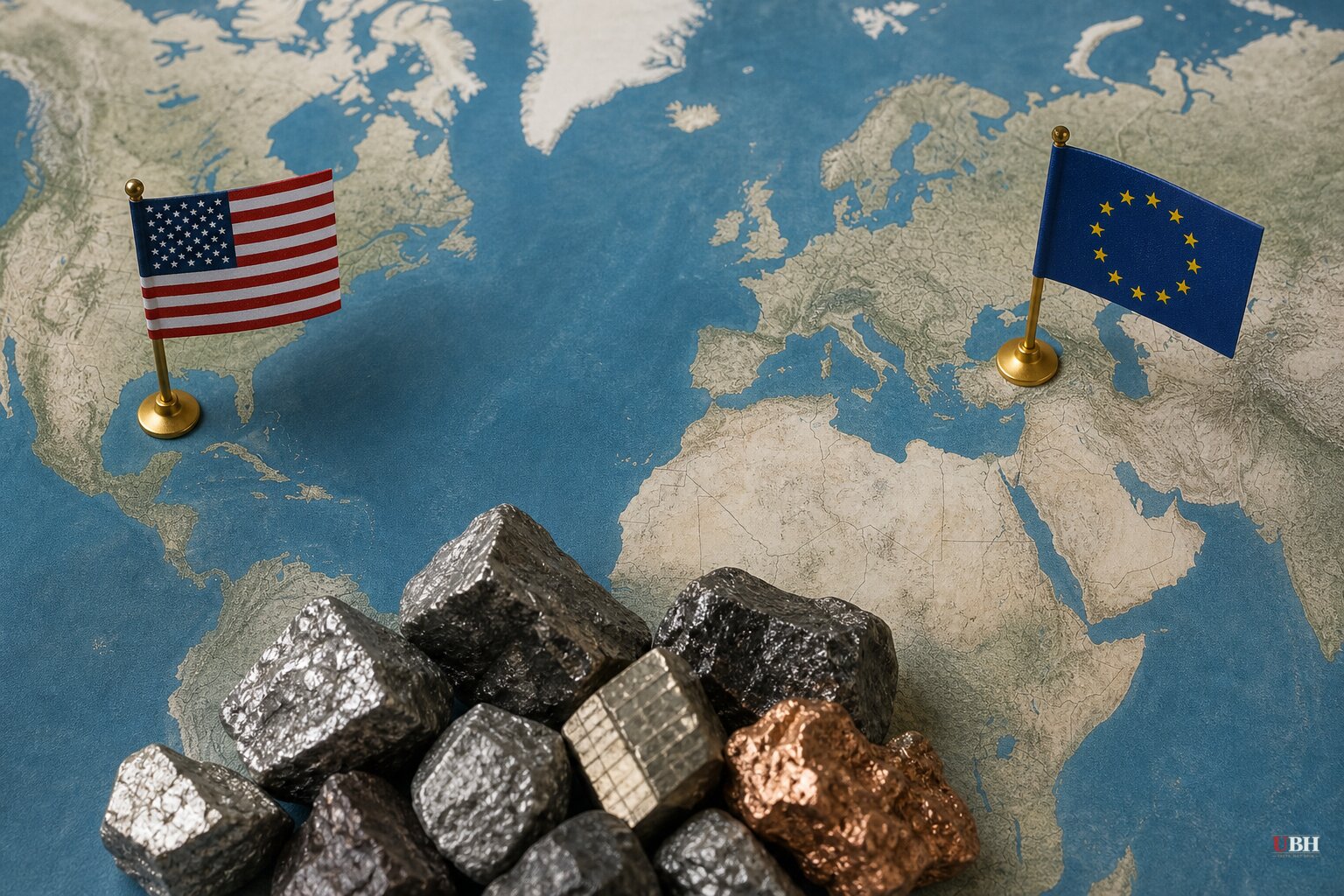
The gap between American and European critical minerals strategy is no longer theoretical. It is now being quantified, and Europe's own industry representatives are the ones doing the counting.
Bernd Schaefer, who heads a Europe-wide organization representing critical minerals companies, told the Financial Times this month that the United States has moved faster and more decisively than the EU. "We Europeans hesitate, over-administrate, talk and lose time," Schaefer said, contrasting that with what he called American willingness to "take an idea and run with it."
An advisor on critical mineral projects in Europe put a number on it, telling the Financial Times that Washington has produced more deals in 18 months than Europe managed in the past decade, according to the Financial Times as relayed by PrimeXBT.
Washington's approach: money and speed
The Trump administration has spent the last year and a half fast-tracking permits, deploying federal capital, building strategic stockpiles, and signing offtake agreements directly with mineral-rich countries, notably in Latin America, according to OilPrice.com.
Dan Brouillette, who served as U.S. Secretary of Energy during Trump's first term, laid out the stakes in a piece published by Breitbart: the United States is 100% import-dependent on 16 minerals and more than 50% dependent on foreign sources for 54 of 90 tracked commodities, according to the USGS 2026 Mineral Commodities Summary. Brouillette contrasted that with the Cold War era, when the U.S. held strategic surpluses across 63 of 75 critical material categories.
China's position is the backdrop for all of it. Beijing controls the majority of global critical mineral refining, dominates 70% of lithium refining, produces 90% of battery-grade graphite, and processes 19 of the 20 most strategic minerals on earth, Brouillette wrote, citing Beijing's past restrictions on graphite and rare earth exports as leverage already used against the U.S. and its allies.
On the ground, American projects are moving: Lithium Americas is advancing the Thacker Pass lithium deposit in Nevada, IRIS Metals is developing a South Dakota project that would produce both lithium and rubidium, Graphite One is advancing an Alaska graphite deposit, and Vulcan Elements is building a rare earth magnet factory in North Carolina, according to Brouillette's account.
One concrete example of the price of moving slowly: when Washington put money on the table for a critical minerals project in Brazil, the EU was dropped from the shortlist and lost the deal, according to the Financial Times as reported by PrimeXBT.
Brussels sees it differently
EU officials don't accept the "we're just slow" framing. Brussels argues that Washington has pursued its own critical minerals interests with no regard for European interests in the same space, effectively treating an ally as a competitor, according to PrimeXBT's account of the Financial Times reporting.
The EU has tried an alternative: designating specific mining, processing, and recycling projects as "strategic" to fast-track their permits under the bloc's Critical Raw Materials Act, which sets 2030 targets of extracting 10% of strategic raw materials domestically, processing 40% within the bloc, recycling 25%, and capping dependence on any single foreign supplier at 65%, according to Mining.com.
The real bottleneck isn't paperwork
Europe's problem isn't just permitting timelines. Mining.com's analysis argues that communities don't want the mines.
The Serbian Jadar lithium project is the clearest example. The EU has designated it a strategic project even though Serbia isn't an EU member. But local opposition to Jadar rose from 55.5% in mid-2024 to 63.5% by March 2025, according to the EU Institute for Security Studies, as cited by Mining.com. These are people who would live next to the mine, and a growing majority of them don't want it built.
That's a legitimate concern, not NIMBY reflexiveness dressed up as principle. Mining consumes land and water, generates waste, and can leave lasting environmental damage, and communities have real reasons to be skeptical of corporate promises, Mining.com noted. Even under fast-track permitting, new mining projects can take up to a decade to reach commercial production, according to both OilPrice.com and PrimeXBT.
China didn't solve local opposition. It simply removed most avenues for opponents to delay or block projects the state considers strategic. Europe, to its credit, hasn't been willing to import that model. But that restraint has a cost, and Brussels hasn't been honest about what that cost is.
The United States faces friction too. NASA has opposed a domestic tungsten project because its location would interfere with satellite-tracking operations, according to PrimeXBT's account of the Financial Times reporting. American permitting isn't frictionless. It's just faster and better funded.
A parallel fight: regulation as a trade weapon
Separately, Steven Bucci of the Daily Signal raised a national security argument about the EU's Corporate Sustainability Due Diligence Directive, which would require American companies operating in Europe to document extensive supply chain and operational information. Bucci argued this functions as an information grab that could expose sensitive American industrial data to bad actors, naming China specifically as a country working systematically to exploit such vulnerabilities. The EU has defended the rule as a human rights and sustainability measure, and no evidence has been presented in these sources that data collected under the directive has been compromised or misused.
What's unresolved
Whether Brussels can hit its 2030 targets of 10% domestic extraction and 40% domestic processing depends entirely on whether it can site actual mines and processing plants in places where a growing share of residents oppose them. No source here shows the EU has cracked that problem, in Serbia or anywhere else. The next test will be whether Brussels treats social opposition as a constraint to work with, or a nuisance to overcome by decree, and whether either approach produces mines before 2030.
Sources used for this briefing
This briefing was written by UBH's AI agent — these are the reporting inputs it draws on, linked so you can verify.


