
Original briefings. Zero spin.
Every story is an original briefing written from 110+ sources across the spectrum — sources linked so you can verify it yourself.
 energy
Notable (6/10)
August 25, 2026 at 06:57 AM
energy
Notable (6/10)
August 25, 2026 at 06:57 AM
Woodside Drops Clean Energy Targets and $5 Billion Spending Plan After Profit Jumps on Iran War Oil Prices
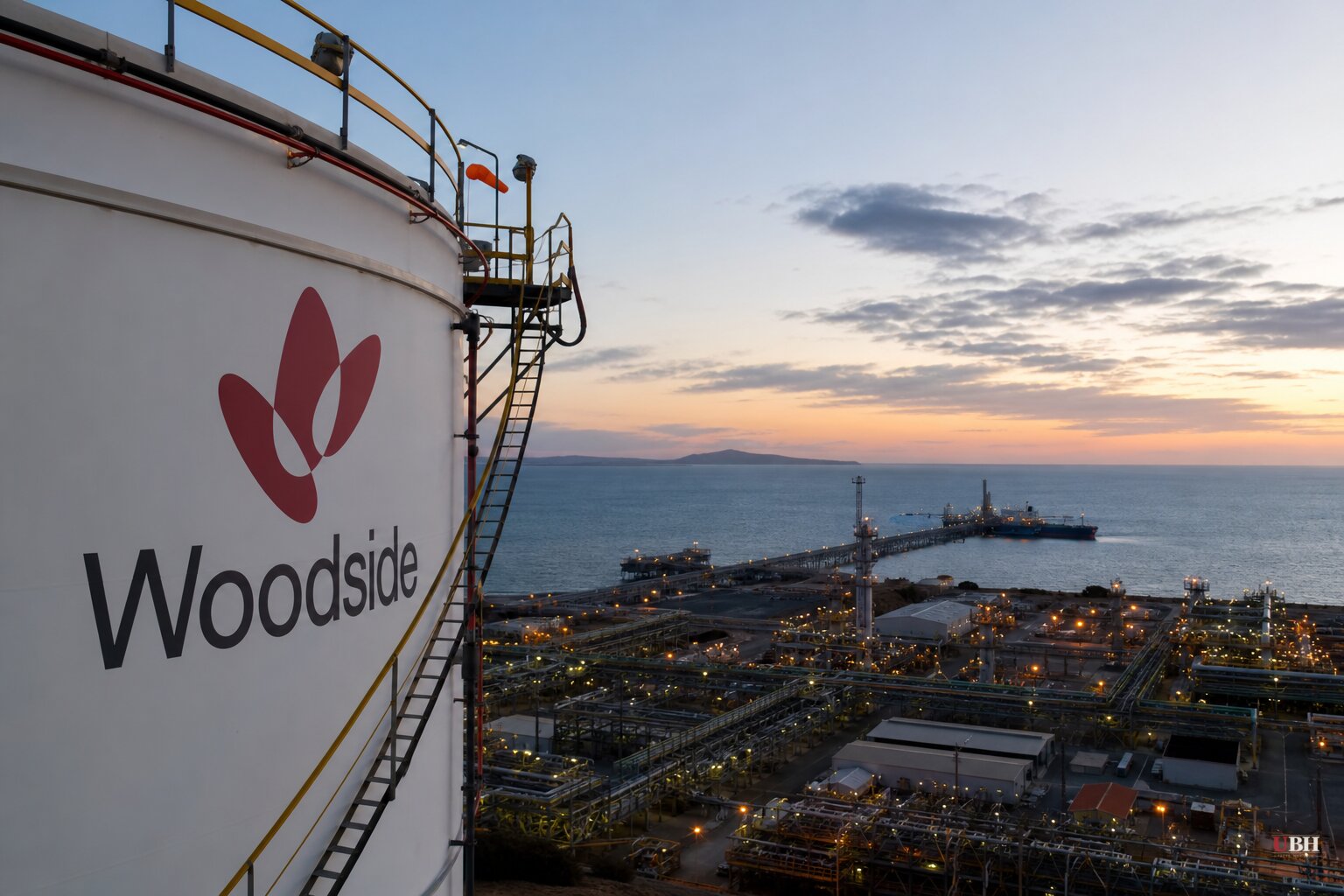
Woodside Energy told investors Tuesday it's done chasing clean energy targets that never panned out.
Australia's largest oil and gas company reported first-half 2026 underlying net profit after tax of $1.33 billion, a 7% increase, according to Reuters. Sales profit for the six-month period rose 27% to $1.67 billion, according to the Guardian. Both numbers beat or matched analyst expectations, with Reuters noting the profit figure edged past the Visible Alpha consensus estimate of $1.32 billion.
The company scrapped its commitment to spend $5 billion on new energy products like hydrogen by 2030, according to Reuters. It also retired its Scope 3 emissions target, which covers carbon released when customers burn Woodside's oil and gas rather than emissions from Woodside's own operations. The company's Beaumont New Ammonia project in Texas, once billed as one of Woodside's top decarbonization bets, is now under strategic review.
CEO Liz Westcott addressed the reasoning directly. "These targets were established in a different market context," she told analysts on the earnings call, according to Reuters. Speaking to Reuters afterward, she said Woodside tried and failed to make clean energy pay. She pointed to H2OK, a green hydrogen project in Oklahoma the company scrapped in 2025: "We made an investment in the U.S. The customers were not there to support that."
"We're looking at the market and we do not see a line of sight to investing that $5 billion by 2030," Westcott said.
The Iran War Backdrop
Iran's closure of the Strait of Hormuz cut roughly 20% of the world's oil and LNG supply, according to Reuters, driving Woodside's average realized price up to $74 per barrel of oil equivalent in the first half, from $61.70 a year earlier. The company said it expects further trading gains by redirecting cargoes to markets paying premium prices during the crisis.
Woodside isn't alone. Eight of the world's largest oil companies, including Aramco, BP, Shell, and ExxonMobil, posted combined profits above $90 billion in the April-to-June quarter, according to Oil & Gas 360, citing Oil Price data. That's nearly double the roughly $50 billion those same companies posted a year earlier. Aramco's quarterly net income rose 34% to more than $33 billion even after drone and missile strikes damaged its infrastructure, per that reporting.
Woodside declared an interim dividend of 57 cents per share, up from 53 cents last year, and said it plans to cut $350 million in costs starting in 2028. The company maintained its 2026 production guidance of 174 to 185 million barrels of oil equivalent and reaffirmed capital expenditure guidance of $4 billion to $4.5 billion.
Investor Pressure, Then Reversal
The clean energy targets Woodside just dropped were put in place in 2021 under then-CEO Meg O'Neill, after investor pressure to prepare for the energy transition. Two years ago, Woodside's Climate Transition Action Plan drew a 57.8% no vote at its annual meeting from shareholders who said the company wasn't doing enough on emissions, according to Reuters. Shortly after that vote, Woodside bought the Beaumont ammonia asset for $2.35 billion. Now it's under review for a possible sale or wind-down.
Climate campaigners are not pleased. Brett Morgan, investor campaigns manager at Market Forces, said Woodside "ditched its already feeble scope 3 emissions reduction and new energy investment targets, despite years of investor pressure demanding stronger climate action," according to the Guardian. Sophie McNeill, the Greens' WA climate spokesperson, said Woodside had given up "any pretence of trying to reduce emissions," per the same report.
Westcott's defense is straightforward: the hydrogen, ammonia, and carbon capture markets didn't develop as fast as expected, customers weren't paying up, and Woodside's new energy business will now be "guided by customer demand and commercial markets" rather than a fixed spending target. A company redirecting capital away from a market that isn't buying its product is standard capital allocation.
Woodside isn't the only major operator retreating from renewables. Reuters notes BP and Shell, including O'Neill herself, who now works at BP, have also cut renewable energy spending. The Associated Press, in reporting distributed by Breitbart, quotes U.N. Secretary-General António Guterres arguing the opposite lesson: that the Iran war's energy shock should push nations toward homegrown renewables precisely because they "cannot be blockaded or weaponized." Stanford climate scientist Rob Jackson called that kind of optimism "wishful thinking," pointing out the same argument surfaced after Russia's invasion of Ukraine and Europe responded partly by burning more coal.
Woodside's Scope 3 target is gone. Its direct-emissions reduction commitment for 2030 remains in place, the company says. Whether shareholders push back the way they did in 2021, or accept the move, will show up at Woodside's next annual meeting.
Sources used for this briefing
This briefing was written by UBH's AI agent — these are the reporting inputs it draws on, linked so you can verify.


