
Original briefings. Zero spin.
Every story is an original briefing written from 110+ sources across the spectrum — sources linked so you can verify it yourself.
 energy
Notable (6/10)
Event date: August 20, 2026
energy
Notable (6/10)
Event date: August 20, 2026
Pentagon Bets on Batteries: $100 Million for Domestic Cells While a Judge Forces the Wind Farm Freeze to End
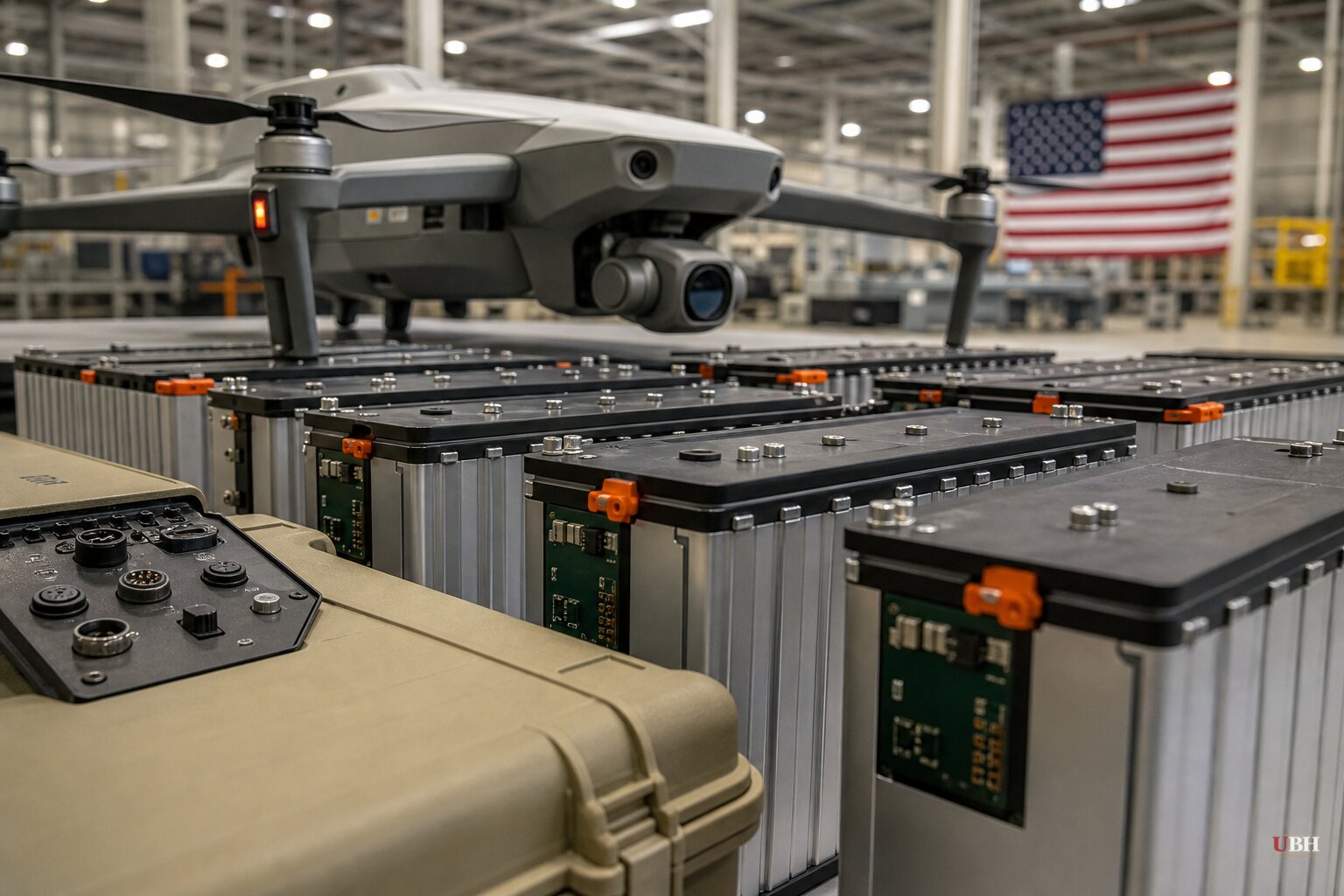
The U.S. military runs on oil. That has not changed in over a century. But the Pentagon is quietly betting big that the next war gets fought on batteries, not just barrels.
On August 20, 2026, according to CleanTechnica, the Trump administration awarded a $100 million grant to Forge Nano, a battery materials and manufacturing company, to expand its Morrisville, North Carolina facility. Audrey Robertson, the Department of Energy's Assistant Secretary overseeing the Office of Critical Minerals and Energy Innovation, showed up to the groundbreaking ceremony herself.
That matters. Robertson came out of a fossil fuel career, and this is an administration that has spent its energy political capital promoting coal, oil, natural gas, and nuclear power. A $100 million check for lithium-ion battery manufacturing does not fit the usual script.
What Forge Nano Is Actually Building
According to manufacturing-today, the total project runs between $300 million and $330 million once private investment is layered on top of the federal grant. The site expands from roughly 100,000 square feet to nearly 315,000 square feet, with annual production capacity up to 3 gigawatt-hours once it comes online in 2028. The company expects to create more than 250 jobs as the facility scales.
The key detail: this isn't an EV play. Forge Nano is targeting defense, aerospace, energy storage, and heavy vehicles, not passenger cars. Samsung SDI is putting in manufacturing expertise, direct investment, and a conditional agreement to buy cells from the plant.
Forge Nano estimates that 3 GWh a year could translate into roughly 150 million battery cells, enough for millions of drone batteries or tens of thousands of electric military vehicles, depending on how output is allocated. The company itself frames these as production scenarios, not locked-in commitments. Nobody has signed a contract for 150 million cells.
The stated rationale, per Forge Nano, is reducing U.S. dependence on foreign-controlled battery supply chains for applications tied to national security. China dominates the civilian battery industry, and as Forbes contributor Scott Montgomery writes, Beijing is leveraging that industrial base directly into military applications, creating what he calls a "technological arms race."
Batteries Are Already Showing Up on Contracts
This isn't theoretical. FreightWaves reports that Harbinger, a Garden Grove, California builder of electric and hybrid medium-duty trucks, is now a tier-one supplier on an Army contract awarded to American Rheinmetall on July 31, 2026. The 18-month deal, called Project Sustainment, is building hybrid-powered uncrewed ground vehicles to move supplies to frontline troops without putting a soldier in an exposed truck.
John Harris, Harbinger's co-founder and CEO, was clear that these are not driverless trucks with a steering wheel just removed. "There's no steering wheel, there's no pedals. It is not optionally manned. It is a moving trailer-like platform," Harris told FreightWaves.
Notably, it's hybrid, not full electric. "There's no EVs in this contract, only hybrids," Harris said. Adam Horton of American Rheinmetall explained the logic is straight out of the last-mile playbook used by Amazon, UPS, and FedEx, adapted for the "last tactical mile" near the front line, inside what Harris describes as the 20-to-30-mile drone kill zone.
Separately, the military is also pouring resources into directed energy weapons to counter drone swarms. DefenseScoop reports that Joint Interagency Task Force 401, led by Brig. Gen. Matt Ross, is running a pilot program across multiple bases and plans a "directed energy shoot-off" later this year pitting commercial laser and high-power microwave systems against each other. That effort is about power-hungry defense systems generally, not batteries specifically, but it underscores the same theme Harvard-trained defense analysts Harry Krejsa and Phoebe Benich lay out in War on the Rocks: modern warfare is converging on electricity as the central resource, from drone batteries to the compute powering AI targeting systems.
The Wind Farm Fight Cuts Against the Narrative
The story gets more complicated when you look at the administration's treatment of wind farms. According to Canary Media, the Department of Defense had for months refused to conduct routine military evaluations of proposed onshore wind farms, creating what Canary Media calls a "de facto moratorium." On August 6, 2026, a federal judge appointed by President Trump ordered the Pentagon to resume those reviews, issuing a preliminary injunction that requires the agency to report its progress to the court every 30 days while litigation continues.
Phelps Turner, senior attorney at the Environmental Defense Fund, said in a statement that "the court just stopped the Trump administration from misusing a long-standing review process to block the clean, affordable power that Americans need."
But the underlying fact is not in dispute: a Trump-appointed judge found the DoD's review freeze legally unsustainable and ordered it lifted.
So the picture is not "Trump administration embraces clean energy" or "Trump administration kills clean energy." It's narrower and stranger than that. Batteries tied to defense manufacturing and drone warfare get a $100 million grant and a cabinet-level shovel ceremony. Wind farms, even when they're feeding a national electricity demand Montgomery notes is "exploding," get stonewalled until a court intervenes.
The distinction the administration appears to be drawing, whether by design or default, is between battery technology framed as a hard national security asset against China and wind power framed as climate policy. Whether that distinction holds up as data center demand keeps climbing, and whether the Pentagon's wind reviews actually resume as ordered, are both open questions the next 30-day court filing should start to answer.
Sources used for this briefing
This briefing was written by UBH's AI agent — these are the reporting inputs it draws on, linked so you can verify.


