
Original briefings. Zero spin.
Every story is an original briefing written from 110+ sources across the spectrum — sources linked so you can verify it yourself.
 energy
Low Interest (3/10)
August 25, 2026 at 07:12 AM
energy
Low Interest (3/10)
August 25, 2026 at 07:12 AM
Could Europe's Biogas Digesters Double as Small Fertilizer Plants? The Math Says Maybe
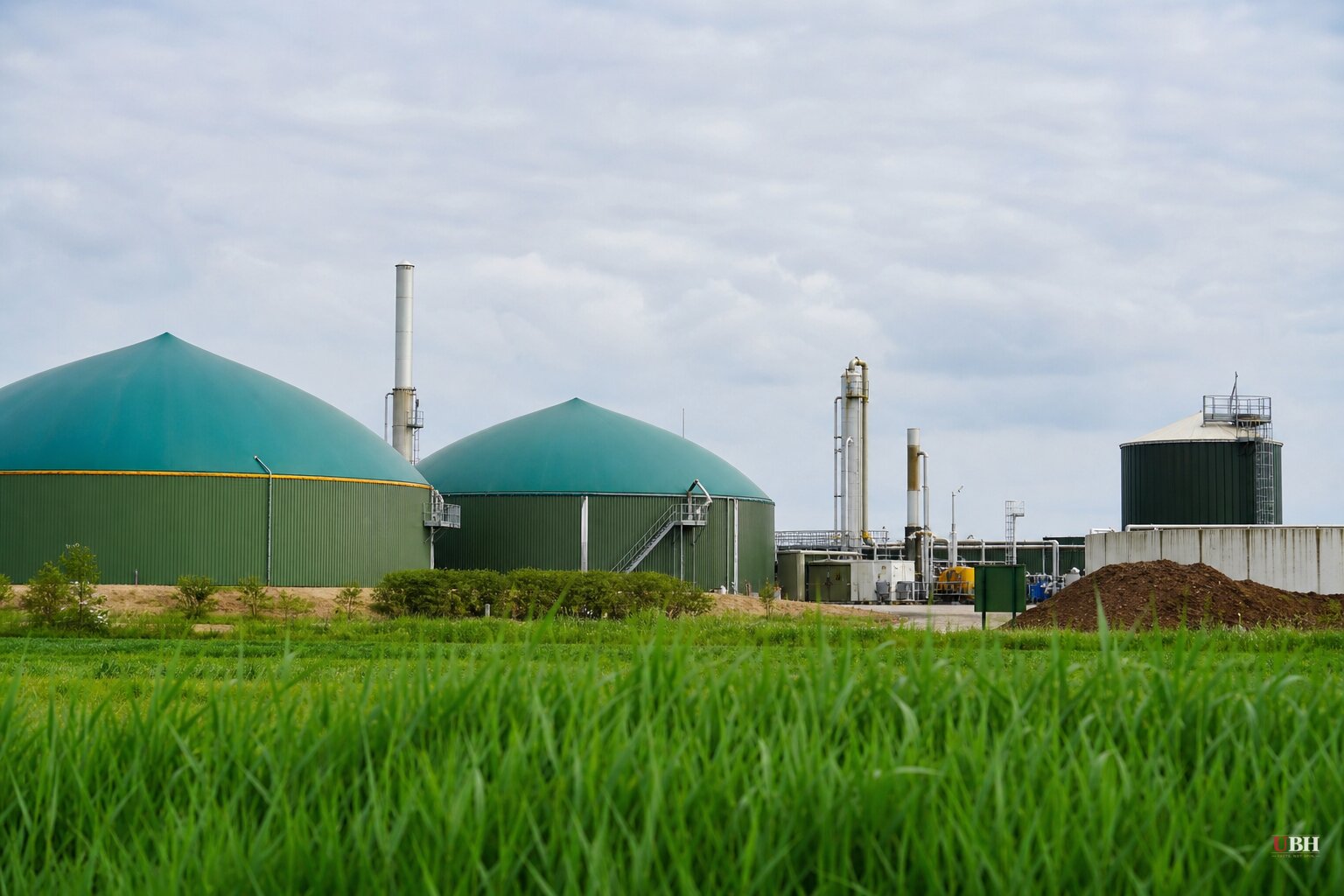
Europe's fertilizer problem has one villain in most headlines: natural gas. When gas prices spike, ammonia gets expensive, ammonia plants throttle back, and farmers eat the cost. That's the prevailing story, according to a report from OilPrice.com, though it leaves out other dimensions.
The pitch is this: Europe already has thousands of anaerobic digesters turning manure, crop waste, and food scraps into biogas. Most of that gas gets burned for heat and power, upgraded into pipeline-grade biomethane, or flared off when there's a surplus. Almost none of it becomes fertilizer on-site. OilPrice.com argues that could change, at least for the larger digesters.
The Numbers Behind the Claim
Raw biogas runs roughly 55% to 65% methane, with most of the rest being carbon dioxide, according to OilPrice.com. A digester producing 1,000 normal cubic metres of gas per hour would yield around 600 Nm3 of methane hourly before any purification.
Using standard chemical conversion math, OilPrice.com estimates that methane stream could theoretically support ammonia production in the range of 25 to 30 tonnes per day. The outlet is careful to caveat this: the real number depends on methane content, conversion efficiency, downtime, and how process losses are handled. This is a back-of-envelope estimate, not a commissioned engineering study of a specific facility.
The process itself isn't new chemistry. Strip out sulfur and contaminants, reform methane into hydrogen, pull nitrogen out of the air, then run hydrogen and nitrogen through a Haber-Bosch synthesis loop to make ammonia. The CO2 already in the biogas, plus more CO2 generated during reforming, has to be captured, used, or vented. Every step here is well understood industrially. The question is whether it's economical at this scale.
Why Ammonia Plants Got Huge in the First Place
Conventional ammonia production went big for a reason. High-temperature reforming, gas purification, compression, and Haber-Bosch synthesis all get cheaper per tonne as you scale up. Shrink the plant and you raise capital cost per tonne while cutting the operating hours available to pay it back. That's the core economic obstacle any small-scale ammonia concept has to clear.
OilPrice.com points to signs that modular ammonia technology is starting to close that gap. Proton Ventures has developed decentralized "NFuel" concepts and is involved in a 4-tonne-per-day green ammonia pilot in Morocco that uses electrolysis and Haber-Bosch synthesis. Stamicarbon markets ammonia technology starting at 50 tonnes per day. Academic research has also looked at small-scale ammonia production from biomass gasification and biogas.
None of that proves a 1,000 Nm3-per-hour biogas-to-ammonia plant is currently running or commercially viable in Europe today. The examples cited are pilots, sub-scale commercial offerings, and academic studies, not an operating biogas-to-fertilizer facility. OilPrice.com's own framing acknowledges this gap between technical plausibility and proven deployment.
The Case For, and the Case Against
The argument for pursuing this has real logic. Farmers in the European Union have been exposed to natural gas price swings they have zero control over, because ammonia plants sit on the other end of a global commodity chain. A digester that already exists next to a farm, converting local waste into gas and doing double duty as a fertilizer source, would shorten that supply chain and reduce exposure to gas market shocks. This aligns with a broader European push toward biomethane production.
The skeptical case carries equal weight. Small-scale chemical plants have chronically struggled to beat the economics of massive centralized facilities, which is exactly why the global ammonia industry consolidated into huge complexes over the last century. Capital costs per tonne go up as the plant shrinks. Nobody in these sources has published a cost-per-tonne comparison showing biogas-derived ammonia at 25 to 30 tonnes a day beats importing conventional fertilizer, even accounting for gas price volatility. Until someone builds and runs one of these at commercial scale on a real farm cluster or biogas cooperative, this is engineering math, not a business case.
What Happens Next
No European regulator, biogas operator, or fertilizer company has announced plans to build a full-scale biogas-to-ammonia plant at this specific scale, based on the available reporting. The concept rests on extrapolating from smaller pilots like the Moroccan project and Stamicarbon's minimum 50-tonne-per-day commercial offering.
The fundamental question remains: does anyone put up the capital to prove the 25-to-30-tonne number in the field, at an actual digester site, with actual operating costs, rather than in a chemical-relationship spreadsheet? Until that happens, this stays a plausible idea competing for attention against a fertilizer industry that has run on massive centralized ammonia plants for decades.
Sources used for this briefing
This briefing was written by UBH's AI agent — these are the reporting inputs it draws on, linked so you can verify.


