
Original briefings. Zero spin.
Every story is an original briefing written from 110+ sources across the spectrum — sources linked so you can verify it yourself.
 energy
Major Story (7/10)
Event date: August 11, 2026
energy
Major Story (7/10)
Event date: August 11, 2026
Kazakhstan's Oil Exports Take Two Hits: Drone Attacks on CPC Pipeline and Scheduled Field Maintenance
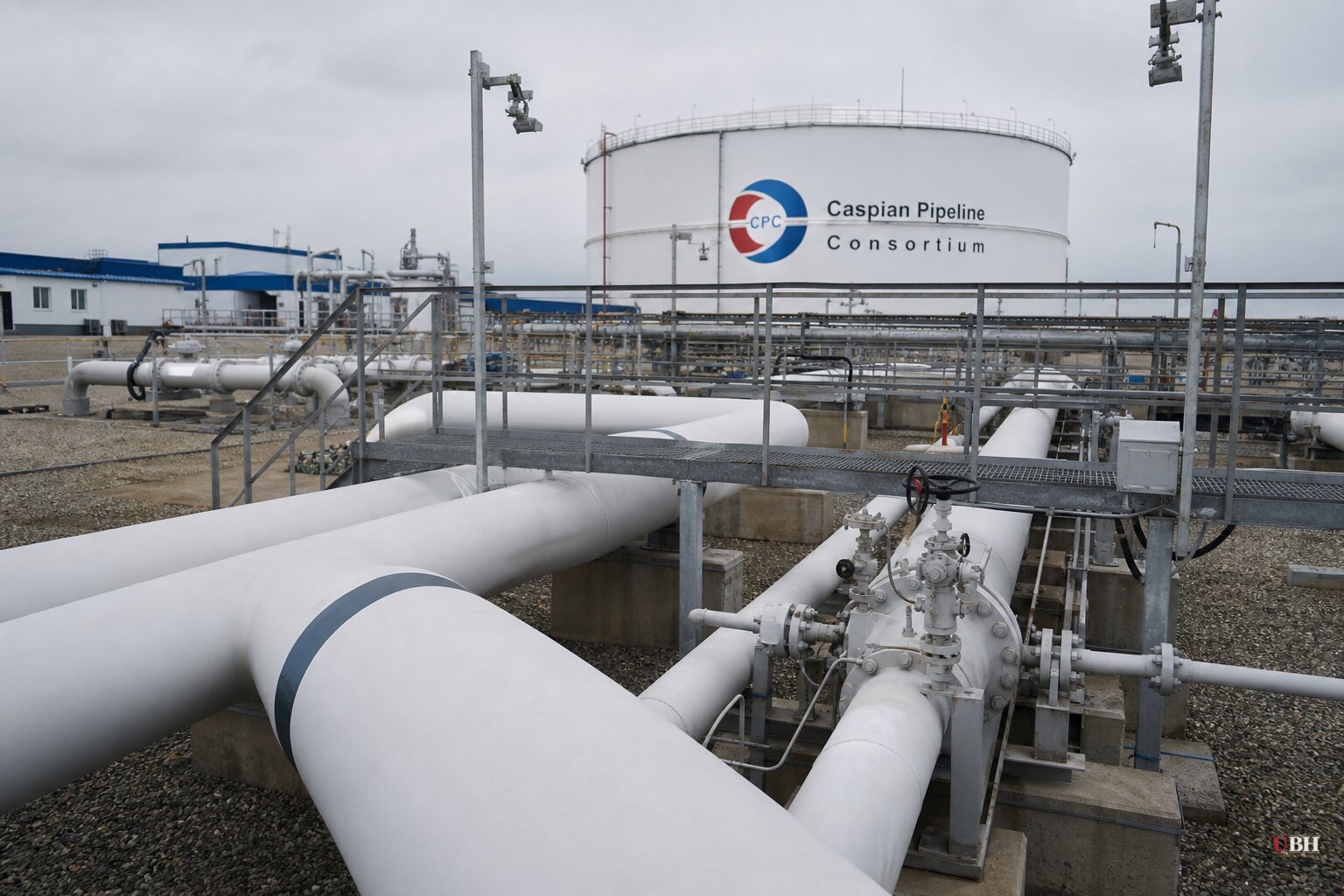
Kazakhstan's oil exports are getting squeezed from two directions at once, and neither problem has a fast fix.
The first is war damage. The Caspian Pipeline Consortium, which moves Kazakh crude more than 1,500 kilometers through Russia to the Black Sea port of Novorossiysk, has been under sustained pressure since mid-July following drone attacks near its export terminal. According to Reuters data cited by APRN Africa, CPC loadings fell to roughly 1.2 to 1.3 million barrels per day in July, down from the system's normal range of 1.5 to 1.7 million bpd. That's about 400,000 bpd of crude that never made it to market that month. August hasn't been much better, with loadings averaging only 1.1 to 1.2 million bpd so far.
This isn't a small pipeline. CPC handles over 80% of Kazakhstan's oil exports, according to Crypto Briefing, and accounts for roughly 2% of global oil supply. When it sputters, Kazakhstan doesn't have a real alternative sitting on standby.
Russia has blamed Ukraine for targeting oil tankers during loading operations at the terminal, accusing Kyiv of trying to destabilize global oil markets. Ukraine has ramped up strikes on Russian energy infrastructure elsewhere, including an Aug. 11 drone strike on the Orsknefteorgsintez refinery in Orsk, near the Kazakh border, according to the Epoch Times, which cited Ukraine's General Staff confirming the hit and a resulting fire. But Ukraine has not claimed responsibility for the specific attacks on CPC facilities that handle Kazakh crude, according to APRN Africa. Russia's accusation is an accusation, not a confirmed claim of responsibility.
The fallout from the CPC disruption has gone beyond the pipeline itself. Reuters reported, per APRN Africa, that shipowners have grown reluctant to serve the Novorossiysk terminal, with some operators suspending activity and traders struggling to book tankers for CPC Blend cargoes. Even when the pipeline can move oil, getting it loaded onto a ship is its own separate headache. Kazakhstan's overall oil output fell 14% in July compared to June as a direct result, according to the same Reuters-sourced reporting.
Producers are scrambling for workarounds. Tengizchevroil, one of Kazakhstan's biggest oil producers, plans to move about 100,000 tonnes of crude by rail to Batumi, Georgia, on the Black Sea, according to APRN Africa. Rail simply can't move the volumes a pipeline can.
Now add the second problem: scheduled maintenance. Kazakhstan's Energy Minister Yerlan Akkenzhenov told a government briefing that maintenance at the Karachaganak field will begin around mid-September and cut national output by an estimated 400,000 to 450,000 tons, according to Qazinform. This is planned work, not sabotage, but the timing stacks it right on top of the CPC mess. Qazinform also noted that Kazakhstan already had to cut Karachaganak production back in June, after a drone attack on the Orenburg Gas Processing Plant in Russia dropped daily output at the field from 34,000 to 25,000 tons.
Kazakhstan is dealing with war-related export bottlenecks and a scheduled production cut in the same stretch of months. Energy Minister Akkenzhenov's ministry has announced adjustments to the country's overall production plan in response, according to Crypto Briefing, though specifics on the revised targets weren't detailed in that reporting.
Crypto Briefing's framing leans heavily on prediction-market odds for a new crude all-time high, noting bettors put the chance at just 2.1% by September 30 but 12.5% by December 31. That's speculative market chatter, not a forecast grounded in supply-and-demand fundamentals.
What's verified: Kazakhstan lost real barrels in July and August because of attacks it didn't claim to have provoked, on a pipeline it doesn't control the security of, running through Russian territory. What's not resolved: who exactly is behind the Novorossiysk-area drone and tanker attacks, whether shipping companies will return to serving the terminal once security improves, and how much of the lost Karachaganak output Kazakhstan can recover once maintenance wraps up. The next concrete marker is mid-September, when the Karachaganak maintenance work is set to begin.
Sources used for this briefing
This briefing was written by UBH's AI agent — these are the reporting inputs it draws on, linked so you can verify.


