
Original briefings. Zero spin.
Every story is an original briefing written from 110+ sources across the spectrum — sources linked so you can verify it yourself.
 energy
Notable (6/10)
August 26, 2026 at 06:47 PM
energy
Notable (6/10)
August 26, 2026 at 06:47 PM
Dutch Gas Reserves Sit at 45% With Winter Coming, Gasunie Confirms Target Will Be Missed
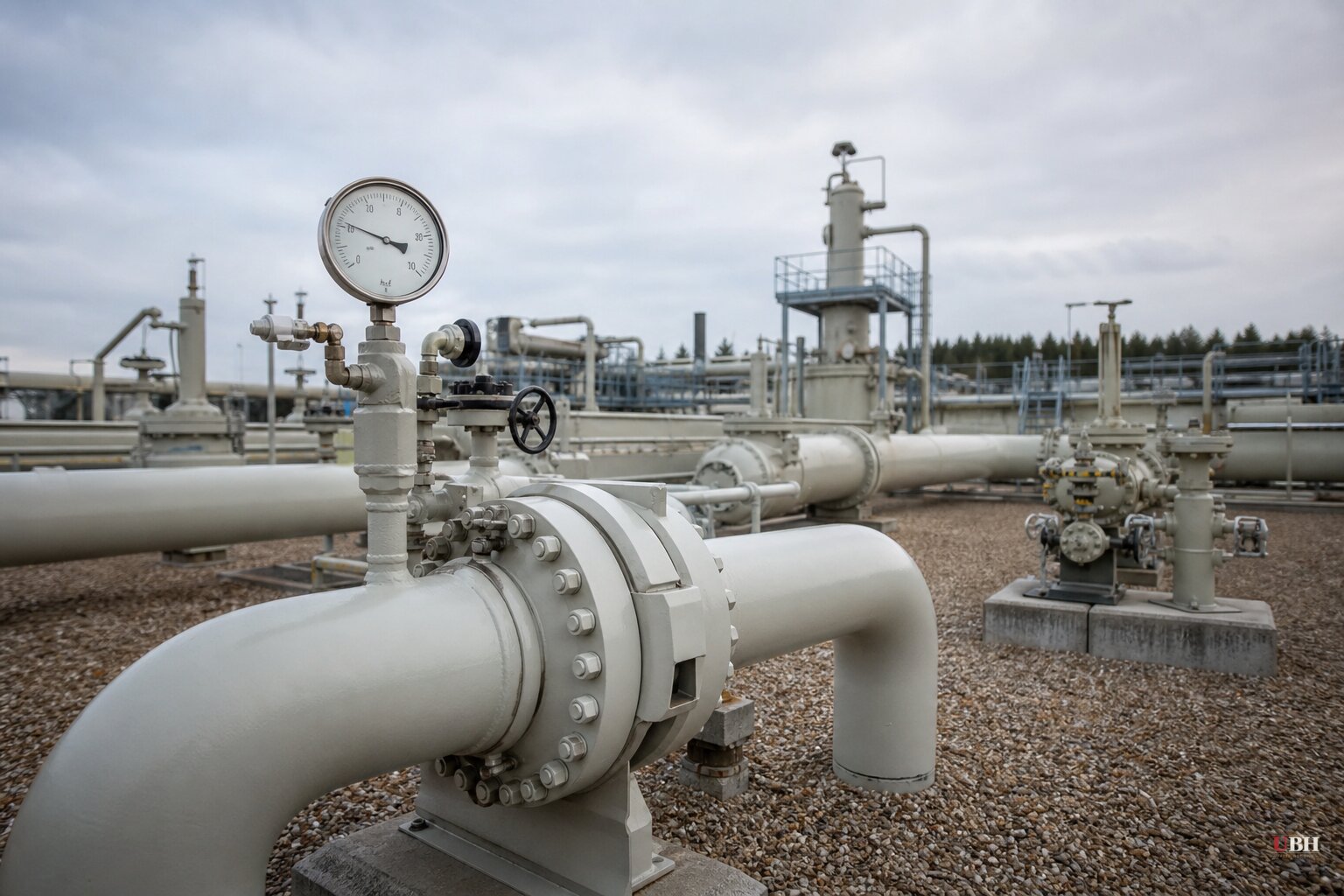
Dutch gas storage sits at roughly 45% of capacity as of August 24, according to Gasunie, the state-owned network operator. That's down from 63% a year ago, 88% in 2024, and 94% in 2023, according to NL Times. The government wanted storage at 80% by November 1. Gasunie itself had recommended a 115 terawatt-hour (TWh) target, roughly half the country's annual gas consumption. Neither number is happening.
"Based on the latest developments, the Netherlands will no longer achieve the previously set filling target for this winter," Gasunie said in a statement reported by Euronews. The EU's minimum requirement is 74% of storage capacity, equivalent to about 107 TWh, according to NL Times. That's also out of reach.
Why nobody's filling the tanks
The mechanics here are basic economics, not sabotage or shortage. Summer gas prices in Europe have been running higher than expected winter prices. That flips the normal incentive: energy companies who'd usually buy cheap in summer and sell high in winter have no reason to stockpile now, because it would lose them money.
European gas prices were trading near €64 per megawatt-hour on Wednesday, more than double where they started the year, according to Euronews. Traders link part of that surge to the war around Iran and disruption tied to the Strait of Hormuz, which has delayed Qatari LNG shipments, according to Anadolu Agency and Dutch News. Record summer heat has piled on additional demand for electricity to run air conditioning, while the same heat and drought have curbed hydropower and nuclear output, Euronews reported.
Because commercial firms won't store gas at a loss, the Dutch government has had state energy company EBN doing it instead. EBN is filling reserves in Bergermeer, Norg, and Grijpskerk under government instruction and says it remains on track to hit its own 80 TWh ceiling, according to Dutch News. Gasunie has said it already warned the Ministry of Climate and Green Growth in June that filling was moving too slowly, according to NL Times.
Is anyone actually worried?
Gasunie is careful to say this isn't a supply emergency. "This does not mean that there will be insufficient gas available this winter or that security of supply is at risk," the company said, according to NL Times. Gas is still arriving through Norwegian pipelines, LNG terminals, and small Dutch fields.
René Peters, an energy expert at Dutch research institute TNO, told broadcaster NOS that under normal conditions he isn't especially worried about storage levels. The danger, he said, is a pile-up of problems hitting simultaneously: a long cold snap that also spikes demand in neighboring countries, combined with a fault at a pipeline or LNG terminal.
A 45% storage level isn't a crisis on its own. It's a thinner cushion. The people flagging risk aren't fringe voices. They're the network operator itself and a state-run research institute, which gives households a fair reason to pay attention even though nobody is predicting the lights go out.
Trade association Energie-Nederland, representing energy companies, said after Gasunie's warning that its members are not concerned about having enough gas this winter, according to Ground News' aggregation of Dutch outlet coverage. That's a real industry counterpoint worth weighing against Gasunie's caution: the people who actually move the gas aren't panicking either.
What it costs households
For most Dutch households, the immediate effect isn't a supply cutoff. It's price. Filling reserves with expensive summer gas eventually feeds through to energy bills, and households on variable or dynamic contracts will feel it first, according to Dutch News.
Gasunie has pushed the government to set up a strategic gas reserve for emergencies. One option under discussion: keeping part of the Groningen gas field, shut down in 2024 after extraction triggered hundreds of earthquakes, available strictly as an emergency backstop. That's politically loaded in a region still dealing with earthquake damage from decades of production, and it's not a decision anyone expects to be easy.
The Dutch cabinet is scheduled to update parliament on reserve levels and possible next steps in September, according to Dutch News. Until then, the question isn't whether the Netherlands runs dry this winter. It's whether an unlucky combination of cold weather and a pipeline or terminal problem shows up at the same time, and whether the state's emergency backstop measures are ready if it does.
One point of comparison circulating online mixes up timelines: separate reporting on a 2022 German gas warning from then-Economy Minister Robert Habeck, tied to the Nord Stream pipeline sabotage that year, describes a different crisis in a different country. It has no bearing on the Netherlands' 2026 storage numbers and shouldn't be read as part of the same story.
Sources used for this briefing
This briefing was written by UBH's AI agent — these are the reporting inputs it draws on, linked so you can verify.


