
Original briefings. Zero spin.
Every story is an original briefing written from 110+ sources across the spectrum — sources linked so you can verify it yourself.
 energy
Major Story (8/10)
August 26, 2026 at 03:52 PM
energy
Major Story (8/10)
August 26, 2026 at 03:52 PM
Europe Paid Nearly $330 Billion Extra for Fossil Fuels Since the Iran War Started. Brussels Still Doesn't Have a Plan.
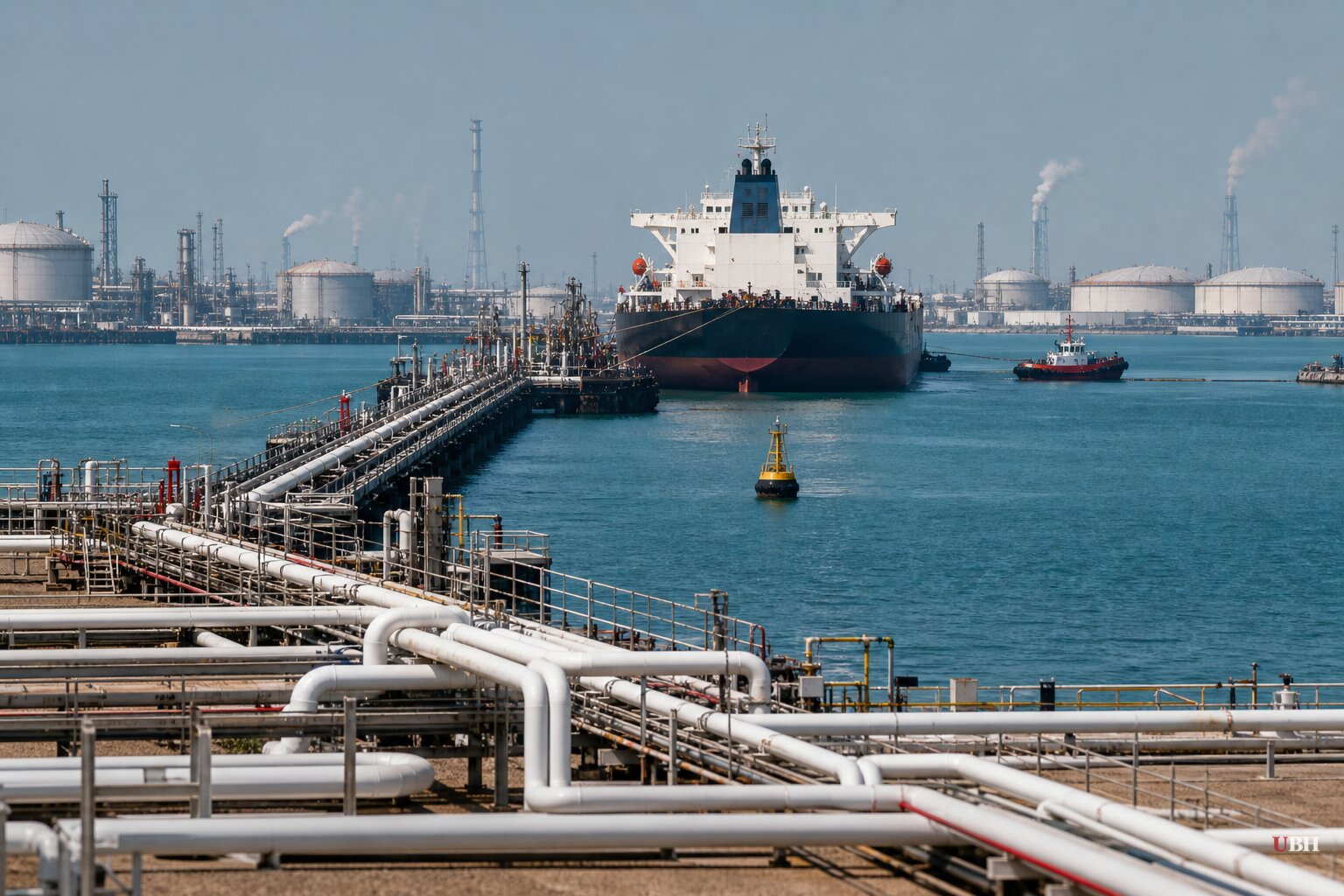
The Strait of Hormuz has technically reopened. Europe is still paying for the six months it was effectively closed.
Since the United States and Israel launched their war against Iran on February 28, 2026, fossil fuel importers worldwide have paid roughly $330 billion more than pre-war futures markets expected, according to a report from the Centre for Research on Energy and Clean Air (CREA), authored by Luke Wickenden and Lauri Myllyvirta. Oil alone accounts for about $140 billion (€140bn as cited by Euronews) of that overrun.
Europe got hit hardest of any region. CREA puts the EU's gross additional cost at $78 billion, ahead of China's $35 billion and India's $22 billion, even though the EU imports less Gulf oil than Southeast Asia does. Four countries alone, the Netherlands, Italy, France and Spain, absorbed close to €43.8 billion in extra costs, according to Euronews' review of the CREA data: the Netherlands at €11.5bn, Italy at €12.7bn, France at €10.8bn, and Spain at €8.8bn.
Why the shock outlasted the blockade
Iran blocked most tanker traffic through the Strait, a chokepoint for roughly 20% of global oil and gas flow. The effects didn't fade when the shooting stopped. LNG prices rose 60% in the Atlantic basin and 75% in the Pacific, according to CREA. Diesel and petrol prices jumped 59%. The International Energy Agency's August 12, 2026 Oil Market Report found Gulf oil production climbed to 23.9 million barrels per day in July, still 8.3 million bpd below pre-war levels.
Art Berman, a petroleum geologist with more than four decades in the industry, told Fox News Digital that wells shut in for months don't simply switch back on. "The bigger story and the more important one long term is that 8 million barrels of Persian Gulf production is currently shut in and world production is down about 10 million barrels a day," Berman said, calling it a world-changing event even if political issues are resolved.
The US Energy Information Administration's numbers differ somewhat from Berman's and the IEA's, putting July shut-ins at an average 5.5 million bpd. The agency doesn't expect production and trade patterns to normalize until early 2027, with some Gulf producers possibly never regaining prior output.
A White House official, speaking on background, pointed to falling oil prices since the signing of a memorandum of understanding and said the Strait is open with a US naval blockade enforcing that access.
Politicians want someone to pay for it
Spain's Economy Minister, Carlos Cuerpo, announced that finance ministers from Spain, Germany, Italy, Portugal and Austria sent the European Commission a letter, dated Friday and made public by Cuerpo, calling for an EU-wide windfall tax on energy companies. The letter argues the war's fallout should be "distributed fairly" and that companies profiting from the crisis "must do their part to ease the burden on the general public," according to reporting carried by Breitbart via the Associated Press.
This isn't a new playbook. The EU imposed a similar "solidarity contribution" with profit caps in 2022 after Russia's invasion of Ukraine sent energy markets into chaos. Eurozone inflation hit 2.5% in March 2026, up from 1.9% in February, driven largely by oil prices, per the same reporting.
EU Energy Commissioner Dan Jorgensen has warned that fuel prices are unlikely to return to normal for the foreseeable future.
There's a reasonable case against a windfall tax, even if it's popular with voters facing higher bills. Energy companies argue that punishing profits during a price spike discourages exactly the kind of investment in new supply, storage, and infrastructure that would prevent future shortages. Critics of the 2022 EU solidarity contribution made that same point at the time. No formal Commission proposal exists as of this writing.
The defense argument nobody in Brussels wants to hear
The Dutch Ministry of Defense published an Energy Security Roadmap arguing that military readiness and energy policy can't be separated. More than 95% of Dutch military aircraft, ships and vehicles run on hydrocarbons. NATO's single fuel policy standardizes alliance logistics around liquid fossil fuels, particularly kerosene, according to the Daily Signal's review of the document.
Samuele Furfari, writing for the Daily Signal, argues this exposes a contradiction: the EU keeps pushing decarbonization while wind and solar account for just over 3% of global energy supply after two decades of subsidies. The 2026 Statistical Review of World Energy found that 86% of global primary energy consumption still comes from fossil fuels. Furfari contrasts this with China, which is expanding renewables while also building new coal capacity and locking up critical mineral supply chains, prioritizing energy availability over ideology.
That's a fair critique of the pace and sequencing of Europe's energy transition. CREA's analysis, using Wickenden as a source, found that EU clean power capacity built since 2020 saved importing countries €36 billion in fossil-fuel costs during just the first five months of the crisis. "The best way to protect against high oil prices is to get off the black stuff as quickly as possible," Wickenden said, arguing that countries which invested in clean energy after past crises saved billions.
Both things can be true at once: renewables softened the blow, and Europe still isn't close to energy independence.
Heat is compounding the energy math
A run of heatwaves, the fifth of the year as of recent reports, is forcing Romania's Nuclearelectrica to disconnect its sole operational reactor because of record-low Danube water levels needed for cooling. France and Hungary have also curtailed nuclear output for the same reason. Triodos Bank estimates Europe's summer heat could cost the economy €180 billion this year, roughly 1% of GDP.
Kieran Tompkins of Capital Economics told CNN that European gas storage levels are "the lowest for this point in the year for over a decade" heading into winter, right as heat-driven air conditioning demand competes with restocking.
Ken Koyama, senior advisor at Japan's Institute of Energy Economics, framed the broader stakes on August 20: "Any departure from a market-determined equilibrium necessarily entails the acceptance of additional costs." Whether the Hormuz shock produces a lasting shift away from Gulf dependence or a return to old patterns depends on how long the disruption lasts and how much cost governments and consumers are willing to absorb.
The European Commission has not yet announced a decision on the windfall tax request. Winter heating demand, and whether gas storage holds up, will be the next test of whether Europe's energy exposure gets any smaller before it gets worse.
Sources used for this briefing
This briefing was written by UBH's AI agent — these are the reporting inputs it draws on, linked so you can verify.


