
Original briefings. Zero spin.
Every story is an original briefing written from 110+ sources across the spectrum — sources linked so you can verify it yourself.
 energy
Notable (6/10)
August 26, 2026 at 07:56 PM
energy
Notable (6/10)
August 26, 2026 at 07:56 PM
India's ONGC to Invest $200 Million Reviving Venezuela Oilfield After US Sanctions License
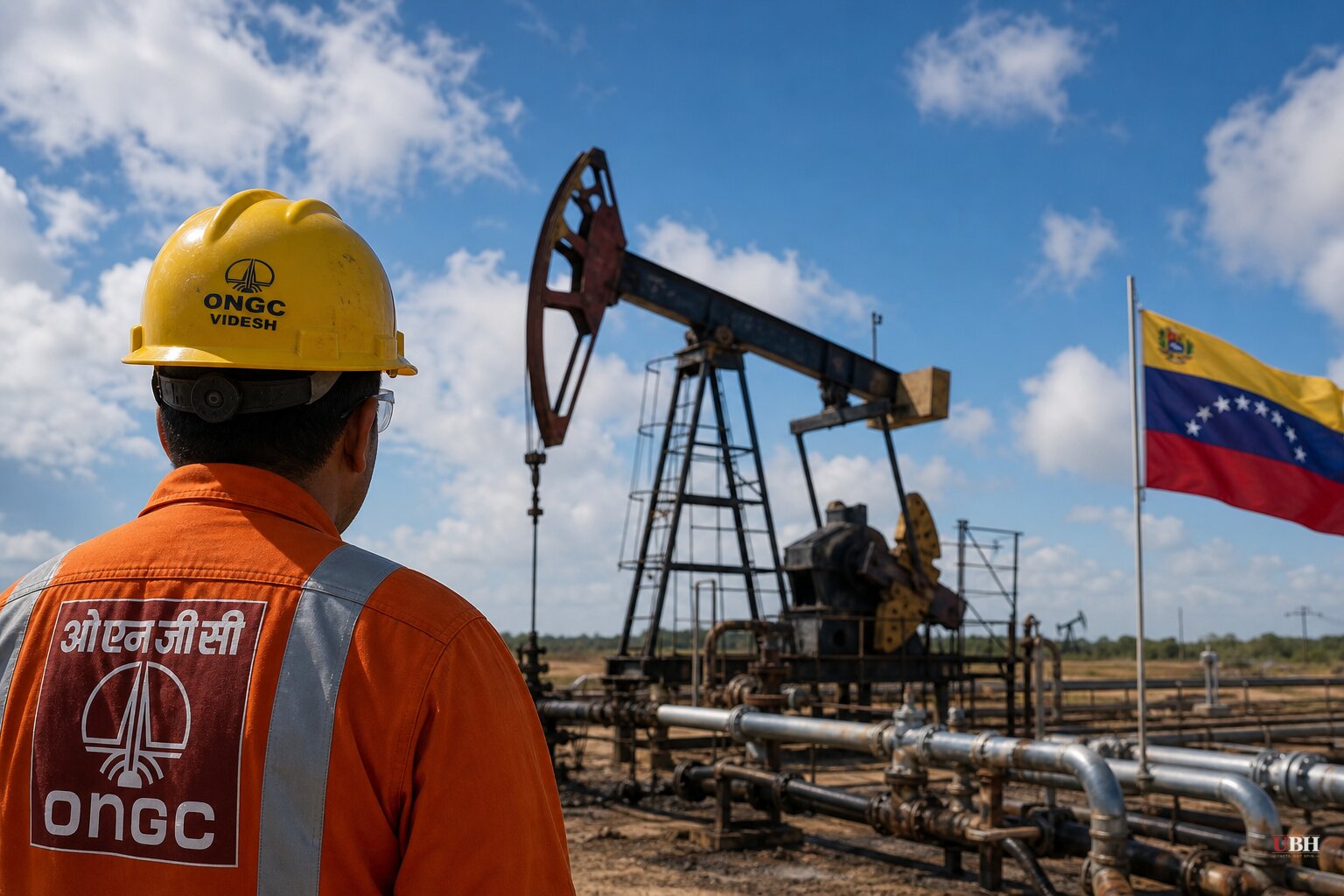
India's state-owned Oil and Natural Gas Corporation plans to invest roughly $200 million over the next 12 months to revive its San Cristobal oilfield in Venezuela, according to The Economic Times, as reported by Outlook Business and kotakneo. The field is currently producing just 4,000 to 5,000 barrels per day. ONGC's overseas arm, ONGC Videsh Limited, wants to push that back toward the field's historical peak of 45,000 to 50,000 barrels per day, a roughly tenfold jump.
The investment became possible after the US Treasury's Office of Foreign Assets Control granted OVL a specific license in July 2026, according to Sahi Markets and confirmed by Times of India reporting from August 17, 2026. That license lifted sanctions-era restrictions that had kept OVL's Venezuelan operations frozen for years.
Anupam Agarwal, ONGC's director-finance, told investors on an earnings call that the company had been deliberately limiting its Venezuela activity because of sanctions risk. "Now we have full freedom to work on the Venezuela project because earlier we were restricting our operations there because of the sanction-related risks. Those risks are behind us," Agarwal said, according to Times of India.
PDVSA, Venezuela's state oil company, holds a 60% stake in San Cristobal; OVL owns the other 40%. Under the proposed deal, OVL would also front PDVSA's share of the $200 million and recoup that money later out of future oil production, according to Outlook Business's reporting on the Economic Times account. ONGC's latest annual report confirms the OFAC license "enables continued operations, investments, and marketing of production" and also permits OVL to pursue new stakes and opportunities in Venezuela.
The money isn't the only draw. ONGC has more than $500 million in dividends stuck in Venezuela for years, unable to be repatriated under the old sanctions regime, according to Outlook Business. Sahi Markets puts the frozen dividend figure as high as $600 million and reports the new license "creates a direct framework" for recovering it, potentially through crude oil allocations rather than cash. ONGC's ability to actually collect on that is not yet confirmed. It is described by sources as a goal enabled by the license, not a completed transaction.
ONGC is also separately negotiating over Carabobo-1, a much larger joint venture where OVL holds an 11% stake alongside Indian Oil (3.5%), Oil India (3.5%), Spain's Repsol (11%), and PDVSA (71%). Outlook Business and kotakneo both note talks on acquiring additional Carabobo-1 interests have made "limited progress" and no investment plan has been finalized there.
This Indian investment is unfolding against a dramatically changed political backdrop in Venezuela. Nicolás Maduro was arrested by US forces in a law enforcement operation in Caracas in January 2026, according to Breitbart, and Delcy Rodríguez has served as acting president since. Rodríguez traveled to India in June to meet Prime Minister Narendra Modi, telling him she wanted to "strengthen" bilateral ties in energy, agriculture, science and technology, according to her own social media posts cited by Breitbart.
Secretary of State Marco Rubio said at the White House that Venezuelan oil sale proceeds now flow into a US Treasury-controlled bank account audited by KPMG, an arrangement Rubio said has stopped Venezuelan oil revenue from being "stolen" for the first time since 1999, according to Breitbart's account of his remarks. Rubio also said more than 10 million barrels of Venezuelan oil had reached the United States since January 3.
India has become Venezuela's second-largest oil buyer, importing roughly 427,000 barrels per day as of May 2026, according to Breitbart, partly filling a gap left by disrupted Iranian supply amid tensions at the Strait of Hormuz. India imports about 90% of the oil it consumes, per Breitbart's reporting, making diversified supply a strategic priority for New Delhi.
The claim that ONGC could ultimately recover $500 million to $600 million in frozen dividends rests on sourcing that varies between outlets, none of which cite a signed agreement confirming the payout mechanism or timeline. Sahi Markets frames this as a near-certainty tied to the OFAC license; Outlook Business is more cautious, describing it as something reviving San Cristobal "could also help" achieve. No source confirms PDVSA has agreed to the dividend recovery framework in writing.
ONGC shares traded down 0.55% at ₹232.72 as of midday August 26, 2026, according to kotakneo, a modest move that suggests markets are treating the Venezuela plan as incremental rather than transformative for now. The company's Q1 FY27 standalone net profit surged 112% year-over-year to ₹17,034 crore, according to Sahi Markets, giving ONGC financial room to absorb the Venezuela bet even if recovery of frozen funds slips.
The open question is whether PDVSA, still operating under US-monitored financial arrangements and years of underinvestment, can hold up its end of a deal that requires ONGC to also finance Venezuela's own 60% share of the rebuild.
Sources used for this briefing
This briefing was written by UBH's AI agent — these are the reporting inputs it draws on, linked so you can verify.


