
Original briefings. Zero spin.
Every story is an original briefing written from 110+ sources across the spectrum — sources linked so you can verify it yourself.
 energy
Major Story (8/10)
August 26, 2026 at 09:18 PM
energy
Major Story (8/10)
August 26, 2026 at 09:18 PM
AI Data Centers Are Driving America's Biggest Gas Power Buildout in Decades
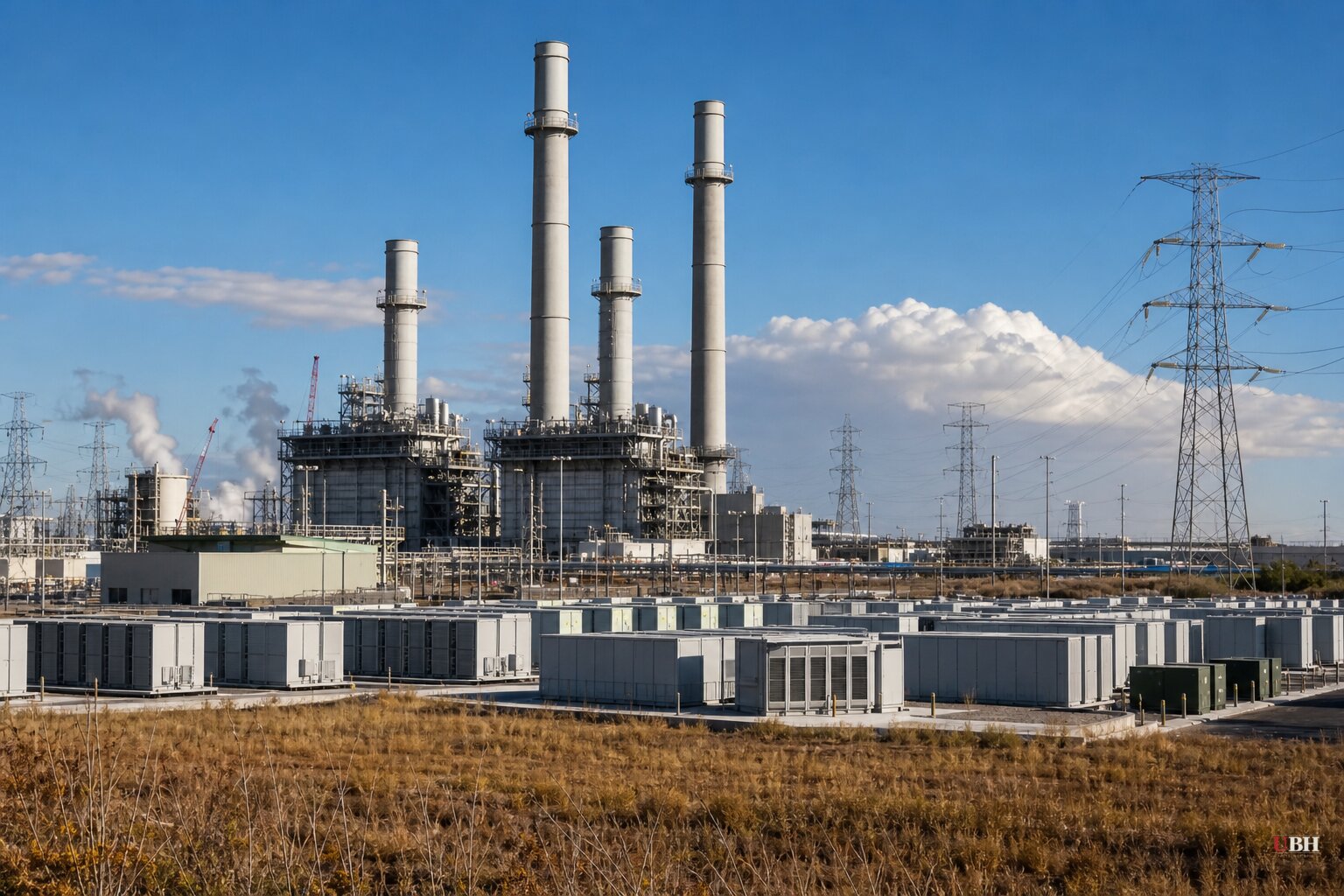
The AI boom needs electricity, and nobody built enough of it. Now the fix is gas, lots of it, and the country is racing to pour concrete before the grid catches up.
Gartner projects global data center electricity consumption will climb from 447 terawatt-hours in 2025 to 565 terawatt-hours in 2026, a 26 percent jump, according to a forecast reported by Tom's Hardware. Peak power demand is expected to rise 27 percent to 132 gigawatts over the same span. Gartner sees total consumption topping 1,200 terawatt-hours by 2030.
The driver is AI-specific hardware, not your average server rack running email. AI-optimized servers pulled roughly 95 terawatt-hours in 2025 and are projected to hit 175 terawatt-hours this year, an 84 percent jump, according to Gartner. By 2027, those servers are expected to consume more electricity than every conventional data center server on Earth combined. Cooling alone is projected to eat up 195 terawatt-hours in 2026, up 22.6 percent, because denser AI racks run hotter.
Gartner Direct Analyst Linglan Wang said power availability, not chip supply, is now the bottleneck. "Surging demand for compute-intensive AI workloads is driving unprecedented data center power growth," Wang said, adding that power security has become the new battleground for scaling AI and protecting margins.
The United States accounts for the biggest share of that demand. Roughly 204 of the 565 terawatt-hours consumed globally in 2026 will happen in the U.S., about 36 percent of the world total, with AI data centers alone accounting for a third of America's national power draw.
Gas Is Filling the Gap, Fast
Nuclear and renewables take years to permit and build. Gas turbines don't. That's why the U.S. has reversed course relative to China, historically the world's biggest builder of new gas capacity.
Global Energy Monitor found the U.S. is now building twice as much gas-fired capacity as China, and nearly three times as much when counting announced and pre-construction projects, according to the Guardian. Since January, gas capacity in development in the U.S. jumped 50 percent, from 252 gigawatts to 378 gigawatts. If all of it gets built, America's gas fleet grows by two-thirds at a cost north of $647 billion, per Global Energy Monitor's analysis.
Jenny Martos, a project manager at Global Energy Monitor, said the shift happened fast. "Six months ago, China had more gas plants under construction but that has now flipped," Martos told the Guardian. "Building all of this gas for AI locks in decades of pollution and it is also locking in dependence on a volatile fuel cost, which will get passed down to rate payers."
Latitude Media reported specifics on one megaproject driving those numbers: an eight-gigawatt data center under development by SB Energy in Pike County, Ohio, with OpenAI as tenant. The facility will be backed by 10 gigawatts of new energy capacity, 9.2 gigawatts of which is gas, according to the project's own website. The Department of Energy's Office of Environmental Management is giving SB Energy access to federal land, and the new gas generation is partly funded through the U.S.-Japan Strategic Trade and Investment Agreement, with the federal government set to own the resulting generation assets. Amazon and Pacifico Energy's planned 7.65-gigawatt facility in Pecos County, Texas, ranks second in size.
Global Energy Monitor's first-half 2026 data shows U.S. gas capacity tied specifically to data centers nearly doubled, hitting around 189 gigawatts across announced, pre-construction, and construction phases, up almost 100 gigawatts from the end of 2025, according to Latitude Media.
A group of electric cooperative executives, including leaders from the National Rural Electric Cooperative Association, Oglethorpe Power Corp, and Basin Electric Power Cooperative, is now pushing to repeal the EPA's 2024 gas power plant emissions rules, arguing the regulations are slowing their ability to meet data center demand, Latitude Media reported.
The UK Faces the Same Squeeze, Smaller Scale
Britain's version of this fight is playing out at the grid-connection level. Ofgem's July 2026 consultation found the UK's connection queue holds applications for 125 gigawatts, nearly three times the country's peak demand of roughly 45 gigawatts, with data centers alone accounting for at least 73 gigawatts of that backlog, according to Tech Times.
Two projects, Wapseys Wood in Buckinghamshire and Quest Park in Bedfordshire, decided waiting years for a clean grid hookup was not commercially viable. Both are building their own gas turbines on-site instead. Combined, the two sites would emit 4.577 million tonnes of carbon dioxide equivalent annually, more than ExxonMobil's entire UK operations, which posted 3.9 million tonnes in 2023, according to Ember data cited by both Tech Times and Novara Media. Foxglove, the digital rights nonprofit that ran the numbers, notes neither site has broken ground yet and neither has a final Development Consent Order. But the turbines being planned are built to run 20 to 25 years, meaning they'd still be operating in 2050, the year the UK is legally bound to hit net zero.
A UK government spokesperson called Foxglove's figures "misleading," arguing they assume the sites run at full capacity from day one, according to Novara Media. Foxglove's head of communications, Tom Hegarty, countered that full-capacity assumptions are standard industry practice for this kind of analysis. Labour MP Toby Perkins, who chairs the Commons environmental audit committee, called the findings a "potent reminder" that data centers could threaten Britain's legally binding climate targets without stronger safeguards.
The Backlash Domestically
It's not just environmental groups pushing back. Daily Wire's opinion coverage points to a broader political shift against data centers regardless of ideology. Pennsylvania Governor Josh Shapiro signed an order this month imposing the strictest data center rules in the country. New York Governor Kathy Hochul ordered a statewide moratorium on hyperscale data centers. Breitbart, citing Gartner, notes more than 75 data center projects worth $130 billion were blocked in early 2026 over local opposition tied to power and water use, with some operators resorting to on-site gas generators just to get running without waiting on grid connections.
The unresolved question is whether any of this slows down. The International Energy Agency has forecast that U.S. spending on gas and coal power plants will outstrip China's for the first time in decades, according to the Guardian. Nobody in these reports is projecting that AI compute demand levels off before 2030. The infrastructure being permitted now, on both sides of the Atlantic, is built to run for a quarter century.
Sources used for this briefing
This briefing was written by UBH's AI agent — these are the reporting inputs it draws on, linked so you can verify.


