
Unbiased headlines. Facts, not spin.
Unbiased Headlines is an independently owned news organization. We bring you the facts, not opinions, written fresh from 110+ named sources. Sources linked so you can verify it yourself.
 energy
Notable (5/10)
Water floods Tarbela T-5 tunnel and powerhouse area after rock collapse, work halted indefinitely
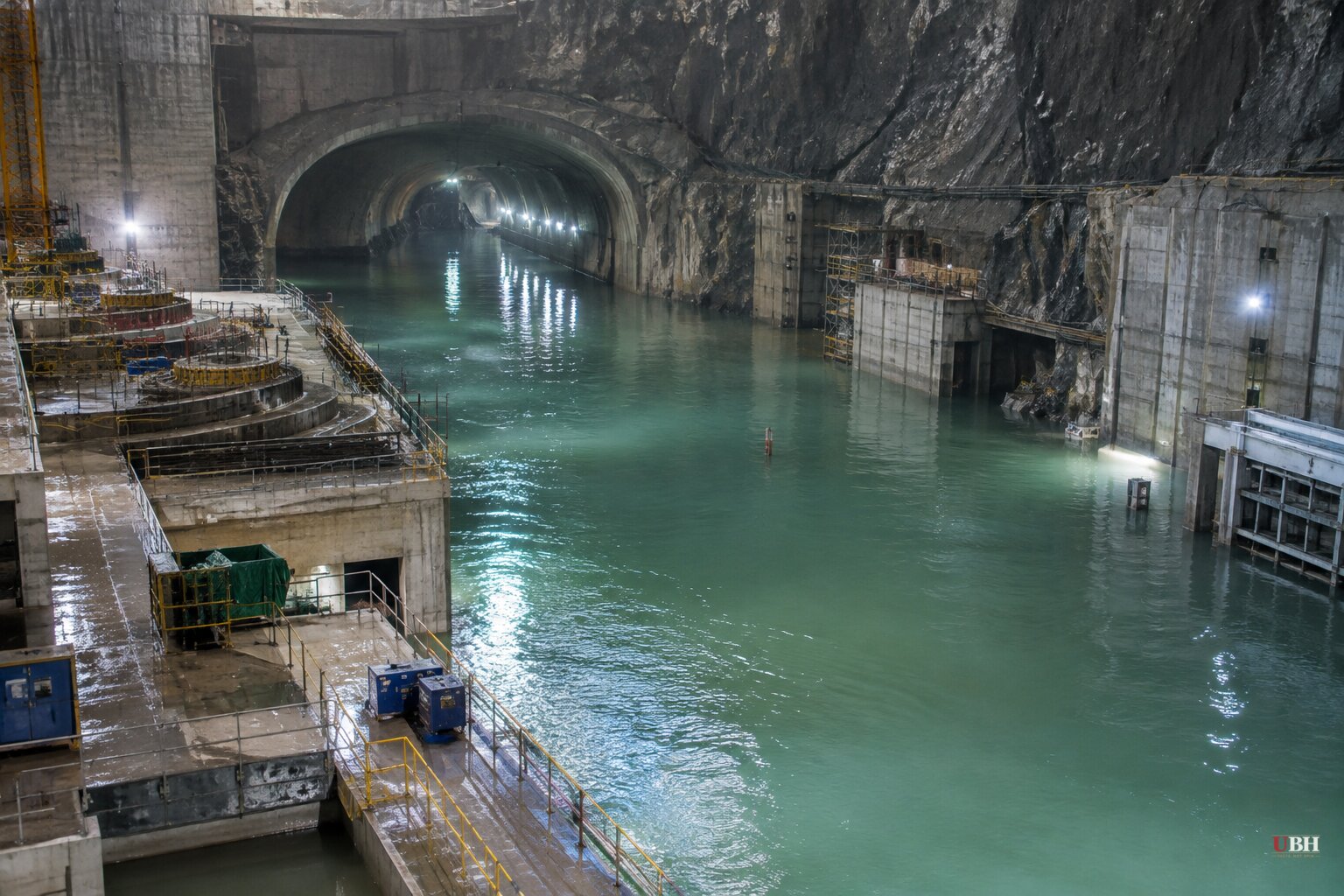
A rock collapse at Pakistan's Tarbela 5th Extension Hydropower Project (T-5) sent water surging into a tunnel and the under-construction powerhouse on Monday, Nov. 9. Construction has been suspended indefinitely. No one died.
The Water and Power Development Authority (WAPDA) said the incident happened during excavation of the 2nd Bench Connecting Tunnel in Haripur district, Khyber Pakhtunkhwa. A weak rock mass gave way, and water from the intake pit entered the tunnel and the powerhouse area.
What WAPDA says happened
In a statement, WAPDA said the intake pit has been completely drained and no further water is entering downstream work sites. Dewatering of the powerhouse had started. An emergency was declared and workers were moved to safer areas.
The agency said the main tunnel, the powerhouse, the tailrace culvert and the switchyard were not damaged. WAPDA said senior officers, the project engineer and the contractor are assessing the site.
Haripur Deputy Commissioner Waseem Ahmed said all Pakistani and foreign workers were evacuated. He said one Pakistani worker was swept into the water as the tunnel flooded and was rescued by emergency teams. Geo News carried a version in which locals pulled the man out.
Ahmed also said work on T-5 has been suspended indefinitely and an investigation has been launched into the cause.
Two descriptions of the failure
WAPDA describes a rock collapse inside the tunnel excavation that let intake pit water in. Ahmed has described the same event as a protective bund giving way. In remarks reported by Geo News, he said part of the protective embankment at the intake broke after a girder fell.
The two accounts may describe linked parts of one sequence. Neither official has said which failure came first, and the cause is the subject of the inquiry Ahmed announced. He said a high-level inquiry would examine the failure of the protective bund and establish whether a structural weakness or technical fault caused it.
Dam did not fail, officials say
Reports circulated on social media that the tunnel had collapsed or that the dam itself had broken. WAPDA called the tunnel collapse reports incorrect.
Ahmed rejected the dam-break claim directly. "If the dam had broken, it would have caused flooding downstream," he told Arab News. He said the water level inside the tunnel had almost completely receded. A senior district administration official said there is no threat of flooding in areas downstream of Tarbela at present.
Swabi Deputy Commissioner Nasarullah Khan said additional water had been released from Tarbela Dam for "unavoidable" reasons and was expected to raise the flow and level of the Indus River. He asked residents to avoid bathing, swimming and boating in the river and to rely on official channels rather than rumours. He did not elaborate on why the release was unavoidable.
A project already in trouble
T-5 is a 1,530 MW addition at Tarbela, intended to raise the dam's installed capacity from 4,888MW to 6,418MW. Its cost has risen from Rs82 billion to Rs316 billion. The Executive Committee of the National Economic Council cleared the revised Rs316 billion cost in August, a rise of 282 percent.
The project is financed with about $700 million in loans from the World Bank and the Asian Infrastructure Investment Bank. The Planning Commission has warned that the levelised generation cost could reach Rs27-28 per unit, among the highest of any renewable project in the country. It has also said completion has slipped to June 2028 from 2026.
This is not the first structural failure at the site. The project's downstream cofferdam collapsed in August 2025. A government inquiry committee led by Federal Flood Commission chairman Ather Hameed held the contractor, the consultant and WAPDA jointly responsible. It found the failure was caused not by flooding but by an unauthorised post-contract design change, from roller-compacted concrete to a weaker rock-fill structure, along with inadequate supervision.
That is the track record against which Monday's incident will be judged. WAPDA's position is that the damage is contained and the core structures are intact. Whether that holds will depend on the assessment now under way.
What comes next
WAPDA has not said how long dewatering will take, what the interruption will cost, or when excavation can resume. Ahmed said the next course of action would be determined after the investigation report is received. Also unanswered is whether the incident will push completion beyond the June 2028 target the Planning Commission has cited.
Sources used for this briefing
7 links from 7 independent newsrooms (syndicated copies of the same report count once)
These are the sources it draws on, linked so you can verify.


