
Unbiased headlines. Facts, not spin.
Unbiased Headlines is an independently owned news organization. We bring you the facts, not opinions, written fresh from 110+ named sources. Sources linked so you can verify it yourself.
 defense
Breaking / Critical (9/10)
Event date: October 21, 2026 ·
Waltz Says Iran War Could Run Another Year, Versus Trump's Original 'Four to Five Weeks'
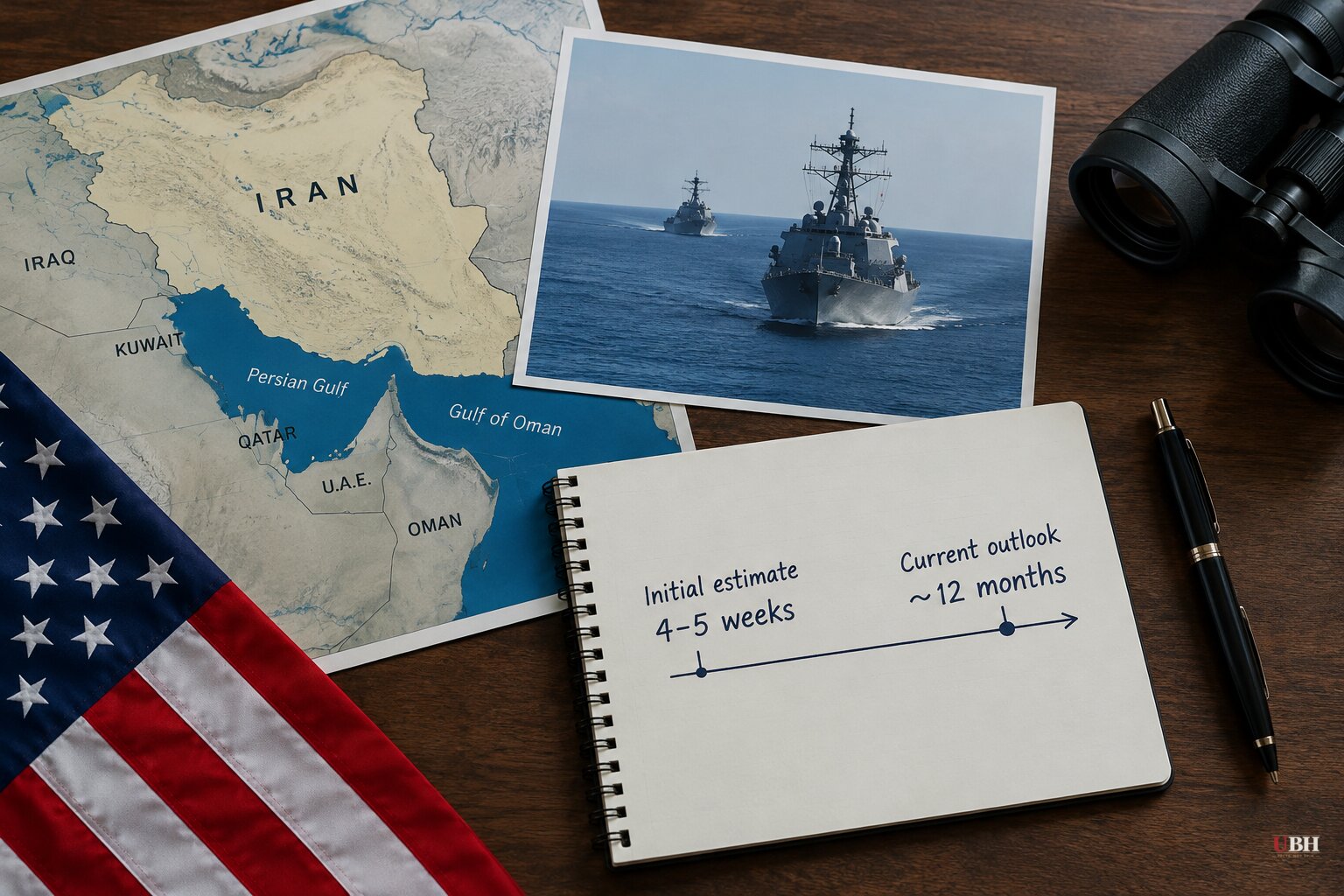
Since the U.S. and Israel launched the war on Iran on Feb. 28, the timeline has only gotten longer. The latest marker came Friday, Oct. 23, from the administration's own envoy.
Mike Waltz, the U.S. ambassador to the United Nations, told the Financial Times the U.S. could still be fighting a year from now. Trump initially said the war would last "four to five weeks." Waltz said Washington will not have achieved its key goals until Iran disposes of its highly enriched uranium and accepts a "meaningful agreement on their domestic enrichment."
"I'm not going to put out hypotheticals," Waltz said. "One would hope that they'll come to the table in a meaningful way before that."
Blockade stays, pressure "tightening"
Waltz said Trump "and the U.S. Navy can maintain this blockade [on Iranian ports] for the foreseeable future." He added that the administration is still "tightening" its economic pressure campaign.
That is a long way from the message at Trump's campaign rallies this week. On Wednesday, Oct. 21, Trump said the war "will end very soon" and called Iran's hope of outlasting the November elections a "dream." He said oil prices would "drop sharply" once the war ends, and described higher prices as a "very small price to pay" to keep Iran from a nuclear weapon.
At a rally the same day, Trump also said, "We could leave now, but we want to make sure it lasts for a long time." He said the U.S. had defeated Iran militarily and financially.
Both things can be true: a president wanting a lasting result and an ambassador admitting that result may be a year off. But Trump has said "soon" repeatedly since February, and the war is now in its eighth month.
Post-midterm strikes under discussion
The New York Times reported this week, citing U.S. officials and others briefed on the deliberations, that the U.S. and Israeli militaries have drawn up plans for renewed strikes on Iran after the Nov. 3 midterms. The Times said it is far from certain Trump will approve them, noting he has repeatedly vetoed plans to return to major combat this year. A White House official told the paper the administration does not comment on military plans "that may or may not exist."
The FT reported that Trump and Israeli Prime Minister Benjamin Netanyahu are discussing resuming offensive operations after the election. TASS, citing the FT interview, put Trump's approval rating at 31%, a figure we have not independently confirmed.
Iran has read the threats as a promise of escalation. In a letter to U.N. Secretary-General Antonio Guterres and the Security Council president, Iran's U.N. ambassador, Gholamhossein Darzi, cited U.S. media reports from Oct. 15 that the White House and Pentagon had prepared options including the GBU-43/B Massive Ordnance Air Blast, the "mother of all bombs." He also cited Israeli Defense Minister Yisrael Katz's Oct. 18 statement that any new attack would target "all energy facilities." Darzi called the threats violations of international law and asked the Council to demand they stop.
President Masoud Pezeshkian rejected what he framed as surrender after Trump's Sept. 22 U.N. address, in which Trump offered Iran a deal that would let it rebuild or face destruction of the Islamic Republic. Pezeshkian left the door open to negotiations.
Diplomacy and the Gulf
A retired Army officer and former Pentagon strategist, writing for Fox News, argues Washington still has not defined the political outcome it wants. Secretary of War Pete Hegseth's March formulation was "no nukes, no navy, and a complete dismantling of their missile program and defense industrial base." Reopening the Strait of Hormuz was added later. Waltz's two conditions, uranium disposal and an enrichment deal, are narrower than that list.
A memorandum of understanding signed in June after Pakistani and Qatari mediation has stalled over disagreements including navigation in the strait. Pakistan's army chief, Asim Munir, met Pezeshkian in Tehran this week and delivered a new peace proposal, according to The New Arab. Pakistan and Qatar hope it will head off renewed conflict and bring both sides back to the table.
Foreign ministers from the E3 (Britain, France and Germany) and the new R4 group (Turkey, Saudi Arabia, Pakistan and Egypt) meet in Istanbul today, Oct. 23. A Turkish foreign ministry source told AFP the agenda covers the Israeli-Palestinian crisis, Yemen, Hormuz and the Ukraine war.
Britain's foreign ministry said traffic through the strait remains "sharply down on pre-war levels." It said Britain committed RAF Typhoons this week to defend Saudi Arabia from Houthi attacks. Saudi Arabia's aviation authority said an attack on Dammam airport killed one person and injured eight. The president of Saudi Aramco said the flow through the pipeline that bypasses Hormuz has more than tripled.
It is unclear whether Trump signs off on the post-midterm strike plans or takes Munir's proposal. Waltz's year-long estimate suggests the administration is preparing for either path.
Sources used for this briefing
7 links from 7 independent newsrooms (syndicated copies of the same report count once)
These are the sources it draws on, linked so you can verify.


