
Unbiased headlines. Facts, not spin.
Unbiased Headlines is an independently owned news organization. We bring you the facts, not opinions, written fresh from 110+ named sources. Sources linked so you can verify it yourself.
 defense
Breaking / Critical (9/10)
Trump Calls Iran's Seven-Tanker Claim Fake, CENTCOM Says Hormuz Is 95% Open as Blockade Hits 100 Days
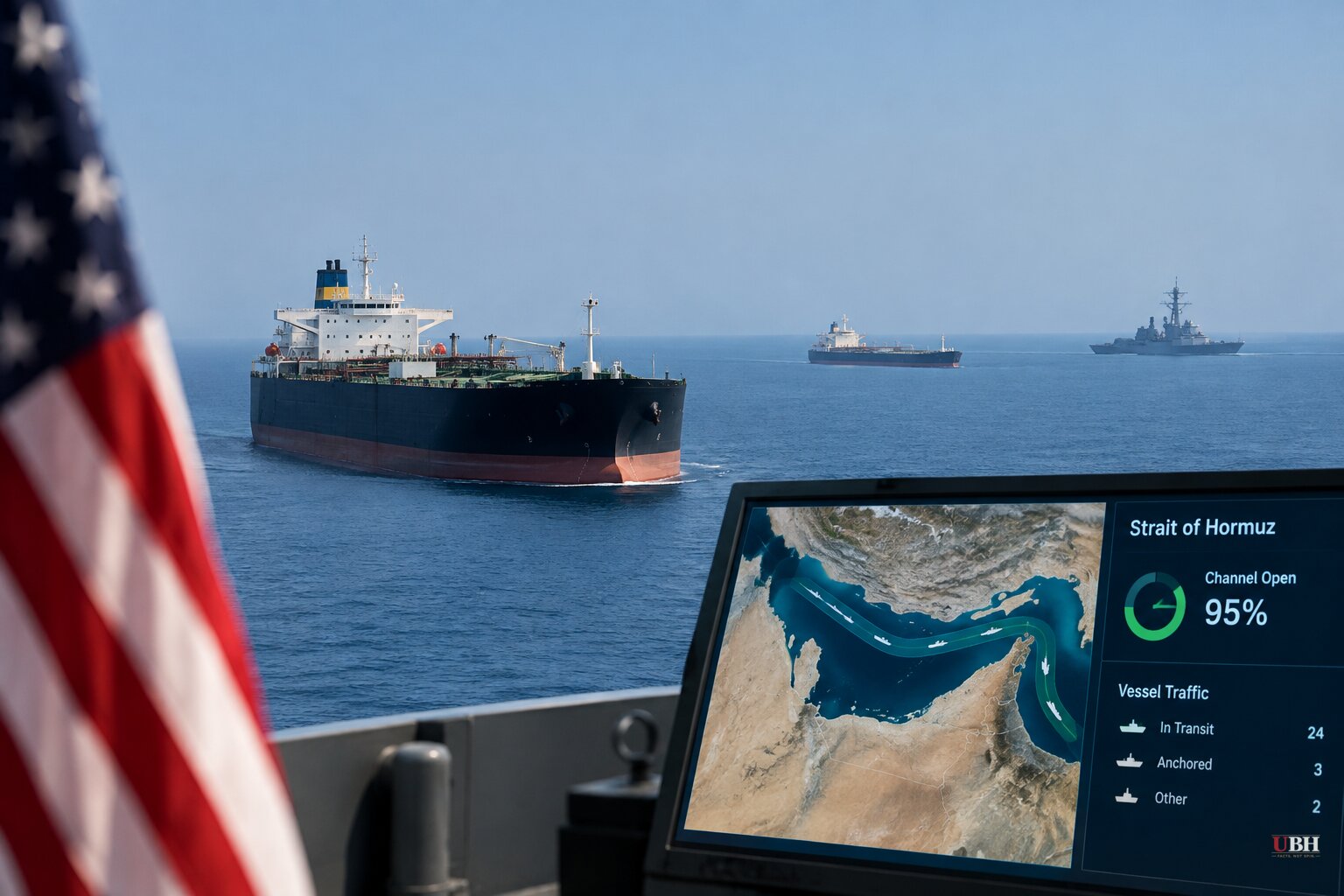
Since the IRGC said Thursday, Oct. 22, that seven tankers were hit in the Strait of Hormuz, Washington has answered with flat denials, and the dispute now sits on top of a 100-day-old U.S. blockade of Iranian shipping.
President Trump posted on Truth Social that "Iran is doing everything they can to drive up the price of oil prior to the US Midterm Election." He added: "They are making up fake hits, mines, and everything else because more oil is coming through the Hormuz Strait now than it did even prior to the beginning of the conflict."
A U.S. Central Command spokesperson, speaking anonymously, gave a narrower rebuttal. The spokesperson said Iran's mine claims are incorrect, that U.S. forces have cleared the international shipping lanes of mines, and that Iran is using missiles and drones. The strait remains open, the spokesperson said, with 95 percent of vessels getting through.
The two U.S. accounts do not match. Trump calls the hits invented. CENTCOM's spokesperson describes missile and drone attacks that, in the spokesperson's words, show Tehran's "desperation" under the blockade.
What Iran says and what is confirmed
Iran's Revolutionary Guard navy said four tankers caught fire while transferring oil and three were disabled after striking mines. Some vessels were still burning Thursday morning, the IRGC said. If accurate, it would be the largest single-day toll for the waterway since the U.S. and Israel began the war on Feb. 28.
The claims could not be independently verified. The report provided no details on the tankers' flags and did not mention casualties.
The United Kingdom Maritime Trade Operations center did not report the latest incidents. It has noted new reluctance by some shippers to report incidents. The same monitor says October has had the most reported attacks on commercial shipping since the war's opening weeks in March.
The IRGC also warned that "if this trend continues, the conflict will extend to its bases in the region," if the U.S. keeps helping tankers transit other parts of the strait. According to the IRGC, all of the damaged ships were along the southern route, hugging the Omani coast, used by the U.S. to escort tankers out of the Persian Gulf.
The blockade at 100 days
CENTCOM marked 100 days of its reinstated blockade on Iranian ports Thursday. The command says it has prevented $25 billion in Iranian crude exports.
The blockade was reinstated July 14 after the Islamabad Memorandum of Understanding fell apart over the wording of one clause. Iran believed it would determine navigation through the strait and withhold charging fees for at least 60 days. The U.S. said the wording did not allow Iran to determine transit.
The first blockade ran from April 13 to June 18 and redirected at least 140 ships. The current one had redirected 138 as of the last U.S. update on Oct. 17. CENTCOM says there have been no exports or imports to Iran by sea except humanitarian aid U.S. forces have allowed.
Diplomacy, threats and the Saudi front
Secretary of State Marco Rubio called Qatar's prime minister and foreign minister Thursday. The State Department said he reaffirmed U.S. commitment to Qatar's security and freedom of navigation in Hormuz. Qatar's readout said the sides discussed de-escalating tensions and a path to a comprehensive agreement.
Tehran's tone is harder. Mohsen Rezaei, secretary of Iran's Supreme National Security Council, told Drop Site that Iran's oil facilities, ports and shipping cannot be treated as legitimate targets while "the economic infrastructure of the other side that supports this war" stays immune "forever." He said Iran is "no longer interested in agreements whose only guarantee is political goodwill."
Foreign Minister Abbas Araghchi said Wednesday that Tehran remains open to diplomacy but is ready to defend itself. The U.S. is sending a third aircraft carrier and thousands more troops to the region.
Saudi Arabia says it intercepted Houthi drones, and Saudi authorities said two people were killed in an attack at King Fahd International Airport in Dammam. The U.S. withdrew staff from its embassy in Saudi Arabia this week. The IMF's regional director, Jihad Azour, said the Houthi attacks have had a "limited" economic impact so far. The IMF still expects Saudi Arabia's economy to contract 3.3% this year and the wider region's to shrink 4.8%.
Prices and politics
Brent crude was reported at more than $111 a barrel Thursday morning by AOL, and CBS News reported it reached $112, its highest since May 18. The U.S. national average for gasoline stood at $4.27 a gallon. Treasury Secretary Scott Bessent said earlier this week that lower oil prices depend "on what happens with the Iran conflict," and that the U.S. faces an "energy shock" even as "core inflation is down."
The calendar adds pressure. Israel votes Oct. 27, and U.S. midterms follow next month. Danny Citrinowicz, a former Israeli military and intelligence Iran specialist now at the Institute for National Security Studies, told the AP that "Netanyahu wants to attack Iran, that's not even a question." He predicted a clear Netanyahu win makes an attack "almost guaranteed."
The next date to watch is Israel's Oct. 27 vote.
Sources used for this briefing
8 links from 8 independent newsrooms (syndicated copies of the same report count once)
These are the sources it draws on, linked so you can verify.


