
Unbiased headlines. Facts, not spin.
Unbiased Headlines is an independently owned news organization. We bring you the facts, not opinions, written fresh from 110+ named sources. Sources linked so you can verify it yourself.
 defense
Major Story (8/10)
Pentagon and Lockheed announce 10-year F-35 framework for 850 jets, with no price and no contract yet
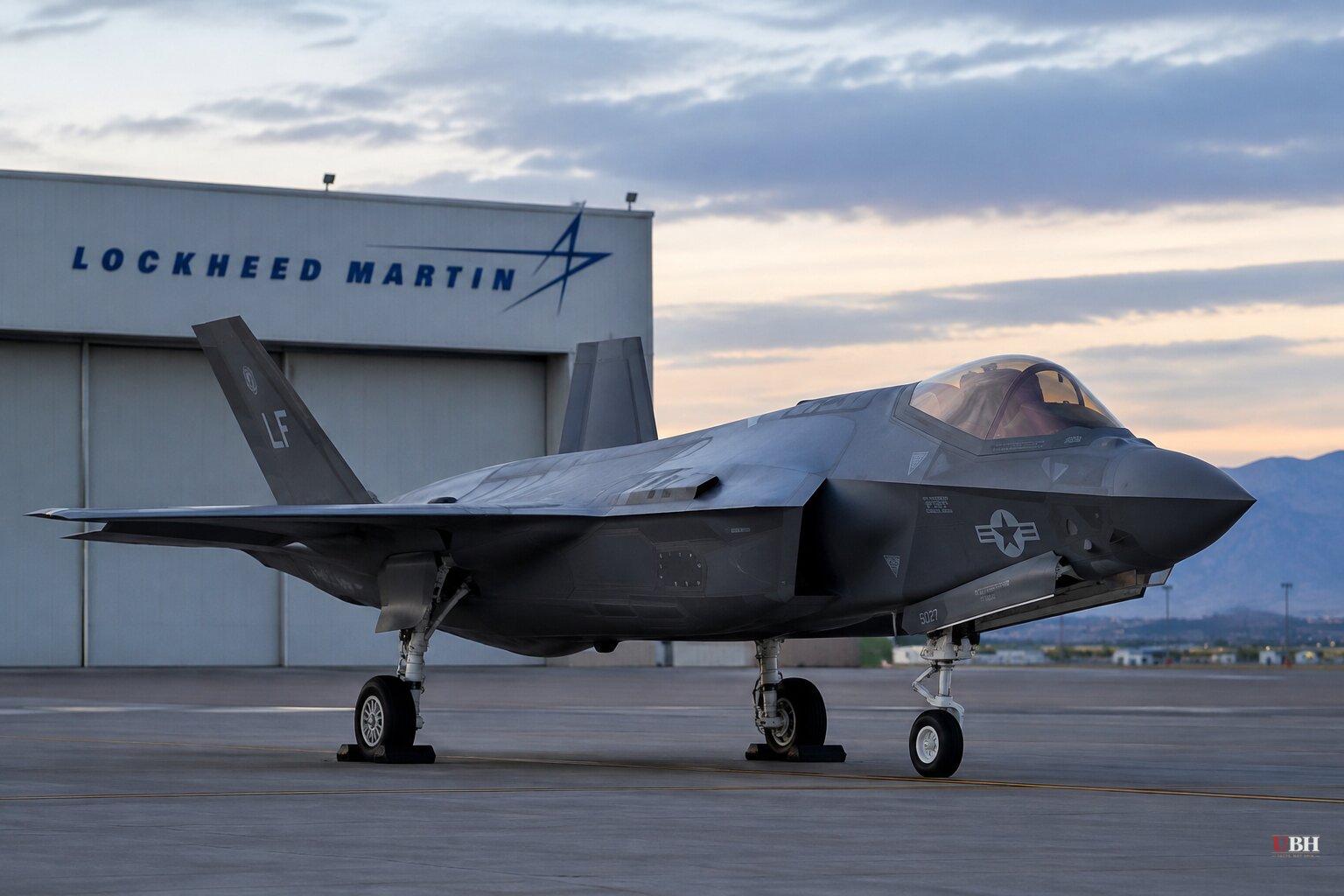
Days after the Air Force told Congress it needs 1,509 combat-coded fighters by 2035, the Pentagon and Lockheed Martin announced today, Oct. 22, a 10-year framework agreement for the F-35 Lightning II. It is a framework, not a contract.
What the framework covers
The Pentagon says the agreement guarantees at least 850 U.S. F-35s across 10 production lots, Lots 21 through 30. It also covers initial spare parts, 10 years of modification kits and 10 years of sustainment, along with orders from foreign customers.
Lockheed says production holds steady at 156 aircraft a year. In exchange for the decade-long commitment, the company will self-fund at least $7 billion in unspecified initiatives supporting the program, the Pentagon said.
"We have fundamentally changed how we stabilize the American defense industrial base to produce at speed and scale," said Michael Duffey, the Pentagon's undersecretary for acquisition and sustainment. "By aligning financial incentives with actual performance, we are ensuring our warfighters are equipped with the lethal capabilities they need to fight and win."
Lockheed CEO Jim Taiclet said the certainty lets the company "make the upfront investments needed to expand capacity, improve efficiency, and build a more resilient supply chain."
The numbers that are missing
Neither announcement gives a total value or a per-jet price. Neither describes the performance-based incentives Duffey referred to, or says what the $7 billion will buy.
Lockheed says the framework is expected to save taxpayers billions of dollars through long-term pricing and industry volume discounts. The company has not put a figure on the savings.
For scale, the most recent deal for two production lots covered nearly 300 aircraft at $24.3 billion. A decade of orders would likely run to tens of billions of dollars.
Lockheed also claims the program will sustain 317,000 U.S. jobs and add roughly $79 billion in economic output a year for the next 10 years. Those are the company's figures.
Not a production ramp
The Pentagon under the Trump administration has pushed several framework deals for in-demand weapons such as munitions. Those were aimed at raising output. This one does not raise the F-35 manufacturing rate, which stays at 156 a year.
At 850 jets over 10 years, the framework averages 85 U.S. aircraft a year. That matches the Pentagon's fiscal 2027 request for 85 F-35s across the services. The request is part of a $21.4 billion ask for the program inside a $1.5 trillion defense proposal.
Congress funded only 47 F-35s in fiscal 2026. Closing the gap between 47 and 85 is a spending decision lawmakers have not made.
The Air Force sent its force structure report to Congress on Oct. 16. It says F-35As would make up about 40% of the 1,509-fighter fleet it wants by 2035.
Congress holds the key
The Pentagon and Lockheed both say execution depends on congressional authorization and appropriations. Only then will the F-35 Joint Program Office and Lockheed work out terms, pricing and schedules in a formal contract award.
The House and Senate versions of the annual defense policy bill would both let the Pentagon sign multiyear F-35 contracts. The House passed its bill in July. Senate Democrats blocked theirs from reaching the floor that month, and leaders have put it off until after the November midterm elections.
The framework cannot become a contract until both bills pass and are merged into a single law. Congress has also not yet approved the money.
A multiyear buy lets the Pentagon purchase a weapon across several years under one contract instead of negotiating annually. That generally lowers unit cost. Whether this one does, and by how much, will not be known until a price is attached.
More than 1,375 F-35s are fielded worldwide, flying from 42 bases, according to Lockheed.
The next concrete test is the defense policy bill. It cannot move until after the midterms, and the framework waits on it.
Sources used for this briefing
8 links from 8 independent newsrooms (syndicated copies of the same report count once)
These are the sources it draws on, linked so you can verify.


