
Unbiased headlines. Facts, not spin.
Unbiased Headlines is an independently owned news organization. We bring you the facts, not opinions, written fresh from 110+ named sources. Sources linked so you can verify it yourself.
 defense
Major Story (8/10)
U.S. Quietly Cuts Troops and Diplomats Across Middle East as Iran Talks Stall, Officials Say
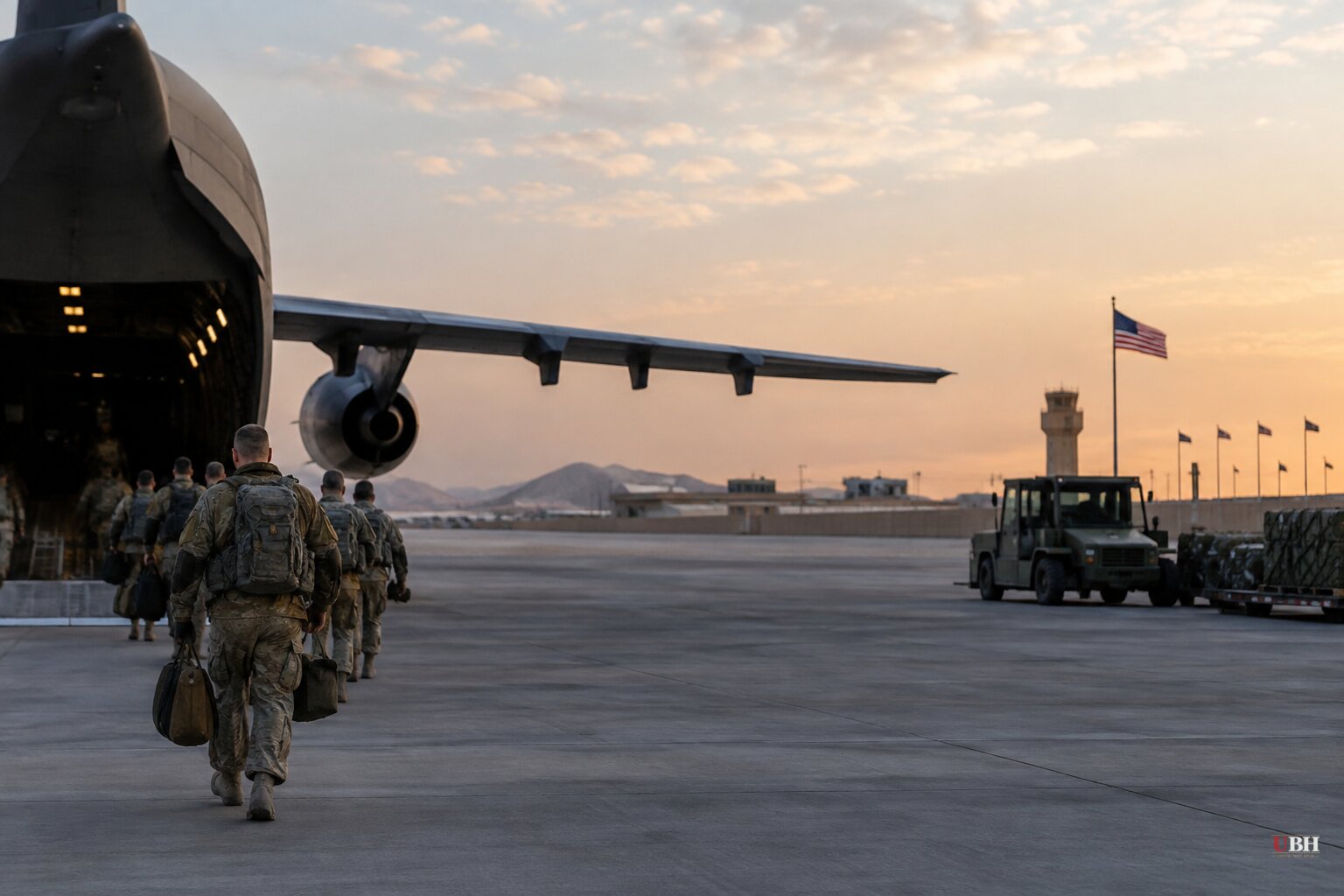
The U.S. is thinning out its people in the Middle East, and it is not saying how many or from where.
A U.S. official and a senior U.S. military official told CBS News on Wednesday, Oct. 21, that the military has been quietly reducing its footprint at regional posts because of threats from Yemen's Houthis and from Iran directly. NBC News was first to report the drawdowns. A U.S. official told NBC that troops stationed in Jordan, Qatar and Kuwait have been moved.
U.S. Central Command would not confirm details. Spokesperson Capt. Tim Hawkins said: "We regularly move U.S. service members and assets to optimize mission readiness. We do not discuss related movements for operational security reasons."
The Pentagon has not publicly laid out the scale of the reductions.
Saudi Arabia ordered departures
The State Department has ordered non-emergency U.S. government employees and their families to leave Saudi Arabia. Spokesperson Tommy Pigott said on X that "Iranian-supported Houthis have increasingly engaged in hostilities against Saudi Arabia, including attacks on civilian airports and other critical infrastructure resulting in civilian casualties and severe travel disruptions."
An ordered departure is a formal instruction, not a voluntary option. The order so far covers Saudi Arabia only. Reuters reported earlier that the department was preparing similar orders for some personnel at other Gulf embassies, and CBS has learned several embassies in the region have adjusted staffing under "restricted operations" status. The department introduced that status in August during flare-ups in the war with Iran. It lets embassies cut staff and services without shutting down.
The trigger was Wednesday evening's attack on King Fahd International Airport in Dammam. Saudi Arabia's civil aviation authority said one person was killed and eight injured, with damage still being assessed. Later tallies put the dead at at least two. The authority did not say what type of attack it was, though Houthi projectiles have repeatedly hit Saudi airports in recent days. The Independent also reported that two people were killed in a drone strike on a Saudi oil field the same day.
Hormuz and the Revolutionary Guard
On Thursday the Revolutionary Guard said it attacked four vessels near the Strait of Hormuz for using a route Tehran rejects. It said three other ships using that route hit sea mines and were forced to halt. Brent crude rose about 3% to $112 a barrel on the news.
A senior Guard official separately threatened Wednesday to hit undersea internet cables in the strait and other U.S. "investments" if Washington launches new strikes on Iranian infrastructure.
Gulf News reported that the U.S. has deployed the USS Theodore Roosevelt carrier strike group and the USS Makin Island amphibious group. The posture is shifting: fewer people at land posts, more firepower at sea.
Talks are alive, but nobody is moving
Foreign Minister Abbas Araghchi said Wednesday that indirect negotiations continue over a seven-day ceasefire proposal that Trump rejected last month. The U.S. is now seeking new clauses. Pakistan and Qatar are mediating.
Iran's public line is harder. Per Egyptian outlet Al-Masry Al-Youm, President Masoud Pezeshkian told Pakistan's Asim Munir: "Americans must first lift the threats and sanctions, and after that we can begin dialogue with them." He added, "Our people do not trust America today."
Mohsen Rezaei told Munir that "Not even a tiny amount of enriched nuclear material will leave Iran." Tehran insists enrichment is a right under the Non-Proliferation Treaty. Trump has demanded "zero uranium enrichment."
That is a direct collision, and no one has offered a way around it.
Iran has also lost a financial cushion. Kpler told The Wall Street Journal that the crude Iran had stored on dozens of tankers in Asian waters, which it had been selling to China during the war, ran out in mid-October.
What Washington has said
Trump said Tuesday that "we're doing very well" with Iran. He also said he has yet to make a final decision on "which way do we want to win the war, the nice way or the not nice way."
The war began Feb. 28 with joint U.S. and Israeli strikes. Eight months later, oil is near five-month highs and the U.S. is pulling civilians out of an allied kingdom.
The drawdown does not by itself show that an attack is coming. Pulling personnel out of range is a standard precaution when retaliation risk rises, and it is also what a government does before it acts. Investing Live's analysis noted that markets read such moves as a signal of rising military risk, while stressing that only official confirmation of the scale would show whether it is a precaution or a precursor.
The New York Times has reported that U.S. and Israeli militaries have drawn up plans to resume strikes on Iran after the U.S. midterm elections, in what it describes as a "short but intensive operation." Per the Times, Iran's energy infrastructure, nuclear facilities, and missile and drone arsenals would likely be targeted, and officials believe a final major blow could push Tehran toward concessions.
Neither the White House nor the Pentagon has confirmed those plans. It is unclear whether Trump orders them after the election, and whether Iran follows through on its cable threat if he does.
Sources used for this briefing
6 links from 4 independent newsrooms (syndicated copies of the same report count once)
These are the sources it draws on, linked so you can verify.


