
Unbiased headlines. Facts, not spin.
Unbiased Headlines is an independently owned news organization. We bring you the facts, not opinions, written fresh from 110+ named sources. Sources linked so you can verify it yourself.
 defense
Notable (6/10)
Event date: October 6, 2026 ·
Lavrov Calls Taliban Rule 'Quite Successful' at Moscow Talks Attended by Pakistan, Which Struck Afghanistan in June
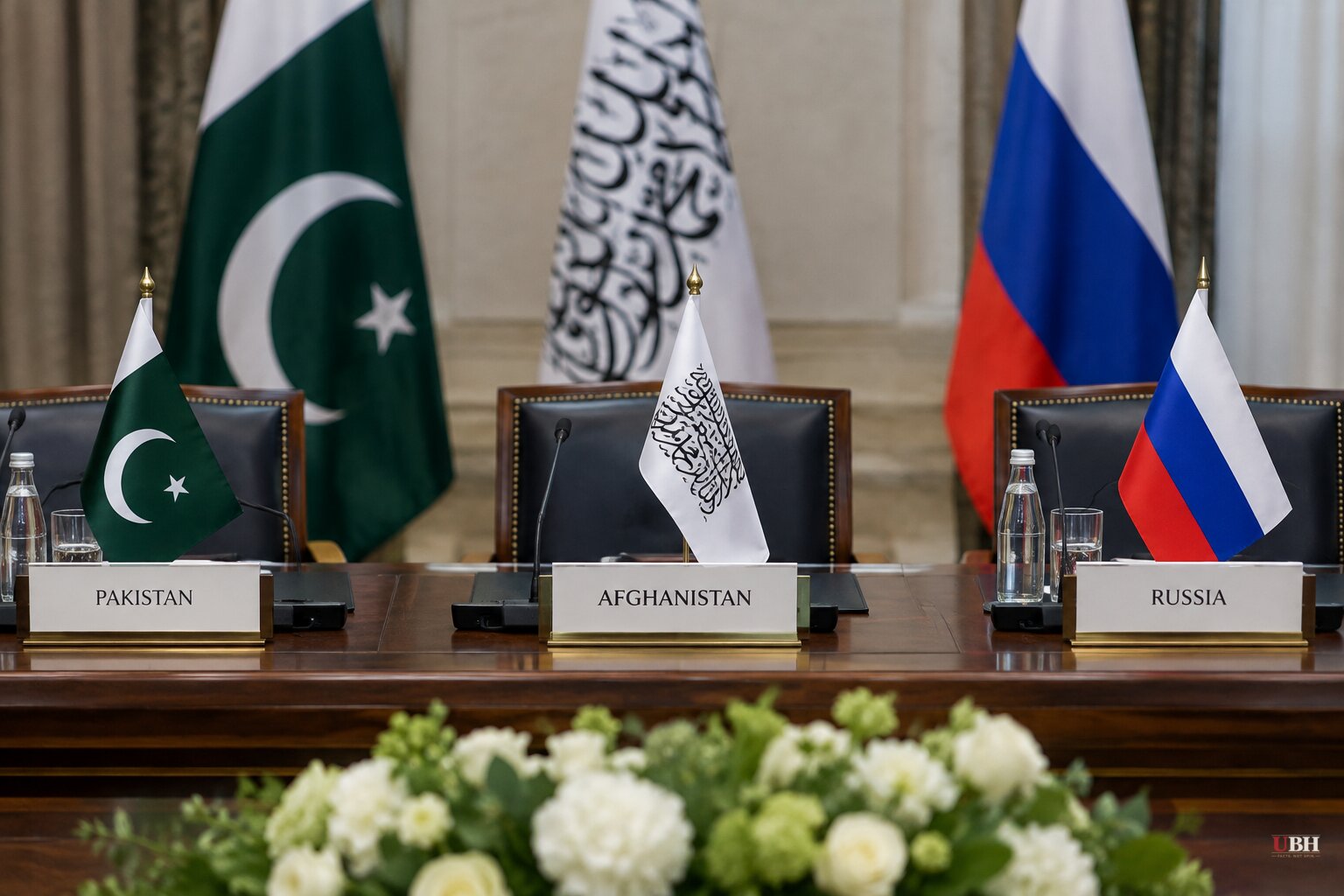
Russia hosted another round of its Moscow format talks on Afghanistan, and its foreign minister used the stage to praise the Taliban.
"The national government that came to power, led by the Taliban movement, has brought the country's territory under control and, one must admit, is governing it quite successfully," Sergey Lavrov said, according to Russian state news agency TASS.
Lavrov also credited the Taliban with going after other terrorist groups. "Hundreds of militants have been destroyed, with a number of high-profile terrorist attacks foiled, including those targeting foreign citizens and diplomatic missions," he said. Those figures are Lavrov's own. No independent count has been presented.
He added that Russia would never again allow NATO troops in Afghanistan.
Who was in the room
The meeting brought together 11 countries. Participants included Russia, Iran, China, India, Kazakhstan, Kyrgyzstan, Pakistan, Tajikistan and Uzbekistan. Belarus and Egypt attended as unofficial participants.
Russia is the only country to have formally recognized the Taliban as Afghanistan's government since the group retook Kabul in August 2021 during the U.S. withdrawal. Other governments deal with the Taliban in various ways short of formal recognition. The Taliban says it operates more than 40 embassies and consulates abroad.
What Lavrov skipped
Lavrov's "successful" assessment left out the Taliban's record on its own people. The government enforces a strict interpretation of sharia that has almost entirely banned education for girls and women. Women are barred from leaving their homes without a valid emergency reason.
That record is widely documented. Moscow's endorsement does not engage with it.
Pakistan's seat at the table
One attendee has a particular reason to doubt the Taliban's counterterrorism credentials. Pakistan once backed the Taliban and treated its return to power as strategic leverage. A report in Columbia Political Review by Anaya Qayyum argues that bet backfired. In her words, the Taliban proved "unwilling to subordinate its own political authority and security priorities," and by 2025 the relationship "had moved into direct military confrontation."
The flashpoint is Tehreek-e-Taliban Pakistan, the TTP. Pakistan says the group has stepped up attacks inside its territory while operating from safe havens in Afghanistan. Qayyum writes that Islamabad wants the Taliban to rein in the TTP, a group that shares the Taliban's ideology and Pashtun ethnic ties across the border.
Islamabad has answered with cross-border strikes and the deportation of undocumented Afghan refugees.
In June, Pakistan carried out airstrikes in Afghanistan. The Taliban said the strikes killed 13 civilians and injured 14. Pakistan said it killed 26 militants. Both governments describe the same strikes in opposite terms, one as counterterrorism and the other as civilian slaughter. Neither account has been independently verified in the sources.
The Taliban's own account
The Taliban rejects the picture of a government taking orders from outside. Qayyum writes that the group presents itself as independent Islamic nationalists who freed Afghanistan from foreign invaders. She adds that legitimacy in Afghanistan has historically rested on resisting foreign control, and that Afghans are sensitive to Pakistani influence.
By that logic, acting against the TTP at Islamabad's request would look to many Afghans like betraying their own people on behalf of a hostile neighbor.
That helps explain why Lavrov's claim of effective counterterrorism and Pakistan's complaint about TTP safe havens can both be on the record at once. Lavrov's claim concerns groups that threaten Russia and its partners. Pakistan's complaint concerns a group that targets Pakistan.
What it means for Moscow's push
Russia's strategy is to treat the Taliban as a permanent fact and bring neighbors into a framework built around that assumption. China, Iran, India and the Central Asian states all joined the talks.
The June strikes show that the framework has not settled the most serious security dispute among its own participants. The Moscow format has no announced mechanism for resolving the Pakistan-Taliban fight, and the sources do not say whether Lavrov addressed it.
Whether Pakistan's presence signals a willingness to deal with the Taliban on Moscow's terms, or simply a wish not to be left out of the room, is unresolved. Neither Islamabad nor Kabul has said which.
Sources used for this briefing
2 links from 2 independent newsrooms (syndicated copies of the same report count once)
These are the sources it draws on, linked so you can verify.


