
Unbiased headlines. Facts, not spin.
Unbiased Headlines is an independently owned news organization. We bring you the facts, not opinions, written fresh from 110+ named sources. Sources linked so you can verify it yourself.
 defense
Major Story (7/10)
Event date: October 16, 2026 ·
Pentagon Is Planning Deep-Cover Spy Program Against China's Economy, Six People Familiar Say
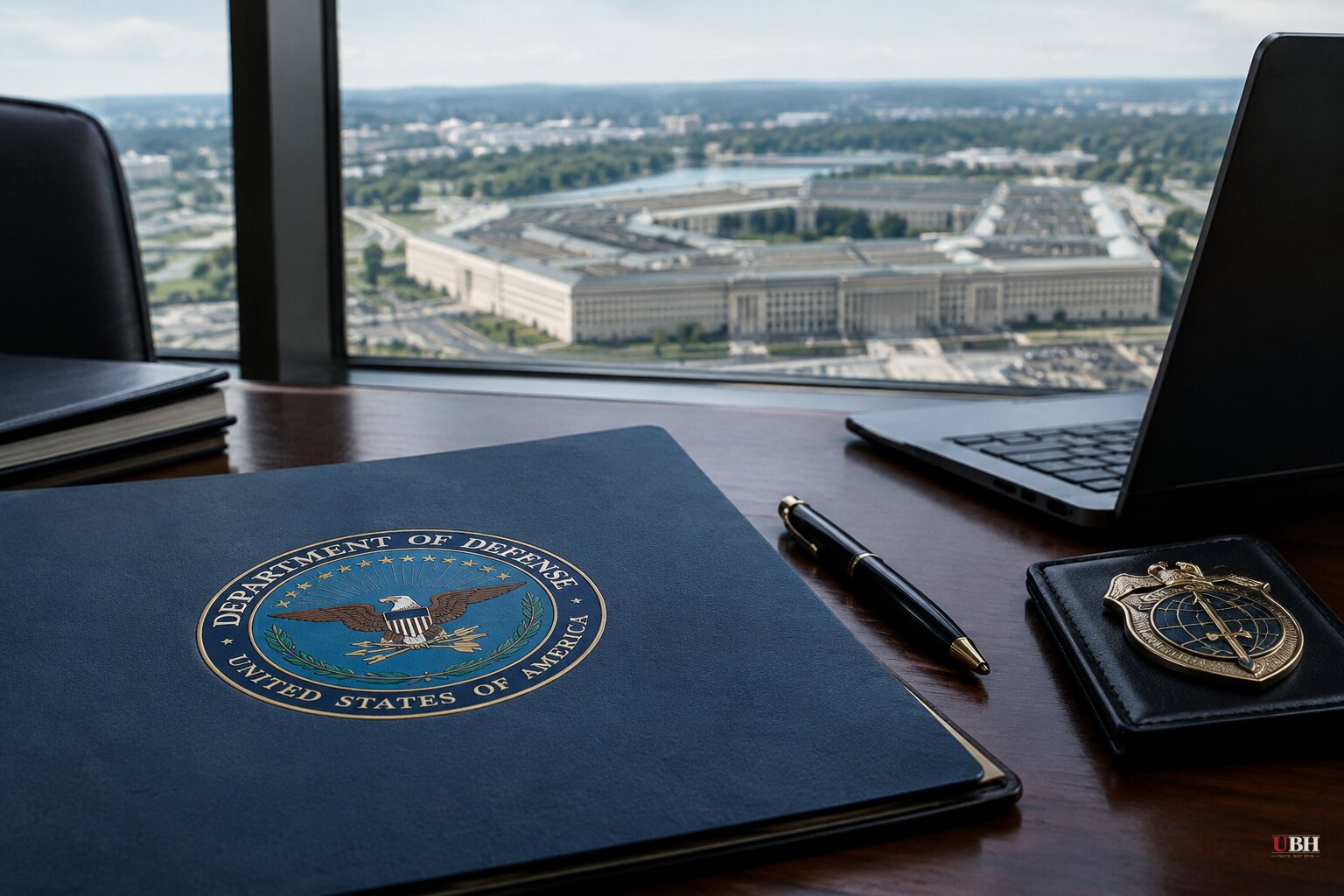
The Pentagon is designing a spy program in which American operatives would live and work as business people or other private workers, with no visible link to the U.S. government. The target is China and other U.S. rivals. That is according to six people familiar with the effort, quoted in a Washington Post report.
The operatives would be called "nonofficial cover officers," or NOCs. The people who described the plan spoke anonymously because the initiative is sensitive.
A secret arm of an economic campaign
The NOC program is meant to be the clandestine arm of a broader Pentagon campaign of economic warfare, the people said.
It is not running yet. The Pentagon has not settled where it would sit. It could become its own deep-cover unit, or it could grow out of the secret human intelligence work the department already does.
Experts from the military service branches and from the office of the Under Secretary of War for Intelligence and Security are helping with the planning, along with retired CIA officials.
The CIA is talking more openly about China
The Pentagon plan lands as U.S. spy agencies talk more openly about China. In a September speech, CIA Deputy Director Michael Ellis said the United States is widening its spying on China. He named Chinese companies working in artificial intelligence, biotechnology and advanced semiconductors as targets.
American agencies have spied on major Chinese firms for years. It is rare for a senior CIA official to say so in public.
One person interviewed about the plan, identified as Cohen, said the country has gathered sensitive economic information for years and should not worry about whether that helps companies commercially. Cohen added that oversight would be needed to prevent favoritism or corruption in choosing which firms benefit.
That last point is the central design question. A program that collects economic intelligence has to decide who receives it. No one has described publicly who would make that call or who would check it.
What Beijing is doing on American soil
China's own operations in the U.S. show what the Pentagon would be up against.
Thomas Weir Pauken II, 51, spent 16 years in China as a columnist and editor for state media. For seven of those years he was also on the payroll of the Ministry of State Security, the civilian agency that runs Beijing's foreign intelligence, counterintelligence and secret-police work.
Pauken was arrested at a Washington hotel in February. On Sept. 1, a federal judge in Alexandria, Virginia, sentenced him to two years in prison.
The Justice Department said that from at least 2019 until February 2026, a Chinese state handler he knew as "Cathy" paid him at least $100,000. His tasks were to travel from Beijing to the United States, meet people who might become intelligence assets, hand them communication devices, and pass along what Beijing wanted to know.
His value came from his passport. "[Pauken] exploited his U.S. citizenship and corresponding ability to travel to the U.S. without restriction," Assistant Attorney General John A. Eisenberg said.
Lawful tasks, hostile purpose
Experts told The Epoch Times that Beijing runs most of its U.S. intelligence work through people already living in the country. They said it relies on tasks that are largely lawful: making introductions, hosting events, logging attendee lists, looking up individuals.
Those activities play out in student clubs, hometown associations, campaign fundraisers and university forums. These are the institutions an open society keeps accessible on purpose.
In Pauken's case, the Justice Department said his job was to identify "new recruitment targets" for his handlers.
What is still undecided
The Pentagon plan and the Pauken case describe the same basic tool. Each uses people who look like ordinary private citizens, and each aims at the other side's economic and technological information.
The Pentagon has settled neither the program's home nor its safeguards. Where it lands inside the department, and who polices which firms benefit from what it collects, are the questions the planners still have to answer before any operative is placed.
Sources used for this briefing
2 links from 2 independent newsrooms (syndicated copies of the same report count once)
These are the sources it draws on, linked so you can verify.


