
Unbiased headlines. Facts, not spin.
Unbiased Headlines is an independently owned news organization. We bring you the facts, not opinions, written fresh from 110+ named sources. Sources linked so you can verify it yourself.
 defense
Major Story (8/10)
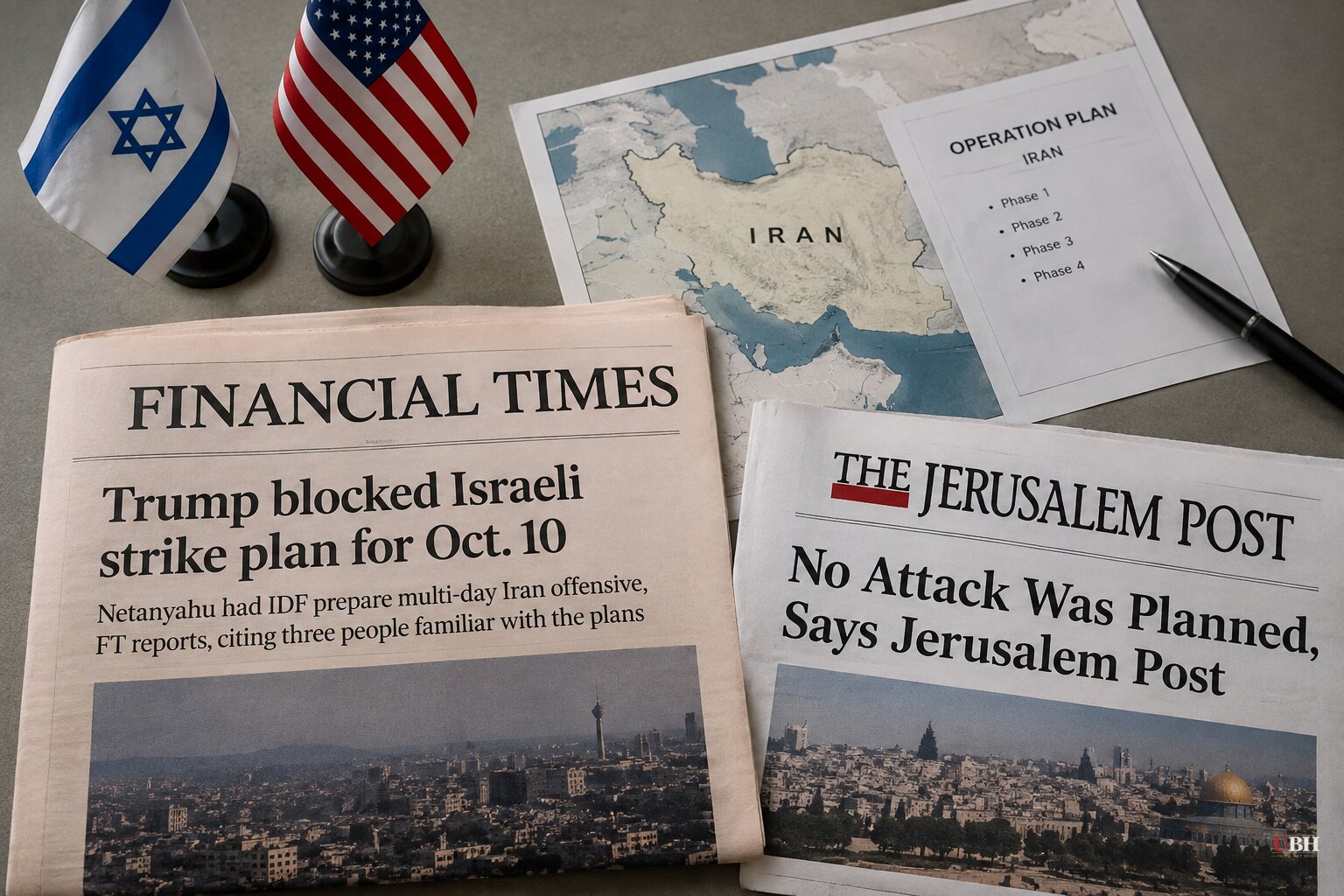
FT Reports Trump Blocked Israeli Strike Plan for Oct. 10; Jerusalem Post Says No Attack Was Planned
Since Israel and the United States launched strikes on Iran in February, the war has settled into a standoff over the Strait of Hormuz, and a new report now says it nearly flared again this month.
The Financial Times reported today, Oct. 21, that Prime Minister Benjamin Netanyahu told the Israeli military to prepare a multi-day bombing campaign for the weekend of Oct. 10. The paper cited three people familiar with the matter.
According to the FT's sources, the target list included nuclear facilities, power plants and other civilian infrastructure, and sites tied to the Iranian regime. The planned operation was described as larger than the February campaign, which Israel called Operation Roaring Lion.
The sources said Trump opposed the plan. They said he did not want to restart a regional war ahead of the Nov. 3 U.S. midterm elections, and the operation was shelved.
What the FT's sources say about next steps
Israeli officials have since given their American counterparts an updated target list built on fresh intelligence, the FT reported. It reportedly includes civilian infrastructure that was not hit in the earlier round.
It is not clear whether the U.S. was expected to join the Oct. 10 operation directly. One source called a joint restart in the coming weeks "not an unreasonable scenario."
One source described the planned strikes as potentially part of a bargaining tactic. That person said: "There will either be a deal or an attack." The FT added that the Pentagon declined to comment and that any decision to resume fighting depends on Trump.
Israeli pushback on the account
The Jerusalem Post, citing its own sources, reported that the IDF was not planning a strike on Iran on Oct. 10. It said the FT's premise that Trump blocked an attack is wrong because Israel was not about to carry out one.
The Post also said its sources speculated that leaking such a story could be aimed at influencing the Israeli election. The Post did not name those sources.
The two accounts conflict, and neither is on the record. The FT's claim rests on three unnamed people. The Post's rebuttal rests on its own unnamed sources.
What is on the record
Netanyahu told Israeli media last week that he is not planning renewed strikes on Iran before the Oct. 27 election, saying "it is not convenient for us."
He was more expansive on Tuesday, Oct. 20, at Tel Hai University in Kiryat Shmona. "We must complete the elimination of the Iranian regime. That is the primary objective," he said, adding that he had discussed it with Trump "more than once, including the day before yesterday."
Trump endorsed Netanyahu on Truth Social on Sunday, Oct. 18, calling him "a Great Warrior Prime Minister." He added that the U.S. would "have to do this work ourselves" if Netanyahu loses.
Trump has also said he is weighing whether to cut a deal with Iran's leadership or "annihilate" the country. He has said that decision could come after the midterms.
Defense Secretary Pete Hegseth met Netanyahu in Israel on Monday, Oct. 19. Hegseth confirmed the visit to reporters on Tuesday, saying he "was there visiting our troops" and "had a chance to talk to the prime minister." He declined to describe their conversation.
Israeli media reported that Defense Minister Israel Katz attended and that IDF Chief of Staff Eyal Zamir was not invited, for confidentiality reasons. Those details rest on anonymous sourcing.
Tehran's position and the economic stakes
Iran's top security official, Mohsen Rezaei, told Pakistani army chief Asim Munir in Tehran that Iran will not negotiate with the U.S. until Washington takes trust-building steps and meets Tehran's conditions, according to Iranian state media.
Meanwhile, Iranian attacks, both threatened and real, have kept ship traffic through Hormuz to a trickle. A U.S. maritime blockade and sanctions have cut Iran's oil export revenue.
Oil prices reflect the strain. Brent crude settled Monday at $109.55 a barrel, and West Texas Intermediate settled at $103.66, its highest close since Sept. 15, Reuters reported. Trump has said he expects prices to fall after the elections but has not laid out a detailed plan to reopen the strait.
Netanyahu has tied the issue to the U.S. pump price. "If you're worried about today's gas prices, think of what will happen if Iran gets nuclear weapons," he said.
Separately, Iran's Revolutionary Guard spokesman Hossein Mohebbi warned Monday that seven major cables pass beneath the strait and that "all the world's internet and commercial data depend on them."
What comes next
Two dates now frame the decision: Israel's Oct. 27 election and the U.S. midterms on Nov. 3. Trump has pledged no U.S. strikes before the midterms, and Netanyahu has said he will not launch any before his vote.
What neither leader has said is what happens on Nov. 4. The FT's sources say the plan is shelved, not scrapped. Israeli officials have not publicly confirmed or denied that an Oct. 10 operation was prepared, and the White House has not addressed the report.
Sources used for this briefing
6 links from 5 independent newsrooms (syndicated copies of the same report count once)
These are the sources it draws on, linked so you can verify.


