
Unbiased headlines. Facts, not spin.
Unbiased Headlines is an independently owned news organization. We bring you the facts, not opinions, written fresh from 110+ named sources. Sources linked so you can verify it yourself.
 defense
Breaking / Critical (9/10)
Two More Tankers Hit in Gulf Waters as US Officials Say Embassy Staff Departures Are Coming
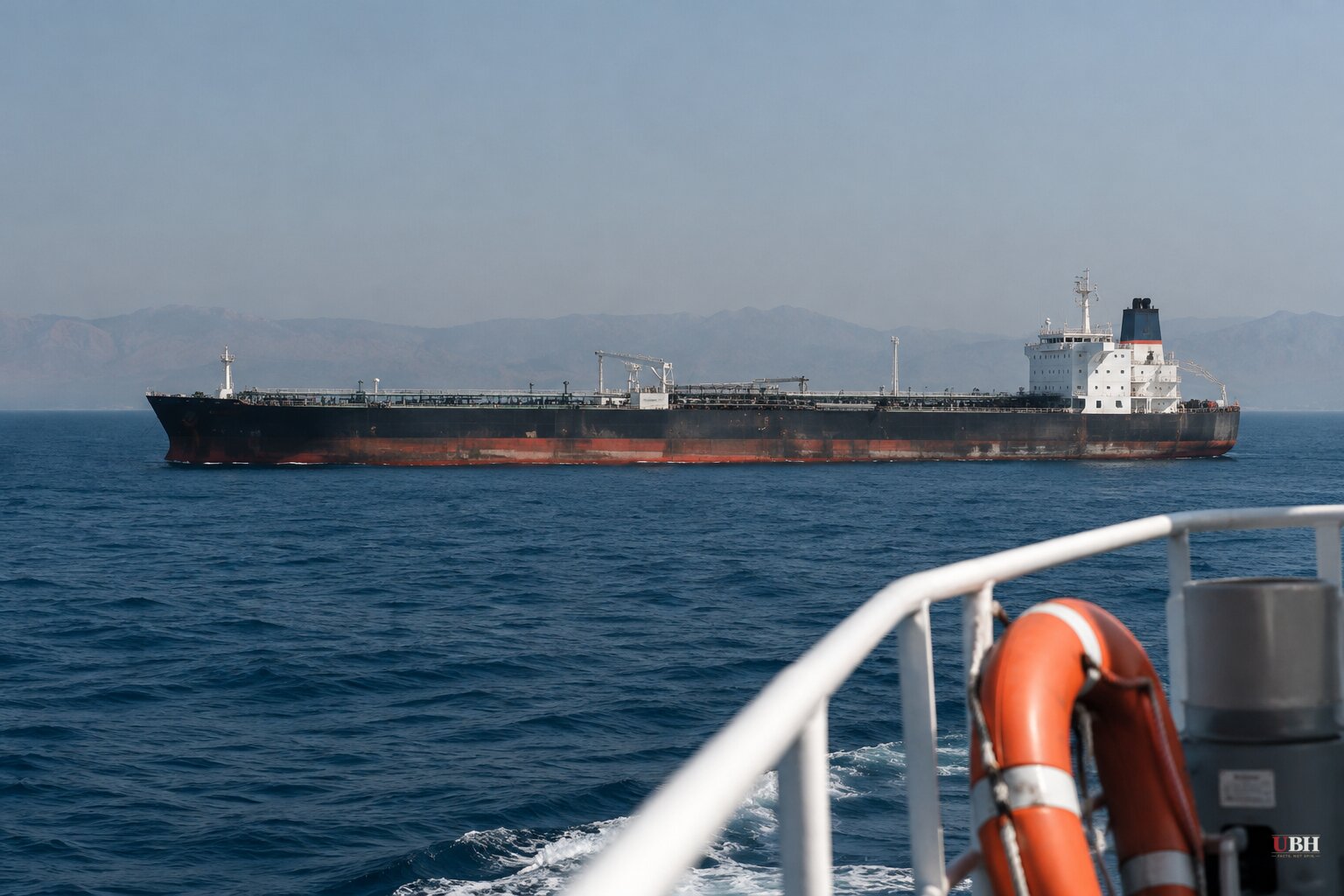
Since two cargo ships sank near the Strait of Hormuz this week, the attacks have kept coming, and the Persian Gulf is now seeing them well beyond the strait itself. Two more tankers were hit in the last day, and the U.S. is reportedly getting diplomats' families out.
Two more tankers struck
The United Kingdom Maritime Trade Operations center (UKMTO) said a tanker was struck by an unidentified projectile about 11 nautical miles west of Bukha, Oman, at 0145 UTC on Wednesday, Oct. 21. The impact started a fire that has since been put out. The vessel is at anchor. All crew are safe, and no environmental damage was reported.
A second tanker's master reported being hit by an unknown projectile about 30 nautical miles southeast of Al Faw, Iraq, at 1830 UTC on Tuesday, Oct. 20. The report reached UKMTO late. Crew are safe, and no damage to the vessel was reported.
Neither ship has been publicly identified. UKMTO did not say who fired. Iranian state media has reported on the latest attack.
Embassy departures
U.S. officials told Reuters on Wednesday afternoon that the State Department is set to order the departure of certain staff and their families from American embassies across the Gulf. The same officials said they expect escalation tied to the Saudi-Houthi war, according to Reuters.
The Saudi Press Agency separately reported an attack on an Aramco oil field in the kingdom's Eastern Region. No further details were available at the time of writing. Oil prices rose on the headlines.
The State Department has not publicly detailed the order or which posts it covers.
The shipping record
The Joint Maritime Information Center (JMIC) kept its SEVERE threat assessment for Hormuz in its Oct. 18 advisory, warning that deliberate attacks remain highly likely. It has since raised the wider Persian Gulf to SUBSTANTIAL, citing the spread of attacks and growing electronic navigation interference.
UKMTO recorded 12 attacks on commercial vessels in the week ending Oct. 16: 10 in Hormuz, one in the Persian Gulf and one in the Gulf of Oman. JMIC counts 153 confirmed maritime security incidents across the region since March 1, a figure that predates the latest two.
The geography is widening. On Oct. 16, two tankers were attacked near Al Jubayl, Saudi Arabia. One was hit by a rocket-propelled grenade fired from a small boat. Another was struck by a projectile and its crew evacuated. On Oct. 18, a tug about 20 nautical miles northeast of Khor Fakkan, UAE, was hit by two projectiles. It stayed under way with one minor crew injury.
Competing numbers on oil flow
The volume data points in two directions.
Kpler, the ship tracker, put Monday's oil transit through Hormuz at 4.147 million barrels. That is less than a quarter of pre-war levels, and the seven-day average has fallen sharply since early October.
The Wall Street Journal, also citing Kpler, reported a different picture on Wednesday. Middle East oil flows averaged more than 24 million barrels a day in the week through Oct. 18, above the pre-war 23.3 million. That total includes shipments through Hormuz and alternative routes across the region.
Preliminary figures put Hormuz flows, including offshore transfers in the Gulf of Oman, at around 14 million barrels a day, or 82% of prewar levels. The Journal attributed the recovery to an improvised shipping system under U.S. protection, and noted that thinning global inventories leave little margin for error and that the operation is expensive, with costs flowing through to consumers at the pump.
The two sets of numbers measure different things: one day of strait transits versus a week of regional exports across all routes. Both can be true. The first shows how little is going through the strait on a bad day, and the second shows how much oil is being rerouted around the problem.
Who is firing, and what Tehran says
Tehran's account differs from the shipping monitors'. After the container ship GFS Pride burned and sank, Iran's Press TV said it had "hit a sea mine on an unauthorized route." Charlie Brown, a former U.S. Navy officer and senior adviser at United Against Nuclear Iran, said a drone strike was more likely. He called the sinking "a dangerous escalation after weeks of near-daily attacks on commercial shipping."
Brown also pointed to a question that goes beyond Washington. "Many ask what response will the US Navy mount," he said. "But the real question is what response will other nations take?"
The politics are visible. The Iran war began in February, and with the November midterm elections approaching, gas prices and the cost of living are already weighing on President Trump, according to CNN. ZeroHedge argues that Tehran wants the attacks publicized to impose an economic cost on Americans before the vote. That is that outlet's reading, not a stated Iranian position.
What comes next
The embassy departure order is the clearest near-term marker. It has been described by anonymous U.S. officials and has not yet been announced. Watch for the State Department's formal notice and for any JMIC move to raise the Persian Gulf rating again. Whoever fired on the Bukha and Al Faw tankers has not been named by any official source.
Sources used for this briefing
7 links from 6 independent newsrooms (syndicated copies of the same report count once)
These are the sources it draws on, linked so you can verify.


