
Unbiased headlines. Facts, not spin.
Unbiased Headlines is an independently owned news organization. We bring you the facts, not opinions, written fresh from 110+ named sources. Sources linked so you can verify it yourself.
 defense
Major Story (8/10)
Bundeswehr Raises Russian Sabotage Threat to Second-Highest Level After Wunstorf Drone Find
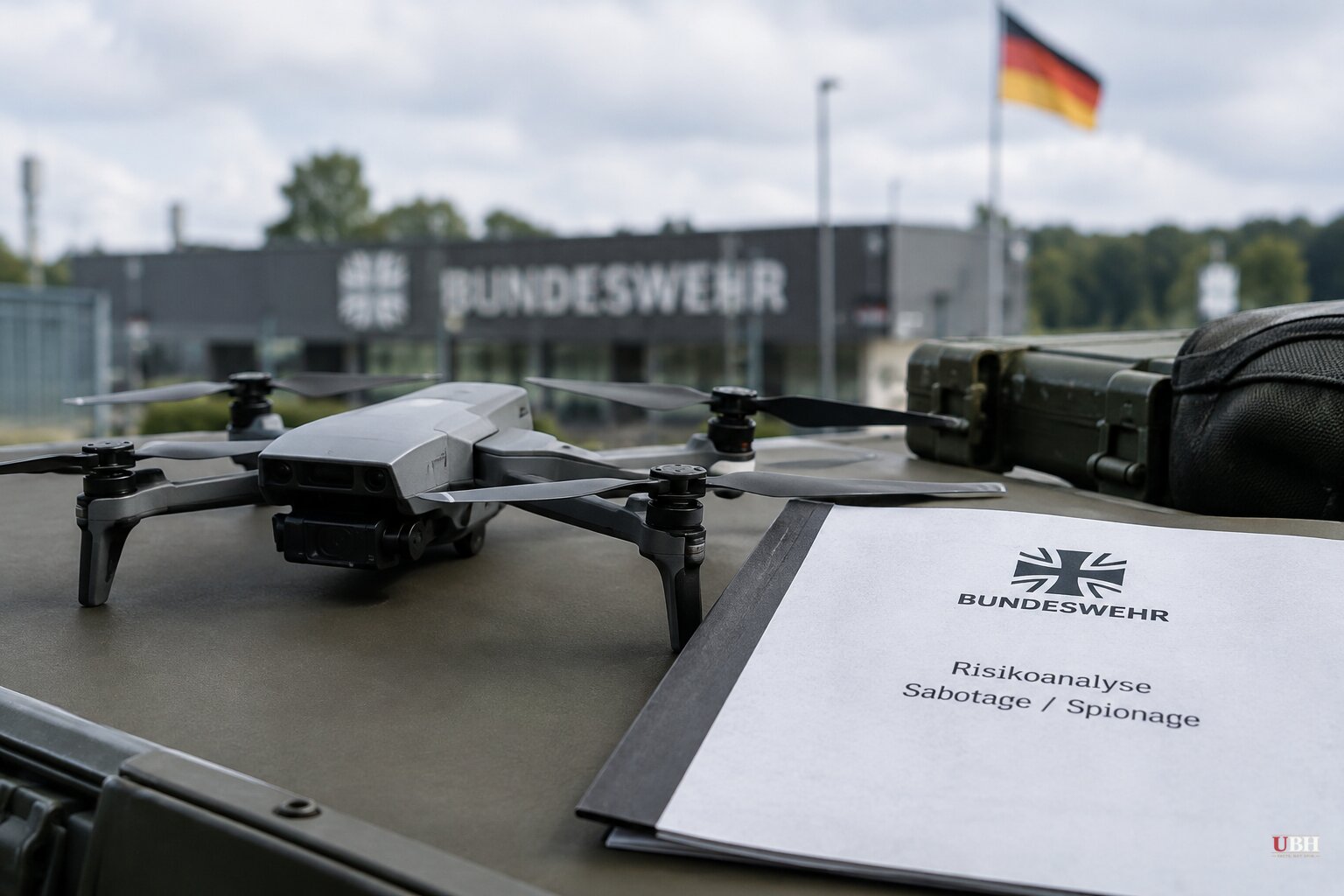
The German military has raised its assessment of the Russian sabotage threat to the second-highest level on its scale, according to a classified internal analysis reported today, Oct. 21, by public broadcaster WDR and Süddeutsche Zeitung.
An Operational Command spokesperson told WDR the Bundeswehr now considers the sabotage risk "substantial" because of the heightened threat. The spokesperson said protective measures at military installations are being strengthened to safeguard personnel and facilities. No specific measures were detailed.
What changed in the military's assessment
Until now, military security specialists focused on sites where Ukrainian soldiers are trained, plus naval bases and shipyards where warships are stationed. Several incidents regarded as possible sabotage had already been recorded at those locations in previous years.
The new analysis drops that geographic limit. It describes a general deterioration in the security situation and says a "short-term escalation of the situation is to be expected, and actions are anticipated in the near future."
It also says Russia has "almost certainly" possessed the capability to act against German forces and facilities for some time, and "very likely" now has an increased intention to do so. Ukrainian partners based in Germany are named as potential targets too.
The analysis concludes that using drones as weapons capable of physical damage or lethal effects crossed a previously assumed "red line."
The Wunstorf drone
The trigger was a crashed drone found in mid-September near the Wunstorf air base in Lower Saxony. A farmer came across it by chance. A can containing explosives lay a few meters away.
Wunstorf is home to Germany's Airbus A400M transport fleet. Investigators suspect the drone was meant for military aircraft, not civilian cargo planes.
Technical analysis by the Federal Criminal Police Office, the BKA, found the drone had probably been lying there for about two years. Its construction resembles the explosives-laden drones from the failed attack at Leipzig/Halle Airport in early August.
The Wunstorf device appears to predate the Leipzig attack by a wide margin, so it was not a follow-on to it.
The military analysis separates the two cases. Leipzig, where Ukrainian Antonov cargo aircraft have been based since 2022, was an indirect threat to the Bundeswehr. Wunstorf very likely targeted the Bundeswehr directly.
Leipzig and the wider pattern
A drone carrying a detonator and explosives was found at Leipzig/Halle overnight into Aug. 5. The German government publicly attributed the attack to Russia after a month-long investigation. Around 1.8 kilograms of high explosives were packed in tin cans attached to the drones, according to the BKA findings reported in the press.
The analysis lists suspicious drone flights over Holzdorf air base, which houses the new Arrow 3 missile defense system, and over the Mechernich facility where Patriot systems are repaired. Security authorities suspect Russian involvement but no attribution has been announced for those flights.
The strategic aim, the analysis says, is to weaken political and public support in Germany for helping Ukraine. At the operational level, it says Moscow likely wants to disrupt equipment deliveries and troop training.
Moscow's position and Berlin's response
Russia rejects the accusations. The Epoch Times reported that Putin told a forum of experts on Oct. 1 that Moscow does not plan to attack foreign factories producing weapons for Ukraine, though he said Russian intelligence services need to track them closely.
The day before, Foreign Ministry spokeswoman Maria Zakharova said such factories are legitimate and potential military targets. "One should not assume that military factories outside Ukrainian territory which produce weapons for the Kyiv regime will be safe. Anyone who thinks so is mistaken," she said.
Chancellor Friedrich Merz addressed the threat on Oct. 1 in Münster, before presenting the Westphalian Peace Prize to NATO. "We are preparing for further hybrid attacks, including severe ones," he said. If they come, "we would respond, as was the case after Leipzig, quickly and very clearly."
In a Sept. 18 speech in Paris, Merz said his government would draw up plans to protect critical infrastructure from drone attacks.
EU foreign policy chief Kaja Kallas has floated a NATO-style emergency security protocol that any member state could trigger after a hybrid attack. The proposal remains at the discussion stage.
What is unresolved
The Bundeswehr has not said which specific installations are getting added protection, or how soon. The government has not announced who was behind the Wunstorf drone or why it sat undiscovered for roughly two years near an air base.
The analysis itself leaves the central question open. It says actions are expected in the near term, and Merz has promised a fast and clear response if they come. What that response would be has not been spelled out.
Sources used for this briefing
7 links from 7 independent newsrooms (syndicated copies of the same report count once)
These are the sources it draws on, linked so you can verify.


